Education and Training
Enhanced understanding of teaching and learning practices, philosophies, and methodologies that shape individuals with the right knowledge and skills from pre-school to the corporate environment.
Contributed to the quality of education in Nigeria by enlightening educators, school administrators, and stakeholders on trends in pedagogy.
Promoted implementation of effective country-specific education theories.
Supported campaigns and policies for integrating advanced educational technologies in primary/secondary schools, vocational academies, and tertiary institutions.
Encouraged teamwork and collaboration with stakeholders in the education system.
Empowered teachers to support students’ physical, emotional, and mental wellbeing.
Provided an all-encompassing platform for students, parents/guardians, teachers, school owners, and professionals in various sectors to create an agile workforce with the right skills set, social engagement, and career motivation.
Promoted personal growth in ways that positively impact society, economy, and the planet.
Emphasized benefits of innovation, creativity, and collaboration in a volatile, uncertain, complex, and ambiguous world where disruptions in healthcare, technology, and other sectors are constantly changing how we learn, work, and live together.
Focused on improving students’ behaviour, strengthening their cognitive capacity and emotional intelligence, and fostering mutually benefitting student-teacher relations to enhance overall teaching and learning outcomes.
Animal and Environmental Biology
Promoted training in basic and applied animal science (e.g., animal genetics, molecular biology, biodiversity studies, and animal biotechnology).
Enhanced knowledge of the relationships between and among plants, animals, humans, and other components of various ecosystems.
Improved Nigeria’s public health system by creating awareness and supporting implementation of policies on animal biodiversity prospecting, wildlife conservation, and environmental management.
Developed students’ intellect and empowered them to leverage technological, scientific, and socio-economic developments in the management of national resources.
Provided basic academic- and policy-related foundations for building more diverse and resilient economies.
Experience
Prepared and delivered academic lectures to undergraduate students on topics relating to botany, molecular biology, marine biology and more.
Prepared teaching materials for lab activities and coursework materials such as handouts, syllabi, and individual/group assignments.
Supervised students’ lab work.
Maintained student attendance records, grades, and other required records.
Evaluated and graded students’ class work, lab work, papers, and assignments.
Compiled, administered, and graded examinations, or assigned this responsibility to others.
Stayed abreast of developments in the field by reading current literature, participating in professional conferences, talking with colleagues, and conducting scholarly research.
Initiated, facilitated, and moderated classroom discussions.
Supervised undergraduate teaching, internship, and research work.
Planned, evaluated, and revised curricula, course content, and course materials and methods of instruction.
Assisted students who need extra help with their coursework outside of class.
Conducted research in a particular field of knowledge and published findings in a professional journal.
Maintained regularly scheduled office hours to advise and assist students.
Advised students on academic and vocational curricula and on career issues.
Collaborated with colleagues to address teaching and research issues.
Written grant proposals to procure external research funding.
Selected and obtained materials and supplies such as textbooks and laboratory equipment.
Participated in student recruitment, registration, and placement activities.
Served on academic or administrative committees that deal with institutional policies, departmental matters, and academic issues.
Provided students course-related experiences such as field trips and outside the classroom.
Reviewed papers for publication in journals.
Certifications
Environmental Sustainability Management 2023 (Udemy)
Promoted responsible, purposeful management of natural resources to achieve sustainability goals.
Empowered learners with relevant knowledge and skills to create and manage innovative solutions to environmental challenges in our oceans and on land.
Explored modules from various disciplines (e.g., geography, environmental science, and marine biology) to address human, economic, social, and environmental aspects of global sustainability.
Trained individuals/professionals who aim to become successful environmental managers, policymakers, consultants, or activists.
Emphasized how businesses can achieve competitive advantage and profitability through strategic planning and by implementing environmental sustainability regulations.
Diploma in Teaching Skills for Educators 2022 (Alison)
Highlighted strategic roles of teachers in building dynamic, resilient education systems.
Emphasized benefits of integrating innovative approaches to teaching and learning.
Encouraged innovative change in theories and practices that do not align with current realities of the complex and constantly evolving global education system.
Empowered educators to leverage new opportunities from modern educational technologies that support parental involvement, teacher-student relations, classroom participation, and other engagements at home or within educational facilities that increase pedagogical outcomes.
Broadened ideas on how educators to make teaching and learning an interesting hobby that improves students’ behaviour, cognitive capacity, and overall wellbeing rather than an occasional activity.
Diploma in Environmental Management and Legal Compliance 2022 (Alison)
Examined prospects, challenges, and negative impacts of industrialization on the environment.
Improved understanding of industry-specific practices and the contributions to ecological damage as evident in deforestation, burning of fossil fuels, and emission of greenhouse gases.
Broadened students’ knowledge of environmental legislation.
Suggested various environmental protection measures and legal compliance procedures that stakeholders should take/implement to reduce pollution problems.
Increased legal awareness, promoted good corporate governance, and helped business leaders to understand the benefits of consistently improving environmental, social, and governance (ESG) performance.
Community and Volunteer Activities
United People Global (UPG), Owerri, Imo State, Nigeria (June 2023)
Created an interactive platform for people to collaborate closely on projects and activities driven by one motive: to make the world a better place.
Participated in campaigns for environmental protection, economic viability, and social equity.
Encouraged members to embrace innovation, creativity, and teamwork.
Urged members in various fields to bring strategic initiatives and partake in projects that support education, entrepreneurship, and global sustainability.
One Man, One Tree Initiative (2022)
Supported environmental sustainability initiatives, campaigns, and policies to build pollution-free and nature-wealthy cities across Nigeria.
Initiated, lectured, and encouraged students, professional, and communities to plant trees for environmental conservation and climate change mitigation.
Embarked on massive planting of domestic tree species within school environments across the country to support actualization of green economy objectives.
Organized seminars, as well as purchased and distributed thousands of tree seedlings to members, students, and the public.
Presented speeches at public events where members encourage active community involvement in development projects.
Awards
Eco Award, Federal Polytechnic Nekede, Owerri (December 2023)
Recognized my individual contributions to community development projects, particularly in the areas of environmental activism, corporate governance, and public health.
Highlighted the health and economic impact of environmental devastation and urged people to act against individuals, organizations, or communities allowing activities that ignore rights of the local population.
Inspired many people – especially in the academic community – to join the environmental movement in Nigeria and globally.
Best Lecturer of the Year 2022
Department of Environmental Biology in collaboration with Federal Polytechnic Nekede, Owerri, Imo State, Nigeria (December 2022)
Recognized my contributions to teaching practice and the impact on students, departmental colleagues, and the educational institution.
Highlighted my skills in leadership, communication (written and verbal), listening, adaptability, collaboration, empathy, and patience.
Résumé/CV: Publications, Conferences, and Notable Presentations
“Country-specific Barriers to Environmental Pollution and Climate Change Responses in Nigeria.” Undergraduate thesis, Imo State University, Owerri, 2015.
“The Political Economy of Global Warming” (PowerPoint Presentation, ‘One Man, One Tree’ Event at Imo State University, Owerri, February 21, 2021).
“The Difference Between Greenhouse Effect and Climate Change” (Speech Delivered at the Climate Action Day at Federal Polytechnic Nekede, Owerri, September 28, 2022).
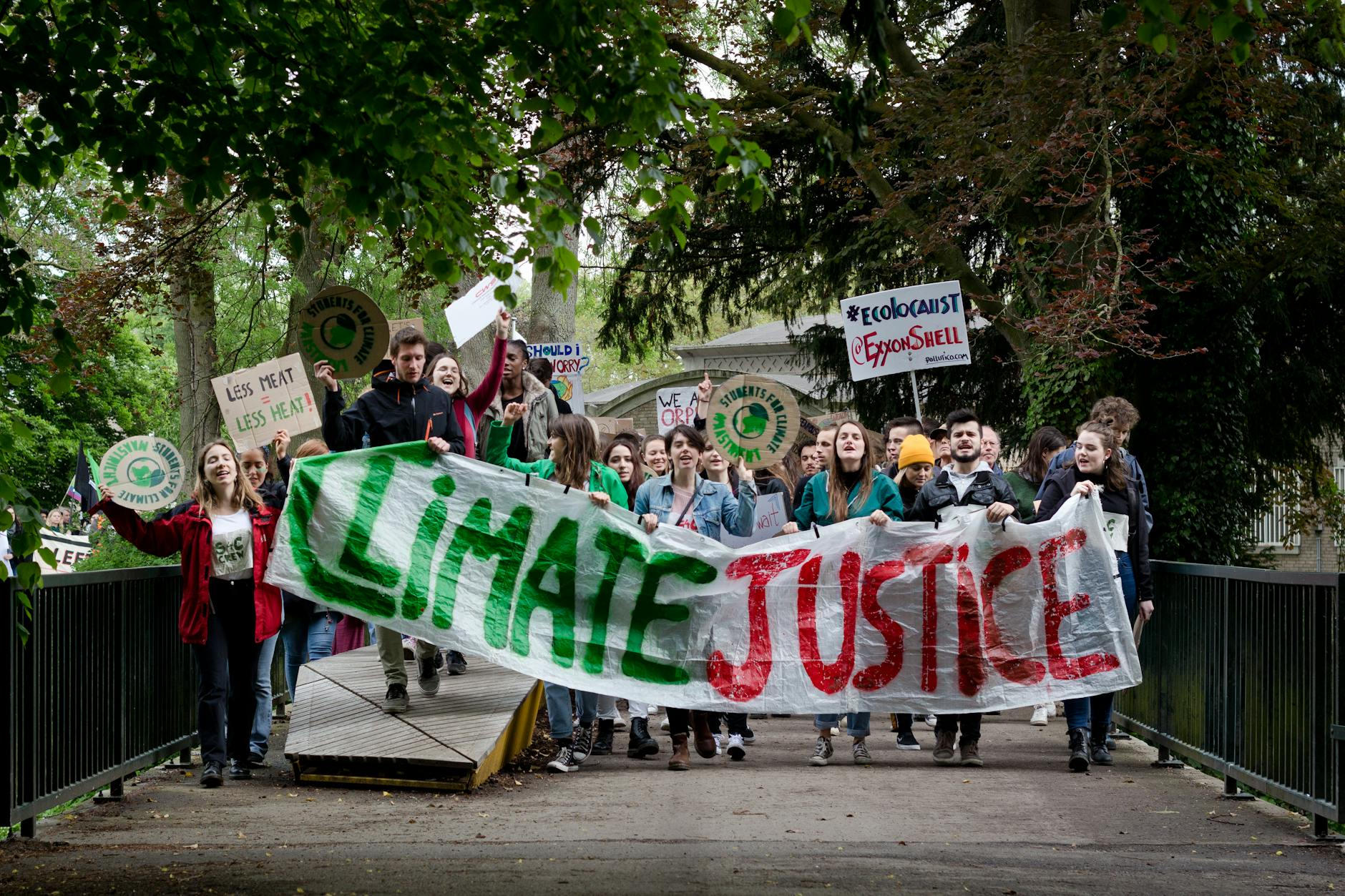
“Health and Economic Benefits of Renewable Energy to Households, Society, and the Government” (Presentation, Advocacy in Climate Justice event via Zoom, January 23, 2024).
“Determination of cholesterol level in different animal protein extracted from meats sold in Mbaitoli local government area, Imo state,” World Journal of Advanced Research and Reviews, 19(03); 097–104. (2023) Available online: https://wjarr.com/sites/default/files/WJARR-2023-1735.pdf
Résumé/CV: Associations and Affiliations
Organization of Women in Science
Federal Polytechnic Nekede, Owerri, Imo State, Nigeria
Membership (April 2021 – Present).
United People Global (UPG)
Imo State, Nigeria
Executive Member (September 2019 – Present).
One Man, One Tree Initiative
Imo State, Nigeria
Founder (February 2017 – Present).
Personal Statement 1
Long essay: What motivates you to work in the field that you do, and what specific goals do you hope to achieve within that field? Provide an overview of your major professional accomplishments from the past year, including specific examples of how these accomplishments have brought you closer to realizing these goals. (250 words)
I find nature fascinating. Nature embodies pure perfection that humans who are innately attracted to the rich diversity within our environment (e.g., sunlight, landscapes, trees, animals, flowers, insects, wind, and life) can only nurture and preserve for long-term economic, environmental, health, and socio-cultural benefits. But threats to our natural world as evident in climate change and global warming highlight an urgent need for organizations, governments, and everyone to support global sustainability actions—hence my choice of Animal and Biological Science.
My goal as a lecturer is to help learners build the confidence to pursue their career goals, protect the planet, and contribute to the body of knowledge through research. I have increased awareness of animal habitats, biodiversity, and ecology through cross-cutting, disciplinary lectures in Animal Biology, Microbiology, Nutritional Biology, and Agricultural/Environmental Chemistry, among others. In addition to backing current environmental realities with scientific evidence during face-to-face lectures and classes, helping students to understand, analyse, and apply scientific methods and ethical principles to solve environmental problems, I regularly organize field trips that provide hands-on experience in animal behaviour, zoology, or conservation.
My achievements in 2024 include leading my students to other academic institutions within Imo state (namely Imo State University and Federal University of Technology) including nature reserves, agriculture, fishery, poultry, and livestock/dairy farms. These academic events, and lectures presented at public events, have significantly improved people’s relationship with nature thereby strengthening the overall environmental, social, and governance (ESG) impact with modern, efficient, and humane global sustainability strategies.
Personal Statement 2
Leadership in Public Management
Long essay: Based on your understanding of your preferred Institute track of study, what are the specific skills and knowledge you hope to gain from the Fellowship that you would not be able to develop through other opportunities? How will those skills and that knowledge enhance your activities in your community and help you realize the goals you noted in the previous question? (250 words)
Public administration at the local, state, and federal govern levels is quite fascinating due to the complex nature of enacting, implementing, and monitoring policy performance. The interdisciplinary discipline combines political, economic, social, technological, environmental, and legal approaches to governance to tackle development challenges in different sectors. During my undergraduate studies, and during my professional/career development, I have learned how educational systems, development policies,, rule of law, public health systems, climate change law, and environmental sustainability actions contribute to the growth of global economic—and remarkably improve the quality and span of life.
Nigeria ranks low in global corruption index due to sharp practices and a dysfunctional corporate culture system which allow leadership incompetence and misappropriation of public funds, as well as condone negligence of duties in public service and lack of political will among public office holders to serve and protect general interests of society. An opportunity in the Mandela Washington Fellowship will thus broaden my understanding of ethical leadership, public policy development/evaluation, and good governance. I am eager to closely collaborate with the team of experienced, world-class tutors in the fellowship to learn how the U.S. (a pioneer of democracy, freedom, and rule of law) combines effective theoretical and practical models that leverage inputs from diverse communities (different political leanings, economic classes, and socio-cultural backgrounds) to sustain process efficiency and policy outcomes. My leadership skills, communication skills, and exposure to multicultural academic and social settings will certainly increase my learning engagement and performance in the 2025 Mandela Washington Fellowship.
Personal Statement 3
Short essay: Nelson Mandela said, “It is in your hands, to make a better world for all who live in it.” What are the greatest needs in your community and how has your public and community service addressed these needs? Please include details explaining how your specific actions contributed to improvements within your community. (150 words)
The key challenges in my community include lack of awareness on the causes and solutions to environmental degradation, systemic corruption in public and private sectors, and widespread apathy towards rule of law, corporate governance, and developmental policies. While these challenges have serious economic implications for a developing country like Nigeria, especially in the areas of policy planning, budgeting, and policy implementation, research shows that every country needs collaboration with educators, research institutions, policymakers, and professionals in different fields to achieve sustainable development goals. My commitment to encouraging active participation in community development projects revolve around agriculture development, leadership training, and entrepreneurial support. In 2023, I established six commercial gardens in Imo state for nurturing saplings and seedlings to address food insecurity, create more jobs, and protect the environment. I also organize leadership training events to encourage improvement in the ESG performance of businesses/organizations.
Personal Statement 4
Short essay: What steps do you regularly take to ensure inclusion of diverse identities and ideas in your work? Describe a time when you proactively worked to reach diverse groups of people within your community and how your specific actions were impactful to their experience. (150 words)
As a lecturer at a higher institution, I closely collaborate with students, academic/non-academic staff within my school, and stakeholders like visiting professors/tutors and stakeholders in the academic ecosystem who influence the internal dynamics of my workplace in various ways. These people come from different cultural backgrounds and have beliefs, lifestyles, and behaviours make them unique. Fostering diversity and inclusivity in the workplace therefore requires organizations to support creativity, innovation, and employee engagement, and more importantly, ensure that every team member – no matter the position, department, or race/ethnicity – can explore their own unique backgrounds, experiences, and perspectives to create value. To engage diverse groups of people in the academic community while organizing field trips, seminars, or business/social events, I explore robust internal communication strategies that help me to connect with everyone as well as embrace and value differences (relating to race, gender, ethnicity, disability, age, professional background and more). My effective strategies for operational productivity include (a) addressing unconscious bias (b) extending diversity, equity, and inclusion (DEI) principles in the selection process, and (c) using surveys for insightful feedback.
Personal Statement 5
Please describe a challenge, mistake, or setback you faced, in detail, and the specific actions you took to address it effectively. How did this experience help you grow as a professional and as a leader? (250 words)
My job responsibility as a lecturer is to teach, conduct relevant research, and participate in community development services. Effective delivery of these services requires clear, satisfactory level of analysis which determines success in terms of achieving personal and organizational goals. While commitment to service and the effectiveness of approach contribute to recognition, awards, and promotion received in the university system, lecturers perform low due to lack of willingness to teach, partake in community development services, supervise/counsel students, grade assignments/exams, and attend meetings or social events.
One of the key challenges I have faced in my job as a lecturer is lack of staff development programme. The school management does not have a structured approach to assessing, planning, implementing, and evaluating performance of its employee development programs. This creates barriers to employee onboarding. So, to adjust with systemic setbacks, acquire requisite skills, knowledge, and abilities for higher responsibility and better performance at my workplace, I enrol for advanced studies and attend talent development conferences. Between 1st and 2nd November 2023, I attended a conference organized by the Faculty of Education, Nnamdi Azikiwe University, Awka to discuss and address issues relating to policies and practice in education, funding for teaching, research, and community services, as well as ICT education, empowerment, poverty reduction, and public-private partnership.
The myriads of challenges facing lecturers in Nigeria include poor motivation, teaching of large class, inadequate infrastructural facilities, strike actions, insecurity, poor computer literacy, and lack of research funding.
Leave a Reply