May 9 has produced some of the world’s most remarkable historical moments. The date has witnessed the fall of empires, anti-colonial resistance, legendary entertainment premieres, shocking aviation disasters, revolutionary medical breakthroughs, unforgettable sports moments, celebrity milestones, and major political decisions that shaped global history.
Unlike generalized historical anniversaries, May 9 repeatedly appears in records tied to wars, diplomacy, cinema, science, activism, music, football, journalism, exploration, religion, and global institutions.
1386 – England and Portugal Signed the Treaty of Windsor
On May 9, 1386, England and Portugal signed the Treaty of Windsor.
The agreement created the oldest continuously active diplomatic alliance in world history.
The alliance later influenced European trade, naval cooperation, and military strategy for centuries.
During the Napoleonic Wars, Britain defended Portugal against French invasion. Portuguese ports later became strategically important for British global naval operations.
Historians still describe the treaty as one of history’s most durable diplomatic achievements.
1502 – Christopher Columbus Began His Final Voyage
On May 9, 1502, Christopher Columbus departed Cádiz, Spain, on his fourth and final voyage to the Americas.
During the expedition, Columbus explored parts of present-day Honduras, Costa Rica, Nicaragua, and Panama.
He searched unsuccessfully for a western passage to Asia.
The voyage became notorious for violent storms, ship damage, disease outbreaks, mutiny fears, and difficult encounters with Indigenous communities.
Columbus eventually returned to Spain exhausted and politically weakened.
Despite transforming world geography forever, he died still believing he had reached Asia rather than a separate continent.
1671 – Thomas Blood Attempted to Steal the British Crown Jewels
One of history’s strangest crime stories unfolded on May 9, 1671, when Irish adventurer Thomas Blood attempted to steal the British Crown Jewels from the Tower of London.
Blood and his accomplices flattened Saint Edward’s Crown with a hammer and tried hiding the royal orb inside clothing.
The bizarre robbery failed after guards captured the group.
Even more unbelievable was King Charles II’s response.
Instead of executing Blood, the king surprisingly pardoned him and even granted him land in Ireland.
Historians still debate why.
1860 – J.M. Barrie, Creator of Peter Pan, Was Born
Scottish novelist and playwright J.M. Barrie was born on May 9, 1860.
Barrie later created Peter Pan, one of the most influential fantasy characters in literary history.
The character inspired stage plays, Disney adaptations, fashion, tourism, and children’s entertainment worldwide.
Peter Pan statues and attractions in London became famous tourist landmarks.
1921 – Sophie Scholl Was Born
German anti-Nazi activist Sophie Scholl was born on May 9, 1921.
As a member of the White Rose resistance movement, she secretly distributed leaflets criticizing Adolf Hitler and Nazi propaganda.
Scholl was arrested in 1943 and executed by guillotine at age 21.
Her courage later made her one of Europe’s most respected resistance symbols.
Schools, streets, academic institutions, and human-rights organizations across Germany were later named in her honor.
1936 – Italy Officially Annexed Ethiopia
On May 9, 1936, Fascist dictator Benito Mussolini declared the annexation of Ethiopia after Italy’s invasion of the African nation.
The event shocked the world and exposed the weakness of the League of Nations.
Ethiopian Emperor Haile Selassie later delivered one of history’s most famous anti-war speeches before the League of Nations, warning that unchecked aggression would threaten global peace.
His warning proved prophetic as Europe moved closer to World War II.
The invasion also became one of Africa’s most important anti-colonial resistance stories.
1945 – Soviet Victory Day Was Celebrated After Nazi Germany’s Defeat
On May 9, 1945, the Soviet Union celebrated victory over Nazi Germany after the German surrender took effect according to Moscow time.
The date became known as Victory Day.
Millions gathered in celebration after years of devastating warfare.
The Soviet Union had suffered approximately 27 million deaths during World War II.
Victory Day later became one of Russia’s most important national holidays.
Military parades in Moscow’s Red Square evolved into globally recognized ceremonies watched by millions.
Countries including Belarus, Kazakhstan, Armenia, and Serbia also commemorate the date.
1950 – The Schuman Declaration Helped Lay the Foundation for the European Union
On May 9, 1950, French Foreign Minister Robert Schuman proposed the Schuman Declaration.
The declaration encouraged European countries to jointly control coal and steel production so future wars between France and Germany would become impossible.
The proposal eventually led to the creation of the European Coal and Steel Community, the European Economic Community, and later the European Union.
May 9 is now celebrated as Europe Day across EU member states.
Brussels, Strasbourg, and Luxembourg regularly host Europe Day educational programs, exhibitions, diplomatic events, and concerts.
1955 – West Germany Joined NATO
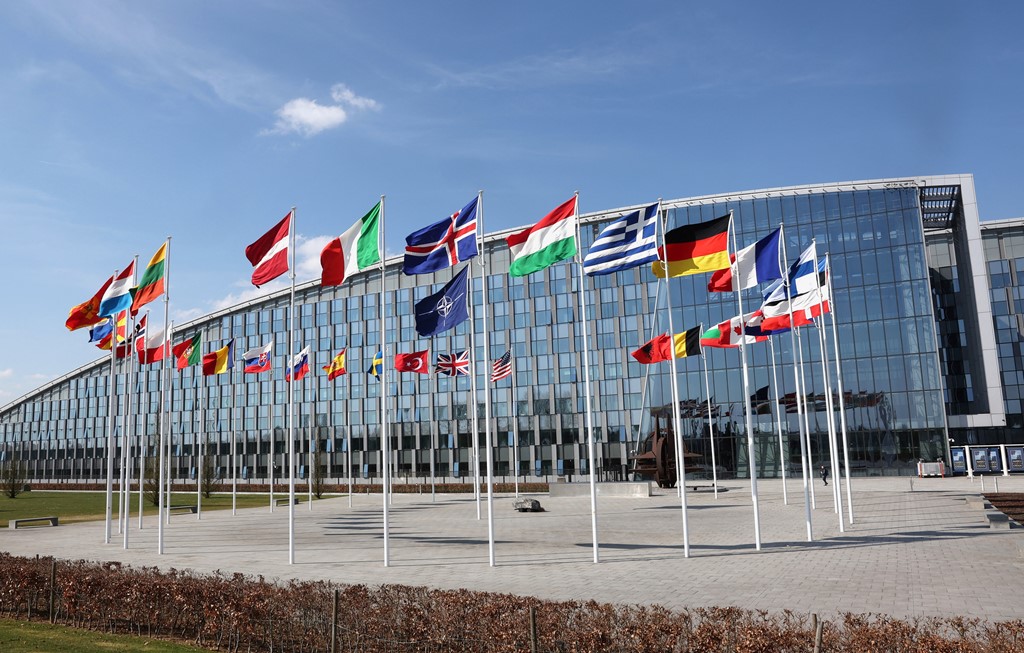
On May 9, 1955, West Germany officially joined NATO.
The move dramatically intensified Cold War tensions.
In response, the Soviet Union and Eastern Bloc nations later created the Warsaw Pact.
West Germany’s NATO membership reshaped European security and military alliances during the Cold War.
1958 – Alfred Hitchcock’s “Vertigo” Premiered
On May 9, 1958, Alfred Hitchcock’s psychological thriller “Vertigo” premiered.
Starring James Stewart and Kim Novak, the film initially confused critics but later became widely recognized as one of cinema’s greatest masterpieces.
The movie revolutionized psychological suspense filmmaking.
Its dreamlike visuals, haunting soundtrack, and obsession-driven storyline heavily influenced Hollywood directors for decades.
In later critics’ polls, “Vertigo” even surpassed “Citizen Kane” as the greatest film ever made.
1960 – The First Birth Control Pill Was Approved
On May 9, 1960, the United States Food and Drug Administration approved Enovid, the world’s first commercially available birth-control pill.
The approval transformed modern society.
Women gained unprecedented control over reproductive planning.
The development influenced feminism, education, workforce participation, healthcare policy, and global debates about religion and sexuality.
The World Health Organization and multiple public-health NGOs later expanded family-planning programs worldwide.
1974 – Nixon’s Impeachment Hearings Began
On May 9, 1974, the U.S. House Judiciary Committee opened formal impeachment hearings against President Richard Nixon during the Watergate scandal.
The hearings followed investigations into political espionage, obstruction of justice, and abuse of presidential power.
Investigative journalists Bob Woodward and Carl Bernstein became global media icons because of their reporting.
Nixon later resigned before impeachment proceedings concluded.
He became the first U.S. president to resign from office.
1978 – The Body of Aldo Moro Was Found in Italy
On May 9, 1978, the body of former Italian Prime Minister Aldo Moro was discovered in Rome.
Moro had been kidnapped and murdered by the Red Brigades, a far-left terrorist organization.
His death shocked Europe.
The kidnapping exposed Italy’s violent “Years of Lead,” a period marked by terrorism, assassinations, and political extremism.
Italy now commemorates May 9 as a day honoring victims of terrorism.
1980 – “Friday the 13th” Premiered
On May 9, 1980, the horror movie “Friday the 13th” premiered.
The low-budget film unexpectedly became a massive box-office success.
Its popularity launched one of cinema’s most famous horror franchises.
Jason Voorhees later became one of pop culture’s most recognizable fictional killers.
The franchise influenced horror films, Halloween culture, video games, and merchandise for decades.
1986 – Tenzing Norgay Died
Legendary mountaineer Tenzing Norgay died on May 9, 1986.
Alongside Edmund Hillary, Norgay became one of the first climbers confirmed to reach the summit of Mount Everest in 1953.
His achievement transformed Nepal into a global mountaineering destination.
Everest tourism later became a major source of income for Sherpa communities and Nepal’s travel industry.
1994 – Nelson Mandela Became South Africa’s First Black President
On May 9, 1994, South Africa’s newly elected parliament chose Nelson Mandela as the country’s first Black president.
The historic vote officially marked the collapse of apartheid rule.
Mandela later formed a Government of National Unity aimed at reconciliation after decades of racial segregation.
The event became one of the most celebrated democratic transitions in modern African history.
2001 – Ghanaian Footballer Nwankwo Kanu Won UEFA Recognition
On May 9, 2001, Nigerian football icon Nwankwo Kanu played a major role during Arsenal’s late-season campaign as African footballers increasingly dominated European competitions.
Kanu’s technical brilliance and comeback story after heart surgery inspired millions across Africa.
His later charity work through the Kanu Heart Foundation helped children receive life-saving surgeries.
2004 – Chechen President Akhmad Kadyrov Was Assassinated
On May 9, 2004, Chechen President Akhmad Kadyrov was killed in a bomb explosion during a Victory Day parade in Grozny.
The assassination highlighted the instability and violence surrounding the Chechen conflict.
His son, Ramzan Kadyrov, later emerged as one of Russia’s most controversial regional leaders.
2012 – Sukhoi Superjet Crash Killed 45 People
On May 9, 2012, a Russian Sukhoi Superjet 100 crashed into Mount Salak in Indonesia during a demonstration flight.
All 45 people onboard died.
The tragedy damaged confidence in Russia’s civilian aviation ambitions.
Investigators later blamed pilot error and situational-awareness failures.
2015 – Cristiano Ronaldo Scored Another LaLiga Hat Trick
On May 9, 2015, Cristiano Ronaldo scored a hat trick for Real Madrid against Espanyol.
The performance strengthened his rivalry with Lionel Messi during one of football’s greatest competitive eras.
Ronaldo’s scoring consistency helped redefine modern football statistics.
2016 – Stephen Curry Delivered an NBA Playoff Masterclass
On May 9, 2016, Golden State Warriors star Stephen Curry returned from injury and scored 40 points against the Portland Trail Blazers.
He also scored an NBA-record 17 points in overtime.
The performance became one of the most celebrated playoff displays of Curry’s career.
2020 – Little Richard Died
Rock-and-roll pioneer Little Richard died on May 9, 2020.
Known for songs such as “Tutti Frutti” and “Long Tall Sally,” he influenced Elvis Presley, The Beatles, Prince, James Brown, David Bowie, and Michael Jackson.
His flamboyant performances transformed popular music and stage fashion.
Little Richard’s personal struggles involving religion, fame, and identity also made him one of entertainment’s most discussed cultural figures.
Funny and Unbelievable May 9 Events
On May 9, 1671, Thomas Blood’s failed Crown Jewels robbery became one of Britain’s strangest criminal stories.
On May 9, 1958, viewers watched a “Trackdown” television episode featuring a fictional conman named Walter Trump who promised frightened citizens he alone could save them by building a wall.
Decades later, social-media users rediscovered the episode and turned it into a viral political joke.
Another unusual May 9 observance is Lost Sock Memorial Day, an unofficial celebration humorously dedicated to missing socks that mysteriously disappear after laundry.
Famous Births on May 9
- 1800 – John Brown, American abolitionist
- 1837 – Adam Opel, founder of the Opel automobile company
- 1860 – J.M. Barrie, creator of Peter Pan
- 1874 – Howard Carter, archaeologist who discovered Tutankhamun’s tomb
- 1918 – Mike Wallace, legendary “60 Minutes” journalist
- 1921 – Sophie Scholl, anti-Nazi resistance activist
- 1936 – Albert Finney, British actor
- 1939 – Ralph Boston, Olympic athlete
- 1949 – Billy Joel, American singer-songwriter
- 1979 – Rosario Dawson, actress and activist
Famous Deaths on May 9
- 1805 – Friedrich Schiller, German poet and playwright
- 1986 – Tenzing Norgay, Everest mountaineer
- 2012 – Vidal Sassoon, celebrity hairstylist
- 2020 – Little Richard, rock-and-roll pioneer
Scheduled and Upcoming Events for May 9, 2026
Several major observances and events are scheduled for May 9, 2026.
Victory Day military commemorations are scheduled in Russia, Belarus, Kazakhstan, Armenia, and Serbia.
Europe Day celebrations are scheduled across European Union institutions and member states.
Late-season fixtures in the English Premier League, LaLiga, Serie A, Bundesliga, Ligue 1, CAF competitions, and the Nigerian Premier Football League are also scheduled around the date.
Film studios, fashion companies, streaming platforms, and entertainment organizations are expected to continue spring release campaigns and festival promotions during this period.
Humanitarian organizations and NGOs are also expected to organize educational programs connected to peacebuilding, anti-war advocacy, and historical remembrance.
Why May 9 Remains Historically Important
May 9 stands out because the date repeatedly appears in defining moments involving war, diplomacy, resistance, cinema, sports, aviation, politics, science, activism, journalism, and global culture.
It is the date of Europe Day and Soviet Victory Day.
It is connected to the rise of the European Union, the fall of apartheid in South Africa, the birth of anti-Nazi activist Sophie Scholl, the final voyage of Christopher Columbus, the first birth-control pill, the Watergate impeachment hearings, and the death of Little Richard.
From royal jewel thefts in seventeenth-century London to Cold War military alliances, from Everest exploration to Hollywood horror franchises, May 9 contains some of history’s most unforgettable stories.
Leave a Reply