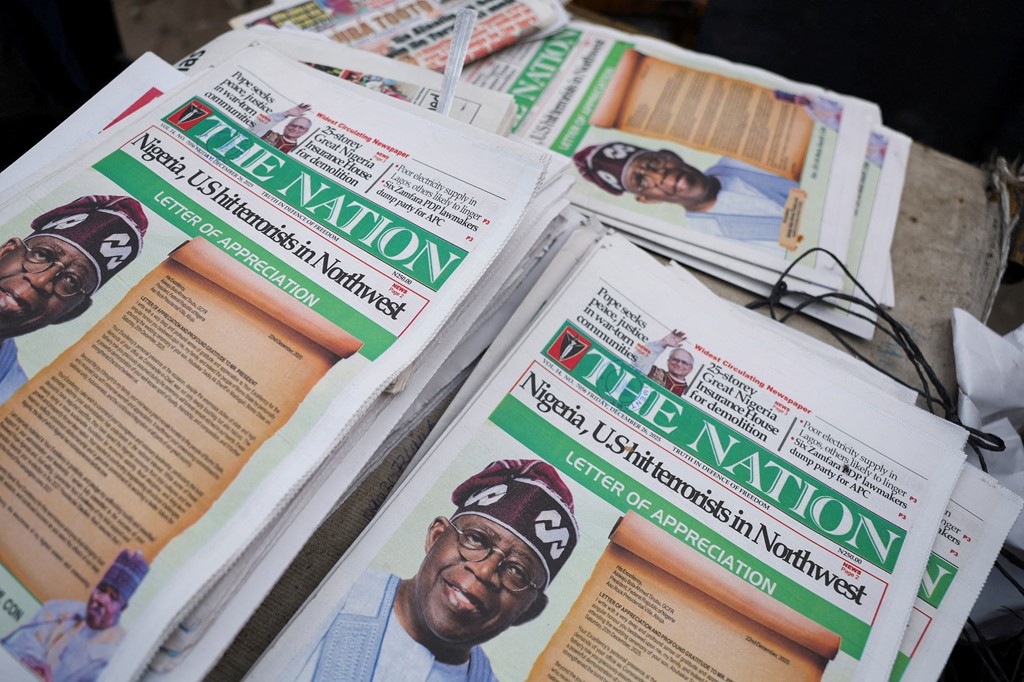
Nigeria woke up this Saturday, May 9, 2026, to another intense news cycle shaped by politics, the economy, energy concerns, security developments, and social anxieties. Across major Nigerian newspapers and online platforms, the dominant themes are the approaching 2027 political realignments, economic uncertainty, developments in the oil and refining sector, security operations in different parts of the country, and growing public debate over governance and national direction.
From Punch Newspapers to Vanguard News, TheCable, THISDAY, Daily Trust, Channels Television, and The Guardian Nigeria, several interconnected stories dominated national conversation.
One of the biggest political stories remains the growing tension and fragmentation within Nigeria’s opposition coalition ahead of the 2027 general elections. A Reuters report that circulated widely across Nigerian political platforms revealed that a proposed opposition alliance has already begun showing signs of collapse after key political figures reportedly pulled away from the coalition effort. (Reuters)
The alliance had been viewed as one of the most ambitious attempts in years to unite opposition parties against President Bola Ahmed Tinubu ahead of the next presidential election cycle. However, internal disagreements, legal disputes, and factional rivalries appear to have weakened the project before it could fully stabilize. Reuters reported that former presidential candidates Peter Obi and Rabiu Musa Kwankwaso distanced themselves from the coalition due to internal mistrust and division. (Reuters)
Political analysts say the development reflects a familiar challenge in Nigerian politics: opposition groups often struggle to maintain unity long enough to build a strong electoral alternative. The ruling All Progressives Congress continues to benefit from incumbency and organizational structure, while opposition movements remain vulnerable to fragmentation.
At the same time, newspapers this morning are filled with reports of internal maneuvering inside the APC itself. TheCable reported disagreements among APC governors over the leadership structure of the Progressive Governors Forum. These tensions may not threaten the ruling party immediately, but they reveal that political succession battles and power positioning ahead of 2027 have already begun.
Another major story dominating Nigerian headlines is the worsening concern over the economy and public finance management. A widely discussed report from Punch Newspapers revealed that Nigeria’s Accountant-General warned that the country could reject future World Bank loans if approval and disbursement delays continue.
The statement has generated extensive debate because Nigeria remains heavily dependent on multilateral financing for infrastructure, development, and budget support. Critics argue that slow disbursement undermines urgent economic projects, while others fear that rejecting concessional funding could worsen fiscal pressures. (Punch Newspapers)
Nigeria’s economy remains under severe pressure from inflation, exchange rate instability, and rising living costs. Although government officials continue to defend ongoing reforms, ordinary Nigerians are still grappling with high transportation costs, food inflation, and rising energy prices.
Closely connected to the economic story is the ongoing national discussion about crude oil supply, fuel refining, and the strategic importance of the Dangote Refinery. Reuters reported earlier this week that Nigerian crude producers supplied less than half of the crude allocated to local refineries during the first quarter of 2026 due to pricing disputes and supply bottlenecks. (Reuters)
The development has raised concerns because Nigeria has spent decades trying to reduce dependence on imported refined petroleum products. The Dangote refinery remains central to the government’s broader energy ambitions, especially as fuel import costs continue to affect national finances.
International attention on the refinery also increased after reports that the United Kingdom may rely partly on fuel imports from Nigeria to help manage aviation fuel shortages linked to Middle East supply disruptions. (The Guardian) The report underlines how strategically important Nigeria’s refining capacity has become not only domestically but internationally.
However, the refinery has also been at the center of labour-related controversy following allegations involving dismissed workers and union disputes. The company denied wrongdoing, while the Nigerian government reportedly intervened to mediate the situation. (The Guardian)
Security issues continue to dominate newspaper coverage as well. Vanguard News Headlines Today reported that troops rescued dozens of kidnap victims and neutralized suspected terrorists in Katsina State. Across the country, insecurity remains one of the biggest concerns for Nigerians, particularly in the North-West and North-Central regions where kidnappings, banditry, and attacks on rural communities continue.
The Guardian Nigeria also reported fresh attacks in Kogi State that left casualties and injuries. These recurring incidents reinforce concerns about the ability of security agencies to fully contain armed groups operating across different regions of the country.
Security experts increasingly warn that prolonged insecurity continues to damage farming activity, internal trade, education, and investment confidence. Communities affected by repeated attacks face displacement, economic disruption, and deep psychological trauma.
Another important regional issue gaining attention today involves Nigerian citizens living in South Africa. Reuters reported that at least 130 Nigerians have requested repatriation following anti-foreigner protests and rising xenophobic tensions in South Africa. (Reuters)
The Nigerian government has strongly condemned attacks on its citizens and called for accountability regarding reported deaths involving Nigerian nationals. Diplomatic engagement between Abuja and Pretoria has intensified as both countries attempt to manage tensions and prevent escalation. (Reuters)
The situation has reopened painful conversations about xenophobia in Africa, migration pressures, unemployment, and the responsibilities African governments owe their citizens abroad.
In the business and financial sector, newspapers are closely monitoring efforts to improve industrial growth and financial inclusion. THISDAY and The Guardian Nigeria carried reports on digital finance, industrial policy, sustainability regulation, and private sector concerns over rising operating costs.
Business groups continue to warn that inflation, electricity instability, and currency volatility are squeezing companies and slowing recovery. There are also growing concerns about youth unemployment and the widening gap between economic growth statistics and everyday living realities.
Meanwhile, the federal government continues pushing infrastructure and reform initiatives. The Guardian reported ongoing efforts to integrate electricity generation systems into a national SCADA monitoring structure aimed at reducing grid vulnerability and improving efficiency. (The Guardian Nigeria) Energy reform remains one of the administration’s major policy priorities, although Nigerians continue to experience persistent electricity challenges.
In sports, Team Nigeria generated positive headlines after winning the African Women’s Wrestling Championship again. Channels Television reported that Nigerian athletes secured multiple gold medals, reinforcing Nigeria’s dominance in African wrestling competitions.
The victory provided a welcome moment of national pride amid difficult economic and political headlines. Nigerian sports continue to serve as one of the few areas where the country consistently projects continental strength and international competitiveness.
The entertainment world also contributed lighter headlines today. Vanguard News Headlines Today reported that global music star Shakira announced an official 2026 FIFA World Cup song collaboration involving Nigerian Grammy-winning artist Burna Boy. The announcement generated excitement across Nigerian social media, with many celebrating another major international milestone for Afrobeats and Nigerian music culture.
On the governance front, there is also growing discussion about institutional reform and public accountability. Reports about interim forfeiture orders involving properties linked to former petroleum officials continue to attract attention. (ThisDayLive) Anti-corruption efforts remain politically sensitive in Nigeria, especially when they involve former ministers, governors, or politically connected figures.
Many Nigerians remain skeptical about whether anti-corruption campaigns are consistently applied across party lines. Nevertheless, legal proceedings involving public officials continue to dominate headlines and public debate.
Another issue receiving attention is education reform and skills development. Punch Newspapers reported calls by education leaders for stronger skills acquisition policies and broader reforms in the education system. As unemployment and underemployment remain major national challenges, policymakers are under pressure to align education more closely with labour market realities.
Across editorials and opinion columns in major newspapers today, there is a recurring theme: Nigeria is at a crossroads. The country faces simultaneous political, economic, and security pressures, yet also possesses enormous demographic and economic potential.
Many columnists argue that the next two years before the 2027 elections will be decisive. Questions about governance, economic management, national unity, institutional reform, and political credibility are already shaping the emerging national conversation.
Despite the intensity of the challenges, there are also signs of resilience. Nigerian entrepreneurs continue building businesses under difficult conditions. Athletes continue winning continental titles. Musicians continue dominating global charts. Young Nigerians remain deeply engaged in political and social conversations online and offline.
Today’s headlines collectively paint the portrait of a nation wrestling with uncertainty but still moving forward. From political coalitions struggling to stay united, to economic reforms under scrutiny, to security operations across troubled regions, Nigeria remains in a period of transition.
The coming months will likely determine whether current reforms stabilize the economy, whether political alliances solidify ahead of 2027, and whether security agencies can regain stronger control over violence in vulnerable regions.
For now, Nigerians continue watching, debating, enduring, and hoping — one headline at a time.
Leave a Reply