We’ve received update from to pilot and aviation consultant Tim Atkinson, who says it is “disappointing but not at all surprising” that those in the Coast Guard aircraft on the ground did not survive.
He said it is “clearly understood in collision investigation” that a collision is less survivable for those who are in the stationary vehicle.
Aircraft “aren’t designed and built to withstand hitting another aircraft on landing”, he said.
Mr Atkinson said collisions on the runway are a “very rare event” but they remain “one of the hottest dozen or so topics” in the industry.
It would be “extraordinary” if there were any “deliberate wilful misdeed”, he said – and it is much more likely there was an “error somewhere along the chain”.
This error led to two aircraft being in the same place at the same time, he said.
Various systems are in place to prevent collisions on runways, but it’s not clear why they didn’t work this time.
Mr Atkinson said that as you approach an airport at night “you’re approaching a sea of lights of different colours”.
It can therefore be difficult to see other departing aircraft other than spotting a “missing patch of lights start to move down the runway” – although there will be ground controllers and radar systems to alert pilots to other aircraft.
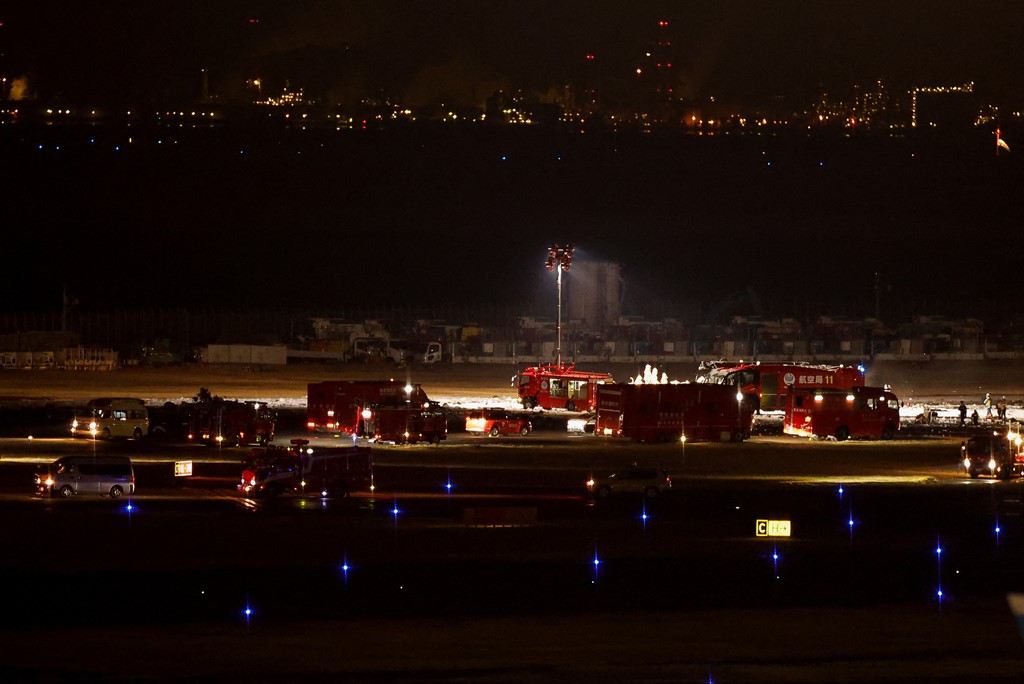
Firefighters work on Coast Guard aircraft
Fire crews are continuing to work on the Coast Guard aircraft that collided with the Japan Airlines flight.
Six crew members were on board the Coast Guard flight, which was heading to provide earthquake relief.
Five of them were killed, while the pilot managed to escape. Their condition is unclear.
Leave a Reply