The Galleria Vittorio Emanuele II became a cathedral of Italian craft on Tuesday night, as A-listers and artisans gathered under its glass dome for a spectacle that honoured the past while staring down the age of AI.
MILAN — The rain had stopped by early evening, leaving the mosaic floors of the Galleria Vittorio Emanuele II slick with reflected light from the iron-and-glass ceiling. Tourists were cleared out by late afternoon, replaced by a front row that read like a who’s who of Italian fashion: Donatella Versace in black, Miuccia Prada arriving quietly, Domenico Dolce and Stefano Gabbana together. They had come not for a typical runway show, but for the fifth edition of Vogue World — and the first to plant itself in the country whose craftsmanship it was designed to celebrate.
The theme, Where the Future is Made by Hand, was a statement of intent. In an era when artificial intelligence can generate a collection in seconds, Vogue chose to fill Milan’s oldest active shopping arcade with performers, models, and artisans, dividing the production into five thematic acts that traced Italy’s creative lineage from the Renaissance to the digital present. The stakes felt deliberate: this was fashion’s argument that the human hand still matters.
The Renaissance, Reimagined
The first act, The Artisanal Revolution, set the tone. Gigi Hadid opened the show in a dramatic period-inspired Valentino gown that seemed pulled from a Renaissance portrait, her cheeks flushed with the layered, painterly blush that makeup artist Dame Pat McGrath had designed to evoke Raphael and Botticelli.
The beauty direction was meticulous: sfumato-inspired contours, white highlighter at the inner corners of eyes, and hair styled into shapes that referenced Renaissance imagery and Leonardo da Vinci’s Lady With an Ermine. The entire opening section was conceived around rich brocades, lace, ornament and hand-worked surfaces, connecting fashion to the broader culture of Italian Renaissance craftsmanship.
But it was J Balvin who provided the evening’s first surprise. The Colombian singer appeared during the opener in a pink-and-black brocade three-piece suit by Dolce & Gabbana, a gold gemstone necklace at his throat, walking with the easy confidence of someone who had done this before. The crowd, momentarily uncertain, then delighted, applauded.
K-pop star Ejae made her runway debut in an archival Roberto Capucci tiered gown of blue and black, while Jeremy Pope and Mariacarla Boscono moved through the tableau of velvets, laces, and embroideries.
Power Dressing and the Industrial Age
The second act, The Industrial Revolution, was where the evening’s historical narrative sharpened. Eva Herzigová — a supermodel whose career spans the very decades the act referenced — walked in an Armani autumn/winter 2026 three-piece suit, her collar deliberately prominent, Church’s sandal-moccasins on her feet.
The look was a living archive: the all’ominile style that Giorgio Armani had defined in the 1980s and 1990s, when women adopted menswear tailoring to claim spaces of power. Herzigová wore it not as nostalgia but as evidence — that Armani’s revolution was, in its own way, as industrial as the factories of Turin.
That same act brought Adriana Lima back to the runway in an archival Giorgio Armani autumn/winter 1993 pinstripe suit, its caramel buttons a quiet contrast against the anthracite wool. The throughline was clear: Italian fashion did not merely dress the industrial age; it gave it a uniform.
Cardi B, Jennifer Lopez, and the Art of the Print
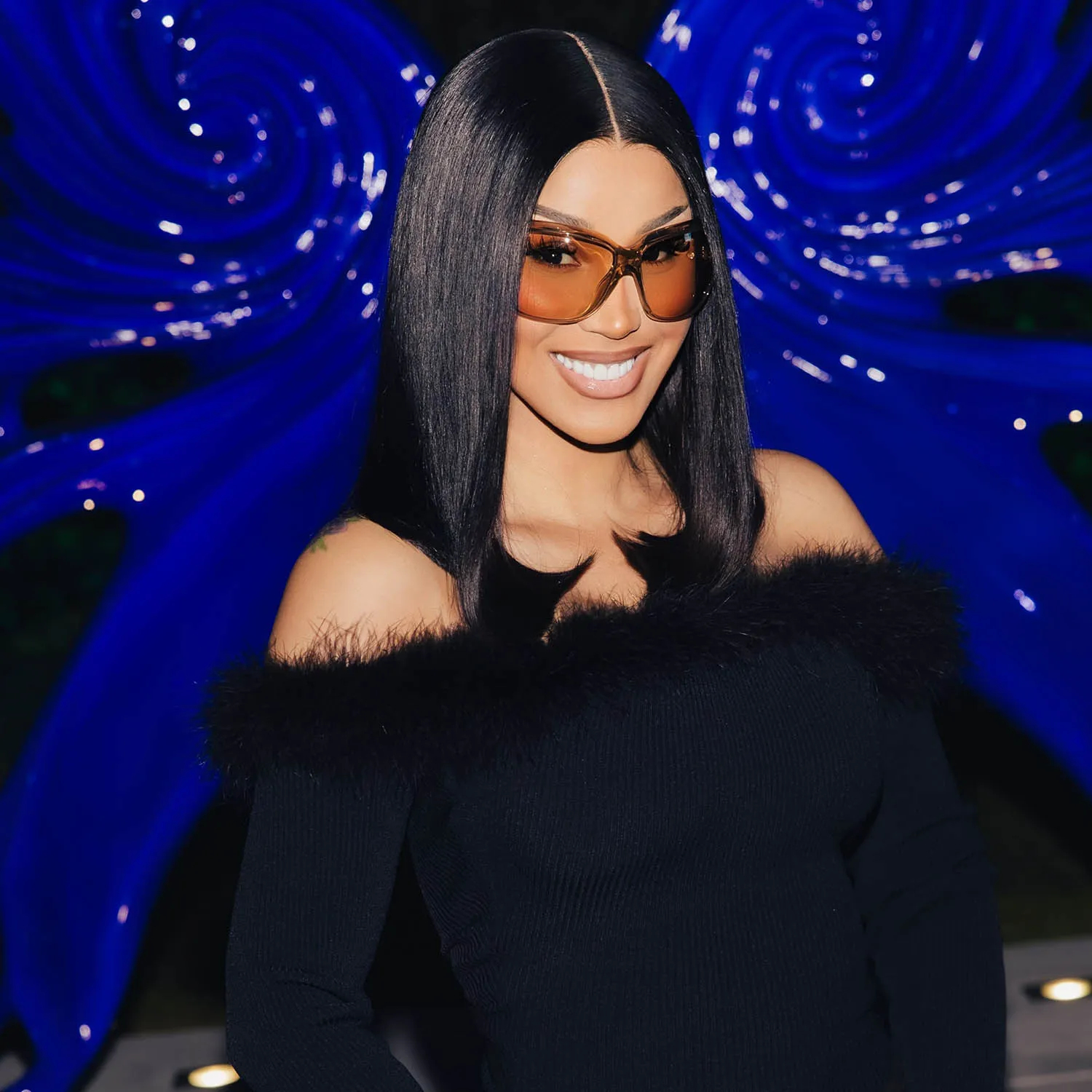
If the early acts leaned into heritage, the evening’s midpoint turned up the volume. Cardi B took to the runway in a spring 2018 Versace dress printed with pop-art renditions of vintage Vogue covers, part of the Patterns section celebrating Italian maximalism.
The dress was itself a piece of history: Donatella Versace had designed that collection as a tribute to her brother Gianni, twenty years after his death, reinterpreting his most legendary looks through a pop-culture lens. Cardi’s accessories — gold, diamond-encrusted Tiffany & Co. bone cuffs — only amplified the point. This was archive as spectacle, and she wore it like armour.
Jennifer Lopez had already made her mark on the red carpet in a black, full-skirted Dolce & Gabbana ballgown before being ushered, mid-show, from the audience to centre stage. The moment was unscripted-feeling, the kind of glamorous disruption that Vogue World has built its reputation on.
Earlier, Alicia Keys had performed, and Italian ballet star Roberto Bolle brought a different kind of physical artistry to the evening.
The Age of Intelligence — and Its Limits
The fourth act, The Age of Intelligence, was the most conceptually ambitious and, perhaps, the most uneven. MGK walked in a neon orange Byblos suit, smoking a cigarette with studied defiance, behind Alex Consani in a bubblegum pink Bottega Veneta dress made from recycled fibreglass.
The act was designed to nod to Milan as a hub where research, manufacturing, and creativity meet — and to Italian tech fabrics that have shaped sportswear giants like Moncler and Prada.
But amid the smoke and the neon, the argument felt less about technology than about tension: what happens when the handmade meets the algorithm?
The answer, at least on this night, came from the ceiling.
In the show’s final moments, thousands of tiny handmade paper dragonflies descended over the crowd, a cascade of paper and wire that seemed to suspend the evening between craft and wonder.
The objects were designed by Jony Ive’s LoveFrom creative studio over a months-long process, with inspirations ranging from dragonflies and sycamore seeds to Milanese lace, Venetian tile mosaics and the architecture of the Galleria.
The team also used software engineering tools to simulate how the objects would move through the vast interior before testing their release physically. The result was a striking convergence of technology and craftsmanship: digital tools helped design and test the spectacle, while the final objects themselves were made by hand.
A Legacy Beyond the Runway
The evening’s deeper purpose had been announced months earlier. Vogue World was also tied to fundraising for the Quarto Oggiaro Library in northwestern Milan, reinforcing the idea that the event was intended to connect fashion with wider cultural life.
The setting itself carried historical weight. The Galleria Vittorio Emanuele II was completed in the 19th century and has long served as one of Milan’s defining cultural and architectural landmarks, linking Piazza del Duomo with Piazza della Scala beneath its celebrated iron-and-glass roof.
Anna Wintour and Vogue positioned the Milan event around the continuing importance of craftsmanship at a moment when technology and artificial intelligence are rapidly changing creative industries. Vogue Italia’s Francesca Ragazzi described the occasion as an opportunity to celebrate the story of Made in Italy and its traditions of genius and craftsmanship in the era of AI.
As guests filed out into the Milanese night, the Galleria returned to its usual rhythm. But for a few hours, it had held a question that the fashion industry will spend the coming season answering: in the age of intelligence, what is made by hand worth?
Vogue World’s answer was written not only into the clothes but into the architecture, the performances, the artisanship and the thousands of handmade objects that floated beneath the Galleria’s dome. The future, the evening suggested, does not necessarily require abandoning the hand that made the past.


The images above are positioned to illustrate Gigi Hadid’s Renaissance-inspired opening look and the handmade paper-object finale described in the article.
Leave a Reply