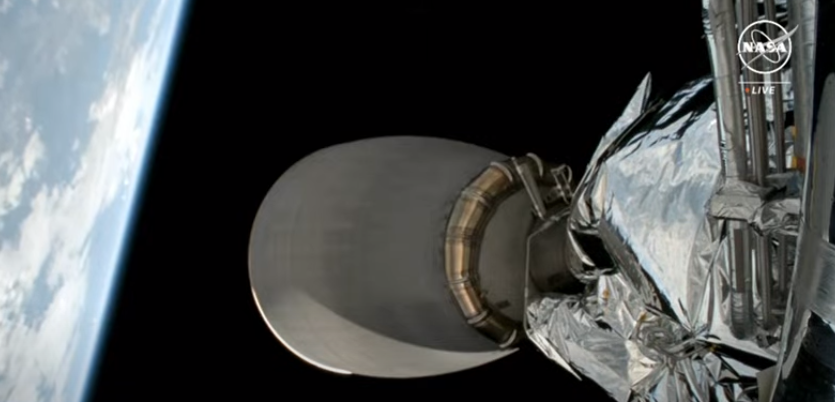
The UK’s role in the IM-1 mission will play a “key part” in NASA’s programme to send humans back to the moon.
A Canadian space technology company with offices in Oxfordshire, MDA UK, has developed landing sensors for the mission with funding from the UK Space Agency (UKSA).
UKSA has spent £3.4m, spread across these three Intuitive Machines missions as part of its partnership with MDA UK.
“As interest in lunar exploration grows around the world, this mission will see Intuitive Machines and MDA UK play a key part in developing services that will be integral to NASA’s Artemis programme, contributing to science that will improve our understanding of the moon and how we can interact with it sustainably to support future crewed missions,” said UKSA chief executive Dr Paul Bate.
NASA’s Artemis programme aims to put US boots back on the moon in 2026, with numerous launches taking place before then aimed at preparing for the mission.
“MDA UK is developing crucial technologies – such as the rangefinder that will help guide the mission spacecraft to the lunar south pole – providing another example of how UK-based expertise is increasingly sought after for international science and exploration missions,” said Dr Bate.
Mapped: A history of moon landings
Moon missions have historically been dominated by the United States and USSR.
In a frantic decade between 1966 and 1976, the Soviet Union’s Interkosmos made eight touchdowns with its Luna programme; NASA landed five Surveyor probes and six crewed Apollo craft.
Then there’s a long pause. Not until 2013 did another spacecraft make it to the moon – China’s Chang’e 3.
India and Japan are the only other nations to successfully land in the dust, though Israel came close.
If you look at a map of all the touchdowns, it’s striking for two reasons.

Firstly, only one – China’s Chang’e 4 – has landed on the far side of the moon, beyond the reach of direct radio communications with Earth.
Secondly, only India’s Chandrayaan-3 has braved the moon’s south pole, where cliffs and boulders make it harder to find a suitable landing site, and heavy shadows from the sun, low on the horizon, make hazards harder to spot and the descent more perilous.
But Chandrayaan-3 was the pioneer. Several US missions will head for the pole this year, including IM-1, and an international armada of spacecraft will follow.
Leave a Reply