Nigeria’s news cycle on Monday, August 10, 2026, is being shaped by a mixture of political tension, economic pressures, security operations and major sporting developments. With the 2027 presidential election already beginning to influence national politics, attention is also focused on the forthcoming Osun State governorship election and the activities of the major political camps.
Meanwhile, the continuing cost-of-living crisis remains a major concern for households, even as financial markets show signs of improvement. Security agencies are reporting fresh operations against terrorists and kidnappers, while the Super Falcons’ elimination from the 2026 Women’s Africa Cup of Nations has generated widespread disappointment.
Cost of Living Remains a Major Concern for Nigerians
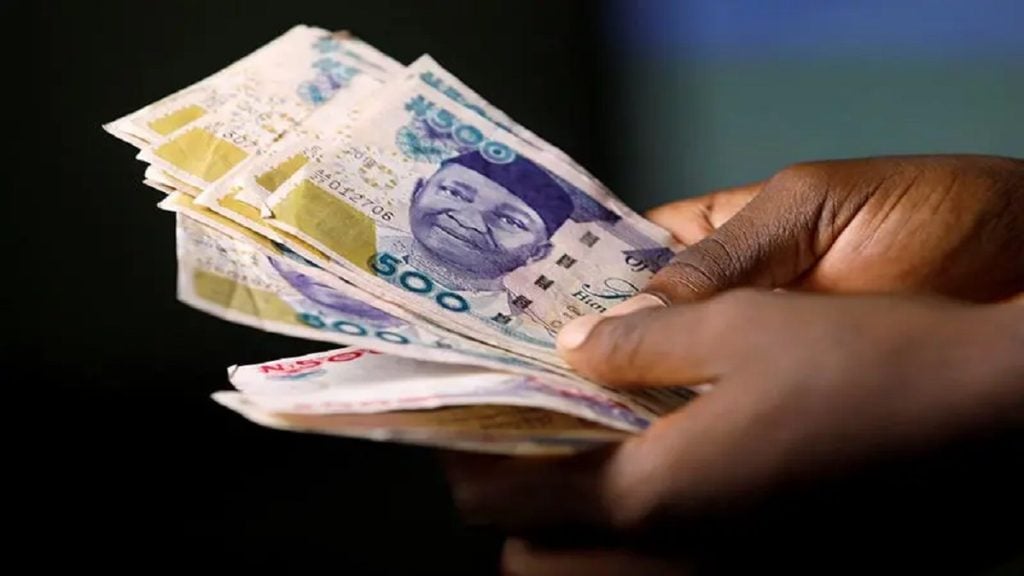
The rising cost of living remains one of the biggest stories in Nigeria as households continue to struggle with the effects of inflation, higher food and transport costs and the wider consequences of economic reforms introduced by President Bola Tinubu’s administration.
A Reuters report published today describes the economic pressure facing ordinary Nigerians as the country moves closer to another election cycle. Although some of the government’s reforms have improved investor sentiment and helped stabilise aspects of the economy, the benefits have not been evenly distributed across the population.
The removal of fuel subsidies, changes to the exchange-rate regime and reductions in electricity subsidies have contributed to substantial increases in the cost of essential goods and services. For many households, salaries have struggled to keep pace with the increase in everyday expenses.
The situation presents a difficult political challenge for the administration. While government officials continue to argue that the reforms are necessary to place Nigeria’s economy on a more sustainable footing, ordinary citizens remain focused on whether their incomes can cover food, housing, transportation, education and healthcare.
Reuters reported that capital inflows into Nigeria have reached a six-year high and the stock market has performed strongly, but that investment optimism has not translated into equivalent improvements in household finances. (Reuters)
Naira Opens the Week Relatively Stable Against the Dollar
The naira began the new trading week relatively stable against the United States dollar, providing another closely watched economic development.
Reports from Monday put the official exchange rate at around ₦1,362.55 to the dollar. The relative stability comes after significant volatility in Nigeria’s foreign-exchange market over the past several years.
Currency movements remain extremely important to Nigerians because the exchange rate influences the cost of imported food, machinery, medicine, vehicles, electronics and industrial inputs. Businesses also closely monitor the naira because exchange-rate changes can significantly affect operating costs and pricing.
The recent performance of the currency is therefore being watched alongside inflation and interest rates as investors and households assess whether Nigeria’s economic reforms are beginning to produce more sustained stability.
Nigeria’s Economy Expands for a Second Consecutive Month
There was also positive economic news on Monday after the Central Bank of Nigeria reported that economic activity expanded for a second consecutive month in July.
The CBN Purchasing Managers’ Index rose to 51.1 points, according to reports, placing the overall measure above the 50-point threshold that separates expansion from contraction. However, the industrial sector remained in contraction, showing that economic recovery is still uneven.
The latest figures provide some evidence that economic activity is improving in parts of the Nigerian economy. However, the continued weakness in industry highlights the challenges facing manufacturers and other businesses dealing with high production costs, financing constraints, energy expenses and weak consumer purchasing power.
The figures therefore present a mixed picture. Nigeria’s economy is showing signs of expansion, but businesses and households continue to face significant structural pressures.
Osun Governorship Election Dominates Political Attention
Political attention is increasingly focused on Osun State as the governorship election approaches.
The election is scheduled for August 15, and political parties and candidates are intensifying their campaigns and mobilisation efforts across the state. The contest has attracted particular attention because of the wider political implications for the major parties ahead of the 2027 general elections.
The political atmosphere has become increasingly heated, with competing camps exchanging accusations and appealing to voters ahead of the poll. Concerns about security and the credibility of the electoral process have also become part of the campaign debate.
On Monday, women in Osogbo reportedly marched to the state police command, expressing concerns about the political atmosphere and urging authorities to ensure that citizens are allowed to vote peacefully.
The election is being watched beyond Osun because its outcome could provide an important indication of the strength of the major political parties ahead of the 2027 presidential contest.
Tinubu, Atiku and Obi Remain Central to 2027 Political Calculations
Nigeria’s political class is already looking beyond the Osun election toward the 2027 presidential race.
President Bola Tinubu is expected to seek another term, while former Vice-President Atiku Abubakar and former Anambra State governor Peter Obi remain prominent figures in the emerging opposition landscape.
Recent political developments indicate that the country’s major political camps are already positioning themselves for what is likely to be a highly competitive election.
The political calculations are complicated by the emergence of new alliances and attempts to consolidate opposition support. Tinubu’s governing coalition continues to seek wider political backing, while opposition figures face the challenge of determining whether they can work together sufficiently to present a serious national alternative.
The 2027 contest is therefore beginning much earlier than the formal campaign period, with political alliances, endorsements and grassroots mobilisation already taking shape.
Nigerian Army Foils ISWAP Attack on Gajiram Base
Security operations remain another major part of Monday’s news.
The Nigerian Army reported that troops at a Forward Operating Base in Gajiram, Nganzai Local Government Area of Borno State, successfully repelled an overnight assault by fighters believed to belong to the Islamic State West Africa Province.
The attack highlights the continuing security challenge in northeastern Nigeria, where insurgent groups remain capable of launching attacks against military positions despite sustained counter-insurgency operations.
Military operations in the region have increasingly focused on preventing insurgents from regaining territory and disrupting their ability to attack civilian communities and security installations.
The reported repulsion of the Gajiram attack is therefore being viewed as another operation in the continuing struggle against insurgency in the northeast.
Troops Arrest Alleged Kidnap Syndicate Commander in Enugu
The Nigerian military also reported an operation against kidnapping in Enugu State.
Troops reportedly arrested a suspected commander of a kidnapping syndicate and recovered four AK-47 rifles and ammunition during the operation.
Kidnapping remains one of Nigeria’s most persistent security problems, affecting communities, travellers, farmers and businesses in different parts of the country. Security agencies have increasingly targeted not only the individuals carrying out kidnappings but also the networks responsible for organising, financing and facilitating the crimes.
The reported arrest could therefore prove significant if investigators are able to obtain information that leads to the identification and arrest of additional members of the alleged syndicate.
The suspects remain subject to due process, and allegations against them will ultimately have to be established through the appropriate legal proceedings.
Nigeria Faces Disappointment After Super Falcons Exit WAFCON
Nigeria’s Super Falcons suffered a major setback at the 2026 Women’s Africa Cup of Nations after being eliminated by Cameroon in the quarter-finals.
The result ended Nigeria’s defence of the continental title and generated considerable disappointment among supporters, particularly because the Super Falcons are the most successful women’s national team in African football.
The defeat was particularly significant because Nigeria entered the tournament with a strong historical record and expectations of another deep run. Cameroon, however, produced the result needed to eliminate the defending champions and advance.
Nigeria’s exit also has consequences beyond the WAFCON title. The tournament serves as part of the qualification pathway for the 2027 FIFA Women’s World Cup, meaning the Falcons must now navigate the subsequent qualification process to secure their place at the global tournament.
The defeat has already prompted discussions about the team’s performance, preparation and the future direction of women’s football in Nigeria.
Nigeria Withdraws From World Flag Football Championships
Nigeria’s men’s and women’s flag football teams will miss the 2026 World Championships in Düsseldorf, Germany, after failing to secure the necessary visas.
The International Federation of American Football confirmed Nigeria’s withdrawal on Monday. The tournament is particularly important because it forms part of the qualification pathway for the sport’s Olympic ambitions.
The development is a setback for Nigerian flag football, especially as the country had been preparing to compete internationally. The withdrawal was attributed to visa difficulties rather than sporting performance.
Nigeria will still have another opportunity to pursue qualification through the African continental championship scheduled for 2027.
NACCIMA Seeks Chinese Investment for $1 Trillion Economy
Nigeria’s organised private sector is continuing to look for foreign investment as the country pursues its ambitious long-term economic growth objectives.
The Nigerian Association of Chambers of Commerce, Industry, Mines and Agriculture has been engaging Chinese investors as part of efforts to strengthen industrialisation and attract capital into the Nigerian economy.
NACCIMA’s engagement with Chinese businesses reflects the growing importance of Nigeria-China economic relations. China is already an important source of manufactured goods, infrastructure financing, equipment and commercial investment for Nigeria.
The push for additional Chinese investment comes as Nigeria seeks to increase domestic manufacturing, develop infrastructure, expand exports and reduce its dependence on imported finished products.
For Nigerian policymakers and business leaders, attracting investment that creates local production capacity and employment is increasingly regarded as more valuable than simply increasing the volume of imported goods.
Nigeria’s Electricity Challenge Remains a National Priority
Electricity supply continues to be a major issue for Nigeria’s economic development, with energy-sector stakeholders calling for greater optimisation of the country’s power infrastructure.
Jennifer Adighije, managing director and chief executive of the Niger Delta Power Holding Company, has called for stronger efforts to optimise electricity generation and distribution as part of the country’s broader socio-economic development.
Reliable electricity remains crucial to Nigerian businesses, manufacturers, hospitals, schools and households. Companies that depend on generators face significantly higher operating costs, while unreliable supply continues to affect productivity.
The electricity sector therefore remains one of the areas where improvements could have a broad impact on the economy. Better generation, transmission and distribution could reduce business costs and improve the competitiveness of Nigerian industries.
Nigeria’s Corporate Debt Market Faces New Pressure
Nigeria’s corporate debt market is also attracting attention following a major development involving Geregu Power Plc.
The company reportedly defaulted on its N40.09 billion Series 1 Senior Unsecured Bond, including a missed coupon payment and scheduled principal repayment. The development has been described as an unusual event in Nigeria’s corporate debt market.
A significant corporate default can have implications beyond the individual company because investors and financial institutions may reassess the risks associated with corporate debt.
The development will therefore be watched by investors, regulators and other companies that rely on the debt market to raise funds for expansion and infrastructure projects.
Census Funding Also Comes Under Scrutiny
Nigeria’s long-delayed national population and housing census is again attracting attention following reports that the country has allocated about N219 billion to the exercise between 2021 and 2026.
The census has been postponed several times, making its eventual implementation an important national issue.
A reliable population census is essential for planning public services, infrastructure, healthcare, education and electoral representation. Accurate demographic data also helps government agencies determine where resources are most needed.
The scale of the reported financial allocation has nevertheless raised questions about the cost of the prolonged preparations and the consequences of repeated delays.
Nigeria’s Economic Recovery Still Faces a Difficult Test
The combination of today’s economic stories illustrates the complicated state of Nigeria’s economy.
On one hand, the naira is showing relative stability, economic activity has expanded for a second consecutive month and investor interest remains strong. On the other hand, households continue to struggle with high living costs, manufacturers face difficult operating conditions and businesses remain concerned about financing and electricity.
This divergence between financial-market performance and everyday economic experience is becoming one of the central issues in Nigeria’s political debate.
Investors may be encouraged by reforms that improve macroeconomic stability, but ordinary Nigerians are likely to judge the economy primarily by the price of food, transportation, rent, electricity and other necessities.
Final Thoughts
Nigeria’s news cycle today reflects a country facing major political, economic, security and social challenges simultaneously.
The approaching Osun governorship election is intensifying political activity and providing an early test of the strength of the country’s major political forces ahead of 2027. At the same time, the cost-of-living crisis remains a major concern, despite signs that some economic indicators are improving.
Security forces are continuing operations against insurgents and kidnappers, with fresh reports of military successes in Borno and Enugu. In sport, the Super Falcons’ elimination from the WAFCON has disappointed supporters, while Nigeria’s withdrawal from the World Flag Football Championships because of visa problems represents another setback.
The coming weeks will be particularly important for Nigeria as the Osun election approaches and economic indicators continue to reveal a mixed picture. The country’s ability to convert improved financial-market confidence into better living conditions for ordinary citizens will remain one of the biggest tests facing the Tinubu administration.
Leave a Reply