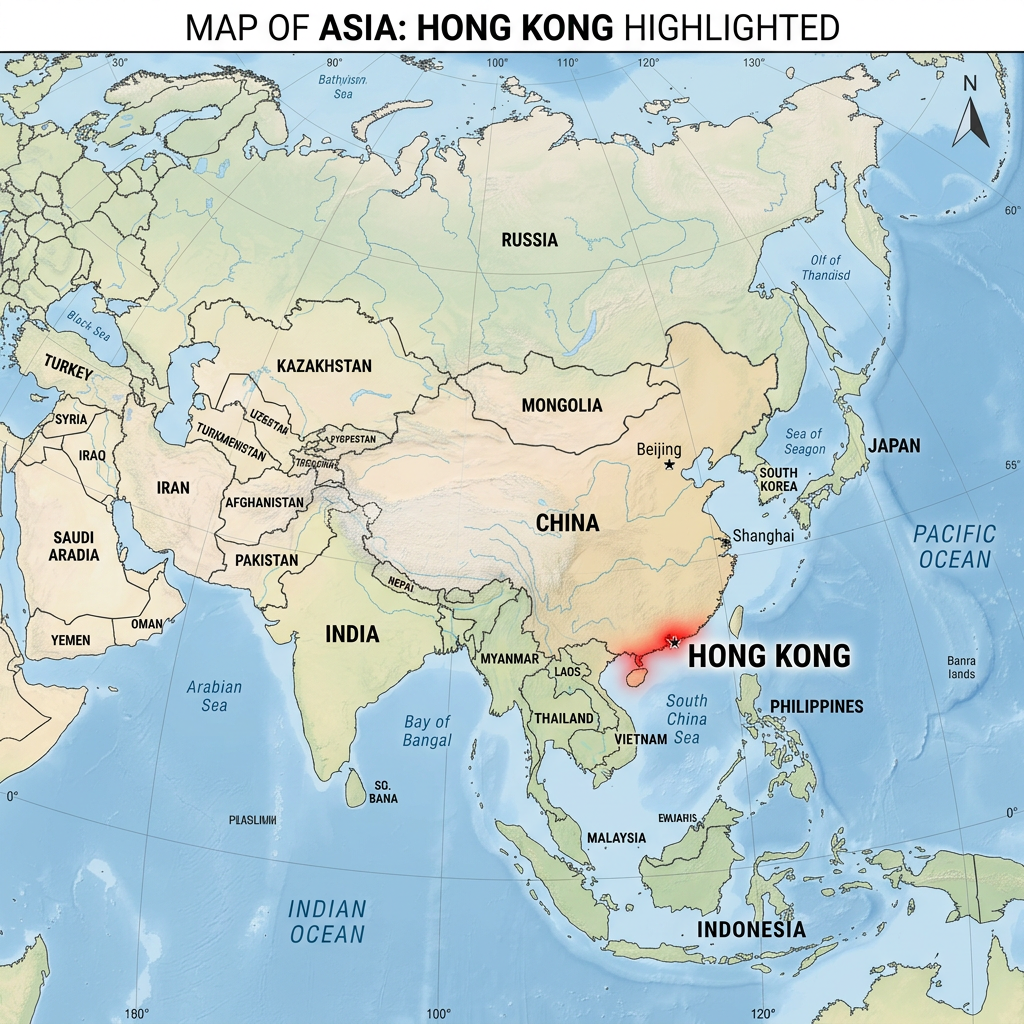
China’s news cycle on Monday, August 10, 2026, is being dominated by the impact of Typhoon Dolphin, which has brought heavy rain, flooding and major travel disruptions to eastern China. At the same time, economic developments, China’s push to internationalise the yuan, the rapid expansion of the country’s robotics industry and renewed tensions surrounding Taiwan are attracting significant attention.
Typhoon Dolphin Forces More Than One Million People to Evacuate
Typhoon Dolphin is the biggest immediate story in China today after the storm struck the country’s eastern coast and brought torrential rain, powerful winds and widespread disruption. More than one million people were evacuated as authorities prepared for flooding and landslides, particularly around Shanghai and other areas of eastern China.
The storm has also caused extensive disruption to transportation. Hundreds of flights have been cancelled or grounded, while heavy rainfall has affected roads and other forms of transport. Authorities have warned that the storm’s effects could continue even as its winds weaken, because large volumes of rain can create flooding and landslide risks well after a tropical system makes landfall.
The scale of the evacuations demonstrates the seriousness with which Chinese authorities are treating the storm. Eastern China contains some of the country’s most densely populated urban and industrial areas, meaning severe weather can quickly affect millions of residents as well as factories, logistics networks and transportation systems.
Shanghai has been particularly affected by heavy rainfall associated with the storm. Officials have been working to manage flooding and maintain essential services while residents have been urged to remain cautious as further rainfall is expected.
China’s Central Bank Pushes for Greater International Use of the Yuan
China’s central bank has announced plans to expand the international use of the yuan as part of its latest five-year plan for the financial sector.
The People’s Bank of China said it would work to broaden the use of the Chinese currency in international trade and investment while maintaining a stable yuan exchange rate. The plan also includes efforts to strengthen financial support for domestic consumption and manage risks in key sectors.
The move forms part of Beijing’s broader effort to increase the role of the yuan in the global financial system. China has for years sought to reduce its dependence on the US dollar in international transactions, particularly in trade and investment involving its major economic partners.
Greater international use of the yuan could potentially give Chinese companies more flexibility in conducting cross-border business while strengthening China’s influence in global finance.
However, expanding the currency’s international role also depends on confidence in China’s financial markets, the stability of the currency and the openness of the country’s financial system.
China’s Export Machine Continues to Expand Despite Weak Domestic Demand
China’s external trade remains a major economic story as the country continues to rely heavily on exports despite signs of weakness in domestic demand.
China’s exports rose about 24 percent year-on-year in July, contributing to a trade surplus of roughly $113 billion. The strong export performance contrasts with weaker domestic indicators, including sluggish retail activity.
The development has intensified international discussion about what some policymakers describe as a new “China shock.” Chinese manufacturers are increasingly competitive in sectors such as electric vehicles, batteries and green technologies, allowing them to expand their presence in overseas markets.
The export strength is particularly important because China’s domestic economy has faced challenges from weak consumer demand and intense price competition in several industries.
Chinese companies have also increasingly explored overseas production as they seek to navigate trade barriers and tariffs. This has created a more complicated global manufacturing landscape, with Chinese firms expanding their international footprint while continuing to rely heavily on their domestic industrial base.
Unitree Robotics IPO Attracts Extraordinary Investor Demand
China’s rapidly expanding robotics industry has produced another major financial story after Unitree, a Chinese robotics manufacturer, reported extraordinary demand for its Shanghai initial public offering.
The company’s approximately $900 million IPO was reportedly more than 8,000 times oversubscribed by retail investors.
The level of demand highlights the enormous enthusiasm surrounding China’s robotics sector. Beijing has identified robotics, artificial intelligence and advanced manufacturing as strategic industries, while Chinese companies have rapidly increased their development of humanoid robots and other automated systems.
The strong investor response also reflects broader expectations that robotics could become one of the next major areas of technological competition between China and the United States.
China’s robotics industry has expanded rapidly because of the country’s enormous manufacturing base, extensive supply chains and large domestic market. The combination provides Chinese companies with the ability to develop, manufacture and test robots on a scale that could potentially accelerate commercial deployment.
China Strengthens Its Position in Humanoid Robotics
China’s broader robotics industry is also attracting attention as the country continues to expand its role in global humanoid robot production.
Chinese companies are increasingly competing in areas ranging from industrial automation to humanoid robots designed to perform tasks in environments traditionally occupied by humans. Industry reports indicate that China has become a major force in the production and deployment of humanoid robots.
The development is part of a wider transformation in China’s manufacturing economy. Beijing has been encouraging companies to move toward higher-value industries, including robotics, artificial intelligence, electric vehicles, advanced batteries and other technologies.
For China, the objective is not simply to manufacture more products but to increase the technological sophistication of the country’s industrial base.
Taiwan Conducts Large-Scale Military Exercises
Taiwan is conducting major military exercises this week, with the drills designed to test the island’s ability to respond to a potential Chinese attack.
Taiwan is holding its annual war games over a 10-day period and has introduced new measures, including simulated disruptions to mobile internet services. The exercises are intended to test Taiwan’s resilience in a range of possible conflict scenarios.
Taiwan’s military exercises are being closely watched in Beijing because China claims Taiwan as part of its territory and has not ruled out the use of force to bring the island under its control.
The exercises also involve scenarios designed to test the response to modern forms of warfare, including attacks on communications and infrastructure.
The military developments add another layer to already complicated relations between Beijing, Taipei and Washington.
Taiwan-China Tensions Remain a Major Regional Concern
Developments surrounding Taiwan continue to be one of the most sensitive geopolitical issues affecting China.
Taiwan’s military preparations are taking place against a background of continued disagreements between Beijing and Taipei and heightened attention from the United States and its regional allies.
For Beijing, Taiwan remains a core national issue and the Chinese government continues to insist that the island is part of China. Taiwan’s government, meanwhile, maintains its own political and security systems and has sought to strengthen its ability to respond to a potential military crisis.
The latest military exercises demonstrate that Taiwan is preparing for a range of scenarios rather than assuming that a conflict would necessarily begin with a conventional invasion.
The situation remains particularly significant for the global economy because the Taiwan Strait is one of the world’s most important maritime routes and Taiwan plays a crucial role in the global semiconductor industry.
China’s Oil Demand Helps Offset Middle East Supply Disruptions
China’s energy consumption is also attracting attention as global oil markets deal with disruption involving Middle Eastern supplies and uncertainty around the Strait of Hormuz.
China has been reducing crude oil demand sufficiently to help offset reduced shipments from the Middle East to other parts of Asia, according to recent market analysis.
China is the world’s largest importer of crude oil, meaning changes in its energy consumption can have significant consequences for international oil markets.
Reduced Chinese demand can help ease pressure on global supplies when geopolitical disruptions threaten shipments. At the same time, China’s energy needs remain enormous because of its industrial economy, transportation sector and manufacturing base.
Oil prices have nevertheless remained volatile amid uncertainty over the future of shipping through the Strait of Hormuz and wider tensions involving Iran and the United States.
Germany’s Trade Deficit With China Widens
Economic ties between China and Europe are also in the spotlight.
Preliminary data showed that Germany’s trade deficit with China widened during the first half of 2026, even though China remained Germany’s largest trading partner.
The figures illustrate the complicated nature of Europe’s relationship with China. Germany depends heavily on Chinese products and industrial supply chains, while Chinese manufacturers have become increasingly competitive across sectors ranging from automobiles to electronics and machinery.
At the same time, European governments have been debating how to reduce strategic vulnerabilities and protect domestic industries without damaging their economic relationship with China.
The trade figures therefore have implications beyond the two countries. Germany is Europe’s largest economy, and developments in its commercial relationship with China can influence broader European trade policy.
Shein Faces Challenges Moving Chinese Production Overseas
The international expansion of Chinese manufacturing is also illustrated by the experience of online fashion retailer Shein.
The company has encouraged major Chinese suppliers to establish manufacturing operations in Vietnam, but the move has encountered difficulties.
The situation highlights one of the challenges facing Chinese companies as they attempt to diversify production away from China in response to geopolitical tensions and trade restrictions.
China’s enormous manufacturing ecosystem remains difficult to replicate elsewhere. Suppliers benefit from dense networks of component manufacturers, logistics providers, skilled workers and specialised industrial infrastructure.
The difficulties experienced by companies attempting to move production therefore demonstrate why China’s manufacturing base remains highly competitive despite increasing pressure to diversify global supply chains.
China’s Manufacturing Transformation Continues
Taken together, today’s economic stories point to a broader transformation taking place inside China.
The country is attempting to move beyond its traditional role as the world’s factory and become a leading producer of advanced technologies. Robotics, artificial intelligence, electric vehicles, batteries and other high-tech industries are increasingly central to Beijing’s economic strategy.
At the same time, China continues to rely heavily on its enormous manufacturing capacity and export sector.
This creates a complicated economic picture. Strong exports and technological development provide important sources of growth, but weak domestic consumption and intense competition in some industries remain challenges.
Beijing’s push to expand the international use of the yuan is another component of the strategy, potentially giving Chinese companies greater financial independence as the country becomes more deeply involved in global trade.
Final Thoughts
China’s news cycle today reflects the extraordinary range of challenges and opportunities facing the world’s second-largest economy.
The immediate concern is Typhoon Dolphin, which has forced more than one million people to evacuate and disrupted flights, transport and daily life across eastern China. At the same time, Beijing is pursuing longer-term economic goals, including greater international use of the yuan and the expansion of high-tech industries.
The extraordinary investor demand for Unitree’s IPO demonstrates the enthusiasm surrounding China’s robotics sector, while the country’s strong export performance shows that Chinese manufacturing remains a major force in the global economy.
Meanwhile, Taiwan’s large-scale military exercises are keeping security tensions in East Asia firmly in the international spotlight.
Together, these developments show a China dealing simultaneously with extreme weather, economic transformation, technological competition, financial reform and geopolitical tensions. The coming days are likely to provide further indications of how the government responds to the typhoon’s aftermath, domestic economic pressures and the country’s increasingly important role in global technology and trade.
Leave a Reply