In 2025, the conversation around mental health reached unprecedented heights. Celebrities across the globe—from Bollywood to Hollywood, from K-pop to the British music scene—have used their platforms to normalise discussions about depression, anxiety, burnout and the invisible battles that rage behind the spotlight. Yet for all the progress in destigmatisation, the crisis has only deepened. Musicians, actors and entertainers remain at a particularly high risk of suicide, with UK researchers finding suicide rates 20% higher than the population average for men in these fields and a staggering 69% higher for women. The glamour of fame, it turns out, masks a devastating reality: celebrity culture is a mental health battlefield, and too many are losing the war.
The Voices Breaking the Silence
The most powerful weapon against stigma has been the willingness of public figures to speak candidly about their struggles. In 2025, that willingness reached new levels of honesty.
Alia Bhatt, one of Bollywood’s biggest stars, revealed in podcast interviews that she had been clinically diagnosed with ADHD and anxiety, describing how overwhelm often manifests physically before she can rationalise it. “My body reacts before my mind understands what’s happening,” she shared, speaking matter-of-factly about attending therapy weekly and framing it as “mental organisation rather than crisis intervention”.
Deepika Padukone, who first spoke publicly about her depression a decade ago, was appointed India’s Mental Health Ambassador in 2025. What distinguished her advocacy this year was its grounding—she travelled to Saunsar in Madhya Pradesh, engaging directly with grassroots mental health initiatives. Addressing students, she said: “Feeling anxious or overwhelmed doesn’t mean something is wrong with you. Very often, it means you’ve been carrying too much for too long without acknowledging it”.
Bella Hadid, the supermodel who has endured over a decade of treatment for Lyme disease alongside her mental health battles, penned a raw Instagram message on her 29th birthday. “Something I’ve carried for many years is the weight of anxiety and depression,” she wrote. “It can sometimes feel all-consuming, paralyzing, and invisible to the outside world, leaving you in tears before starting your day, wondering why your mind feels so heavy when life around you seems so bright”. She spoke of the “deep sense of shame” that comes with mental health struggles and emphasised that access to mental health care is “a right, not a luxury”.
Robbie Williams, who has been open about his mental health for years, admitted in 2025 that he is an “Olympian at masking” his struggles. He described living with depression, isolation, and what he calls “inside tourettes”—intrusive thoughts that relentlessly assault his mind. “I was going through my own mental illness and anything good that’s happening to somebody that is in the throes of depression…” he reflected, the sentence trailing into the painful ambiguity of someone who knows that success and suffering can coexist.
Pepe Herrera, a Filipino actor-comedian, announced his departure from a reality competition to focus on his mental health, revealing he had been struggling with depression and anxiety attacks since he was 13 years old. “I managed to survive because I developed the ability to escape through band-aid solutions. I was sweeping everything under the rug, not dealing with traumatic experiences that I’m afraid to face, putting a mask on, making people laugh and all this time, I didn’t know that my body was keeping score”. He described experiencing chest pains, headaches, darker thoughts, and panic attacks that prevented him from sleeping. After three decades of being a people pleaser, he declared: “I decided to choose myself and my healing”.
Shona McGarty, the EastEnders actress, opened up about her “horrible” five-year battle with anxiety and depression, for which she takes medication. She admitted that her mental health “has stopped me from doing a lot of things I’ve always wanted to do,” and that joining I’m A Celebrity was her way of refusing to “let the anxiety win”. Growing up on screen from age nine, she learned to “fake it to make it”—a survival mechanism that ultimately took its toll.
Lady Gaga revealed that she required psychiatric care and was taking prescribed lithium during the filming of A Star Is Born, saying she feels “really lucky to be alive”. The demands of filming while touring eventually led to a breakdown—a reminder that even the most extraordinary talents are not immune to the ordinary ravages of overwork and stress.
Cara Delevingne, who has previously spoken about struggling with depression and becoming “very good at disassociating from emotion completely,” released debut songs inspired by her sobriety and mental health challenges. “I am a person, I’m flawed and I’m a human and we all have pain and suffering, but music can be the one connector of that,” she said.
Why Celebrities Are Particularly Vulnerable
The question that haunts these confessions is simple yet devastating: why do those who seem to have everything often suffer the most?
Psychotherapist Dr Sarah Boss, who runs luxury rehab retreats and counts A-list celebrities among her clients, offers a stark answer. The condition she sees overrepresented in celebrity clients is attachment trauma—caused by an unhealthy relationship with a parent.
“This is because they often come from highly successful families, so they are being looked after by people on payroll rather than their parents—it’s not a good start in life,” she explains. For first-generation celebrities, she notes, “they often have histories of harsh parenting”. Out of this hardship can breed creativity, but it also presents profound challenges with forming lasting relationships.
The celebrity lifestyle itself compounds these wounds. “Life as a celebrity requires more self regulation than what working in an office will require,” Dr Boss says. “It lacks structure and higher highs, like being on stage, but also the lows of isolation while touring”. For friends and partners of celebrities, it is hard to be part of someone’s life when everything is photographed or written about. “For the celebrity, this leads to a reliance on superficial friends—over time this leads to a feeling of being used and mistrust of others”. Many have lost their fundamental development years to rising fame, unable to build the strong relationships that ground ordinary lives.
The combination of attachment trauma, pressure and isolation frequently leads to substance abuse. “Substance abuse is a real issue for our clients, who are readily exposed to it, and are trying to self medicate the problems they are dealing with,” Dr Boss says.
Research backs these clinical observations. Studies have found that famous musicians tend to have a higher mortality risk than the general population, suggesting that fame itself may be a risk factor for early mortality. A high number of adverse experiences is associated with increased mental health problems, substance abuse and suicide.
MC Mong, the South Korean rapper, embodied this lethal combination. He recently confessed to attempting suicide due to extreme emotional distress, driven by years of relentless public scrutiny over military service evasion allegations and other controversies. He tearfully described breaking down when police arrived, showing the depth of his pain behind the public scandals. The cumulative pressure of legal investigations, media backlash, personal losses and health issues pushed him to a breaking point. His ordeal reflects a harsh reality faced by countless celebrities who struggle silently under public pressure.
The Statistics Tell a Grim Story
The anecdotal evidence is devastating, but the data is even more alarming. International researchers who examined mortality data from multiple countries found that musicians, actors and entertainers rank among the five occupational groups with the highest suicide mortality. In the UK, suicide rates are 20% higher than the population average for men in these fields and 69% higher for women.
Beyond the stereotype of the “tortured artist,” researchers point to specific aspects of entertainment work that influence mental health: financial instability, substance use disorders, anxiety and irregular sleep patterns. A study by Creators 4 Mental Health found that 10% of content creators report feeling suicidal thoughts related to their work—nearly double that of the broader US population.
The “27 Club”—the haunting list of musicians who died at 27, including Kurt Cobain, Janis Joplin, Jimi Hendrix and Amy Winehouse—is not merely a myth. It masks a public health problem: systems that amplify musicians’ psychological vulnerability. The common thread among many members of the 27 Club is the struggle with mental health.
Even elite athletes are not spared. According to data from the International Olympic Committee, 33.6% of elite athletes suffer from anxiety and depression. The figures remain alarming beyond retirement, as 26.4% continue to experience mental health issues once their athletic careers have ended.
When the Mask Slips: Tragedies That Shook the World
Behind every statistic is a human life. In September 2025, 26-year-old model and former Miss Universe contestant Tyra Spaulding was found dead at her home in what police are investigating as a suspected suicide. Just weeks before her death, she had uploaded a YouTube video titled “Don’t Be Sad,” in which she described daily battles with suicidal thoughts. “I’m fighting for my life, my mind is trying to kill me,” she said, adding that part of her wanted to live while another part wanted to die. Friends revealed she was “always smiling” and that “so many people would never have guessed what she was going through mentally”.
Her death sparked renewed conversations about mental health awareness and support, particularly for young people in the public eye. One Facebook user wrote: “Check on your black women friends, sisters, mothers and daughters. Create spaces where vulnerability is welcomed, not judged”.
In 2024, the inquest into the death of Robin Windsor, the former Strictly Come Dancing professional, concluded that he took his own life. The jury heard that being “vulnerable to rejection both emotionally and professionally” were factors in the decline of his mental health. His former dance partner, Lisa Riley, told the inquest that Windsor slipped “deeper and deeper into endless depression” after leaving the show, describing times of “never feeling good enough” and “imposter syndrome”.
The list goes on. Baek Se-hee, the South Korean author of the bestselling memoir I Want to Die But I Want to Eat Tteokbokki, died at 35 after a decade of treatment for dysthymia. Cheslie Kryst, former Miss USA, took her own life in 2022. Matthew Perry‘s death in 2023 exposed the dark underbelly of Hollywood’s relationship with ketamine, a drug initially prescribed for depression and anxiety that became a fatal addiction.
The Positive Power of Disclosure
Yet amid the darkness, there is light. Research has shown that when a public figure discloses a mental illness, it can motivate members of the public to reconsider their own health behaviours. A study in South Korea found that celebrity disclosures of panic disorder were associated with higher levels and steeper slopes in the monthly incidence of panic disorder diagnoses—suggesting that people sought help after seeing their idols speak out.
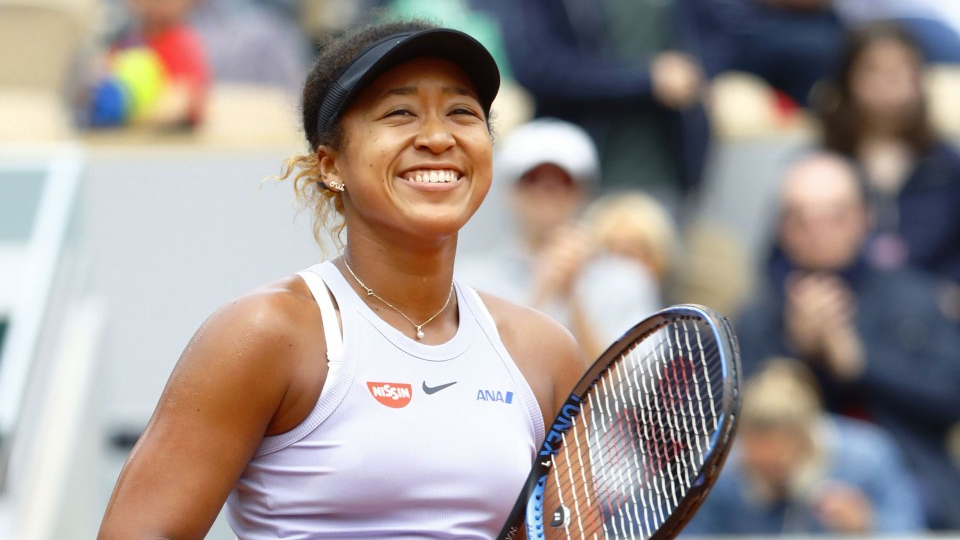
Celebrities are increasingly going public with their mental health struggles, using their fame to help destigmatise seeking help. Megan Thee Stallion was honoured with the Mental Health Champion of the Year Award for 2025 by The Trevor Project, joining previous recipients including Dua Lipa, Lil Nas X and Janelle Monáe. Simone Biles and Naomi Osaka have launched a global reckoning around mental health, becoming powerful role models for a generation of young people who face significant struggles with stress, mental exhaustion and anxiety. Simone Biles started her day with therapy before winning her fifth Olympic title in Paris 2024—a powerful demonstration that seeking help and achieving greatness are not mutually exclusive.
Ananya Panday spoke candidly in 2025 about the psychological cost of constant scrutiny, acknowledging that online trolling impacted her mental health deeply enough to seek therapy. “You think you’re strong enough to ignore it, but negativity settles quietly in your subconscious,” she said, reminding young audiences that confidence is not immunity.
Karan Johar spoke with striking candour about living with body dysmorphia, describing it not as insecurity but as a persistent sense of shame and repulsion. “It’s not about being unhappy with how you look. It’s about feeling disgusted by your own body,” he said, speaking about avoiding mirrors, swimming pools and intimacy with lights on. “Your body may change, but your mind doesn’t automatically catch up”.
Serena Terry, known on TikTok as Mammy Banter, found herself in the “depths of depression” despite selling out tours as a comedian. “A big part of my job is making people laugh, but I couldn’t even make myself smile,” she said. A turning point came with a diagnosis of combined ADHD, which she described as “absolutely life-changing”.
What Needs to Change
The mental health crisis among celebrities is not simply a collection of individual tragedies. It is a systemic failure—of an entertainment industry that exploits talent, of a media culture that devours its subjects, of a public that demands perfection while refusing to acknowledge the human cost.
Researchers argue that there is evidence available that could help build effective suicide prevention networks specifically for people in the entertainment industry. This requires acknowledging that the “tortured artist” stereotype is not romantic—it is lethal. It requires the industry to provide meaningful mental health support, not just when a star collapses but as a routine part of professional life. It requires reducing the relentless pressure of touring, content creation and public scrutiny that drives artists to burnout.
And it requires all of us—the audience, the fans, the consumers of celebrity culture—to recognise that the people we admire are, above all, people. As Fifth Solomon, who was diagnosed with bipolar disorder in 2025 after years of struggling with depression and anxiety, put it: “Just because someone looks okay on the outside doesn’t mean they aren’t fighting battles we don’t see. There are so many people out there just trying to survive and feel normal”.
A Call to Action
The stories shared in 2025 are not just confessions—they are calls to action. When Alia Bhatt speaks about weekly therapy, she normalises help-seeking. When Bella Hadid writes about the shame of depression, she dismantles it. When Pepe Herrera chooses himself over his career, he challenges the toxic notion that success must come at the expense of wellbeing.
But these individual acts of courage are not enough. The entertainment industry must change. Media must change. And we, as the public, must change.
We must stop treating celebrity breakdowns as gossip and start treating them as warnings. We must stop romanticising the “tortured artist” and start demanding that artists be protected. We must stop expecting perfection and start accepting humanity.
As Bella Hadid reminded her followers: “You are not alone. And I love you so much”. As Fifth Solomon emphasised: “Mental health is health. And just because you’re struggling doesn’t mean you’re weak or incapable”. As Megan Thee Stallion‘s advocacy demonstrates: using your voice to challenge stigma is not just courageous—it is transformative.
The spotlight will always have a shadow. But that shadow does not have to be a death sentence. By speaking out, by listening, by caring, and by demanding systemic change, we can ensure that the next generation of celebrities does not have to suffer in silence—or worse, lose their lives to battles we all knew they were fighting.
If you or someone you know is struggling with suicidal thoughts, anxiety, depression, or any mental health crisis, please seek immediate help from a doctor, mental health expert, or trusted individual. Helplines and support services are available to offer assistance and guidance. You are not alone. You are loved. You are worthy of help.
Leave a Reply