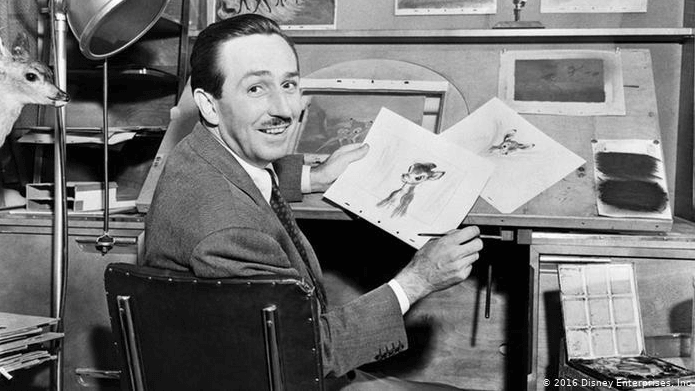
Since the death of Walt Disney in 1966, the company suffered in the animation industry, failing to reproduce massively successful productions. That lack of memorable films and characters was felt across its theme parks, as well.
Disneyland parks have relied heavily on the local population to stay profitable. Thus, to attract nearby residents, they require regular reinventions of the performative content inside the parks and the additions of new and exciting rides. The lack of successful films and recognizable characters had provided only minor updates to the park since 1964.
Nonetheless, some of the most extraordinary expansions happened during the first decade of Michael Eisner’s tenure as CEO of The Walt Disney Company, which in total lasted 21 years (1984-2005). As the head of Disney, he was bold and calculated, making strategic moves that increased the company’s international reach and even carried Disney through some tough times.
The Disney Renaissance Period
Since Michael Eisner headed Disney, he and Frank Wells, president and later COO of the company, found, to their amazement, a mountain of dusted material and assets that had a remarkable potential for the future of the company. They were excited and eager to exploit every last one of them. And so they did.
Eisner was very aggressive in expanding the parks, adding new resorts, and adopting a more profitable pricing strategy. He disagreed with the notion that when Walt Disney left this world, he also took with him the soul of Disney and the possibility of making it again the leading producer of original and timeless animation films.
Hence, he put a considerable focus on making quality, new animation films. Successful in his endeavor, he produced movies like “The Little Mermaid”, “Beauty and the Beast” and “The Lion King” that sparked what was later called the Disney Renaissance period. Now he had original Disney characters to promote and populate the parks.
Under Eisner’s guidance, Disney opened seven new parks around the world including “Disney’s Animal Kingdom”, “Disney’s California Adventure”, “Disneyland Paris” (initially Euro Disney), “Hong Kong Disneyland” and one of the best Disney parks, “Tokyo DisneySea”. Eisner encouraged and approved ambitious new rides and shows for both existing and new theme parks alongside the new parks.
These moves contributed greatly to the international expansion of Disney.
He didn’t stop there, however. He wanted to activate all of Disney’s assets and make them profitable. The Disney channel got new productions, aiming at claiming higher Saturday-morning numbers with cheaper animation. He cooperated with big names in the film industry to produce, act and perform on new products.
One of the most cash-producing decisions that the company made under Eisner was the release of its animated classic feature films on video. This unexpectedly lucrative decision was, in essence, tapping into an underutilized market and took advantage of a fascinating habit, persistent to this day, of young kids to watch animation movies a nightmarish (for their parents) amount of times.
Disney Stores, Cruises, and Lifesaving Moves
These successes fueled the expansions of the theme parks and drove significant profits with their physical products. With some service-oriented moves that made the client experience uniquely enjoyable, Disney nearly doubled their stores and even introduced their first one in London.
The initial fear that the increase of stores would compete with other retail outlets that sold Disney-licensed products was quickly busted, since instead of driving their sales down, every new Disney store increased the sales of Disney-related products of nearby stores, too.
In 1996 an original and highly profitable segment of The Walt Disney Company was established, the Disney Cruise Line. The experience in a Disney cruise was designed to offer a sense of luxury of a bygone era coupled with modern amenities. The first two ships, “Disney Magic” and “Disney Wonder” are still active to this day, underscoring their lovable and flourishing voyages.
As profitable and treasured those moves may have been, the one that provided the most invaluable assets to the company was arguably the acquisition of Capital Cities/ABC Inc. in 1996.
Buying a network was in Eisner’s plans for years, and even though a few other networks besides Cap Cities were considered, conversations about ABC were happening years before. Disney tremendously increased its distribution power with the acquisition, being the first company with a major presence in filmed entertainment, broadcasting, cable television, and telephone wires. This proved lifesaving in the following barren decade.
The price of success
In spite of all the success in the 80s, the late 90s and early 2000s were not a good time for Disney. The expansion had taken a toll on the company. During the Renaissance Period, every single project that Disney undertook was always exceeding the initial budget.
Disneyland Paris, originally Euro Disney Resort, went more than a billion over its budget and struggled for many years to become profitable. Its opening day was a disappointment. Key decisions regarding Europe’s cultural habits and based on overly ambitious projections almost closed the park’s gates forever.
On the creative side, Disney strayed from its path and target audience. It produced films and music that were inappropriate for families and young children. In its pursuit of global domination and higher profits, the company made mistakes of arrogance, got involved in many unpopular stories, and damaged its brand.
Internally, people felt they were treated unfairly, and the company’s structure became so centered that Disney became rigid and no original ideas could be developed.
Leave a Reply