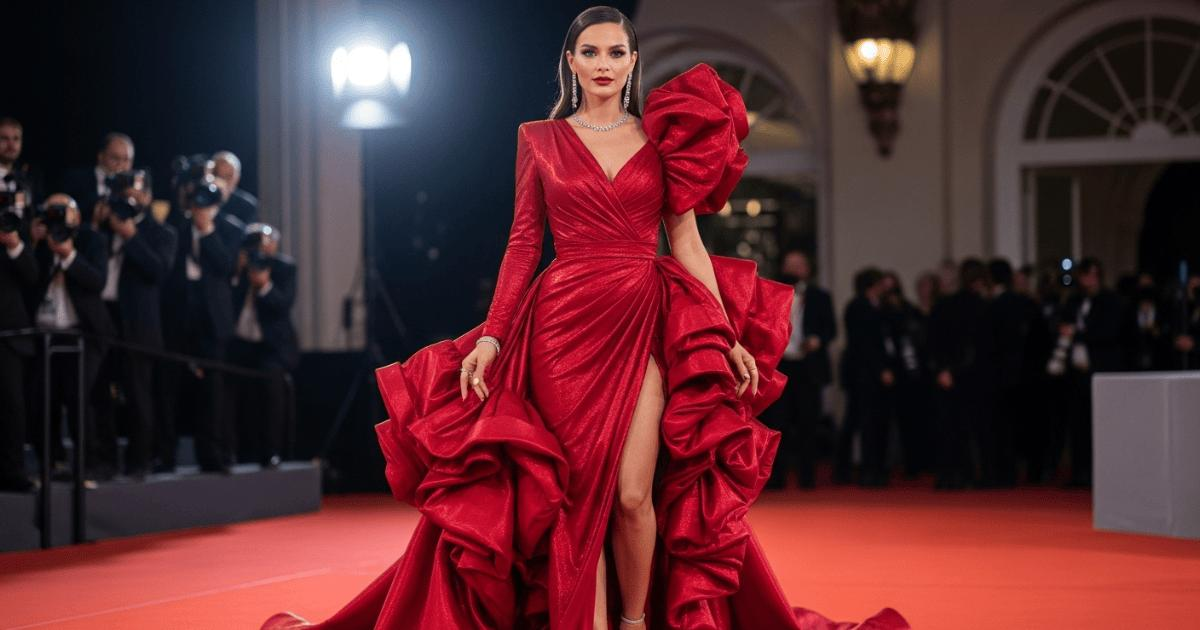
Fashion this month felt less like a predictable parade of red carpet appearances and more like a carefully orchestrated cultural conversation.
Across film premieres, music awards, brand events, and spontaneous street-style sightings, celebrities leaned into bold silhouettes, archival revivals, and an increasingly fluid understanding of gendered dressing. The result was a month where fashion did not simply complement celebrity—it actively defined their public narratives.
What stood out most was not just the clothing itself, but the intent behind it. Styling choices felt more editorial than ever, as if every appearance were a magazine cover shoot happening in real time. Designers continued to blur the line between couture craftsmanship and wearable art, while celebrities became more confident in treating fashion as a storytelling device rather than a costume. This month’s standout moments reflect that shift clearly: deliberate, expressive, and often surprisingly intimate in their references.
Below is a deep dive into the most memorable celebrity fashion moments of the month—looks that shaped conversations, trended across social platforms, and reaffirmed why red carpet style remains one of the most influential visual languages in pop culture.
Zendaya and the Return of Sculpted Futurism


When discussing contemporary red carpet evolution, it is nearly impossible to ignore Zendaya, whose fashion choices this month once again demonstrated a rare balance between conceptual risk and effortless elegance. Her standout appearance at a high-profile film event captured this duality perfectly: a sculptural gown that seemed to merge armor-like structure with soft architectural draping.
The dress, reportedly inspired by early-2000s futurist couture, featured sharply contoured shoulders and a fluid metallic base that caught light in a way that made movement itself part of the design. What made the look particularly compelling was not just the garment’s construction, but how it interacted with Zendaya’s presence. She wore it with a controlled ease that softened its rigidity, transforming what could have been an austere silhouette into something almost poetic.
Styling choices were intentionally minimal—sleek hair, muted makeup, and barely-there accessories—allowing the gown to dominate without overwhelming the wearer. This restraint is a recurring hallmark of Zendaya’s fashion identity. Rather than competing with the garment, she amplifies it, creating a dialogue between body and design.
In a broader sense, this look reflects a shift in celebrity fashion toward what might be called “architectural storytelling.” Clothing is no longer just decorative; it constructs a narrative around identity, confidence, and cultural positioning. Zendaya continues to be one of the few public figures who consistently understands and executes this balance with precision.
Timothée Chalamet and the New Language of Menswear Fluidity
Timothée Chalamet has long been associated with redefining menswear boundaries, but this month marked one of his most cohesive style evolutions to date. At a major premiere event, he arrived in a sharply tailored ensemble that merged traditional suiting with unexpected fabric experimentation.
The jacket silhouette was classic at first glance—narrow lapels, structured shoulders, and a fitted waist—but closer inspection revealed subtle disruptions in texture and finish. A slightly iridescent sheen shifted under lighting, while the trousers broke convention with a relaxed drape that contrasted the precision of the top half. The result was a look that felt both disciplined and emotionally expressive.
What made this appearance particularly notable was its tonal restraint. Instead of relying on bold color or overt embellishment, the outfit leaned into material contrast and silhouette tension. It suggested a maturity in Chalamet’s style trajectory: a move away from shock value and toward refined experimentation.
The accessories were equally intentional. Minimal jewelry, polished leather footwear, and a softly undone hairstyle contributed to an aesthetic that felt effortless but highly constructed. This is where Chalamet’s fashion presence becomes most interesting—his ability to present carefully engineered looks as if they were instinctive choices.
In the wider menswear landscape, this moment reinforces a growing trend: tailoring is no longer static. Designers are increasingly treating suits as modular frameworks, open to reinterpretation rather than tradition-bound execution. Chalamet remains one of its most visible ambassadors.
Rihanna and the Art of Controlled Extravagance
Few public figures command fashion narratives quite like Rihanna, whose presence alone can redefine the tone of any event. This month, her standout appearance at a luxury brand showcase reaffirmed her mastery of what might be described as “controlled extravagance.”
The ensemble combined exaggerated proportions with meticulous tailoring: a voluminous outer layer balanced by a sharply structured inner silhouette. Fabric choices leaned heavily into tactile richness—silks, satins, and subtly reflective materials that responded dynamically to movement and lighting. The effect was dramatic without ever tipping into excess.
What distinguishes Rihanna’s approach is her instinct for proportion. Where many would overwhelm the frame with volume or detail, she distributes visual weight with precision. This month’s look emphasized that skill, using contrast rather than accumulation to achieve impact.
Her styling also leaned into narrative layering. Hair and makeup were not separate elements but integrated components of the outfit’s story. A softly sculpted hairstyle echoed the curvature of the garment, while makeup featured warm undertones that grounded the overall composition.
Rihanna’s fashion language continues to influence the broader industry because it resists easy categorization. It is neither purely avant-garde nor strictly classic. Instead, it exists in a hybrid space where luxury becomes expressive rather than ornamental. This appearance was a reminder that her fashion influence is not about spectacle alone, but about coherence between identity and aesthetic expression.
Jennie and the Quiet Power of Minimalist Luxury
In contrast to maximalist red carpet statements, Jennie delivered one of the month’s most discussed understated looks. Appearing at an international fashion event, she embraced minimalist luxury with a precision that felt almost architectural in its restraint.
The outfit centered on a clean silhouette—structured yet soft, tailored yet fluid. Rather than relying on embellishment, the design focused on cut and proportion. Every seam appeared intentional, guiding the eye without demanding attention. The result was a look that communicated confidence through reduction rather than excess.
This kind of styling is increasingly influential in global fashion circles, particularly within K-fashion’s expanding impact on luxury aesthetics. Jennie’s appearance highlighted how minimalism, when executed at this level, becomes anything but simple. Instead, it becomes a study in discipline.
Her accessories followed the same philosophy: refined, subtle, and carefully chosen. The absence of visual noise allowed the silhouette to speak fully, reinforcing the idea that restraint can be as powerful as extravagance when handled with intention.
The Month’s Defining Trend: Emotional Tailoring


Across all appearances this month, a unifying theme emerged: emotional tailoring. Rather than focusing purely on silhouette or trend cycles, designers and stylists appeared to prioritize garments that evoke mood, memory, and identity.
This was visible in the contrast between structured futurism and soft romanticism, between minimal restraint and maximal volume. Even within a single outfit, tension between opposing ideas became a defining stylistic tool. Clothing was not just worn—it was performed, often with a sense of narrative awareness that blurred the line between fashion editorial and lived experience.
What makes this moment in celebrity fashion particularly significant is its shift away from predictability. There is less interest in dressing for category recognition—“best dressed,” “avant-garde,” “classic”—and more interest in dressing for emotional resonance. The result is a more layered visual culture, where meaning is constructed through subtle interplay rather than obvious statements.
Celebrities like Zendaya, Timothée Chalamet, Rihanna, and Jennie exemplify this evolution in different ways. Whether through sculptural futurism, fluid tailoring, extravagant proportion play, or minimalist precision, each look contributes to a broader redefinition of what red carpet fashion can communicate.
Closing Impression: Fashion as Cultural Dialogue
If there is a single takeaway from this month’s celebrity fashion landscape, it is that clothing has become increasingly dialogic. It speaks not only to designers and audiences but also to the evolving identities of the wearers themselves. Fashion is no longer a backdrop to celebrity—it is a primary language through which celebrity is expressed and understood.
This month’s standout moments remind us that style is not static. It shifts, reacts, and evolves in real time, shaped by cultural currents and personal expression alike. And as celebrities continue to experiment with form, silhouette, and symbolism, the red carpet remains one of the most compelling stages for visual storytelling in contemporary culture.
Leave a Reply