The impact video has finished and we heard opening statements from this hearing’s core participants during yesterday’s inquiry on COVID-19 vaccination policy..
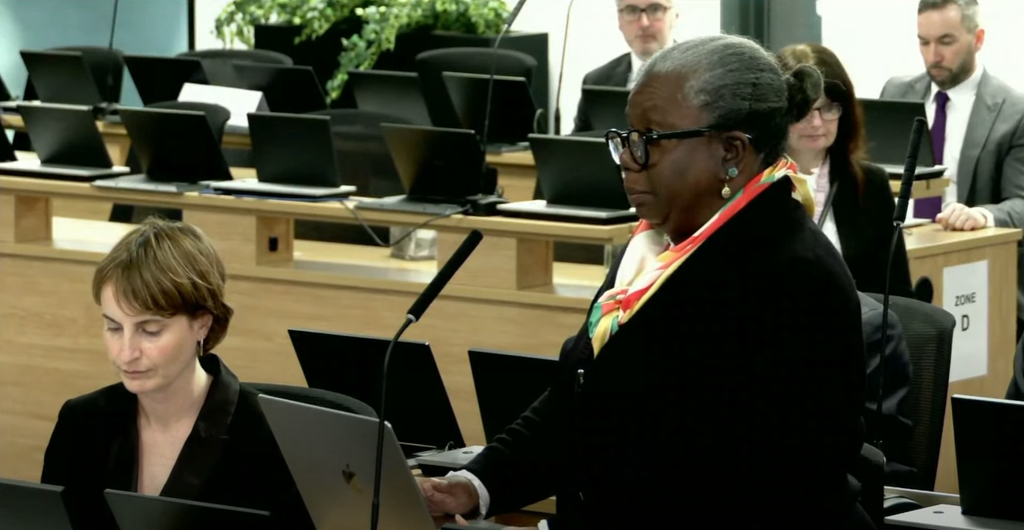
Allison Munroe KC, from the COVID-19 Bereaved Families for Justice group, says the inquiry needs to consider the “good, the bad and, whilst not necessarily ugly, the somewhat unsightly and troubling” side of vaccine procurement during the pandemic.
There was “much to be praised about securing a vaccine in the UK”, she says, but adds the picture is “rather more complex and nuanced than at first blush”.
She cites accounts from a number of professors, which form part of their evidence to be presented during this stage of the inquiry.
Funding to support research and delivery of new vaccines “was and remains suboptimal and fragmented”, she says as part of her statement.
Clinical trials, too, raised some concerns, she adds, referring to a professor’s remarks that “our old friend lack of data remains a stubborn and unwelcome guest”.
She continues: “So, from that brief look at some of the aspects of planning and preparedness, it is clear that it will be imperative that the inquiry examines the narrative critically and addresses the fundamental question – where do we stand now?”
She raises a statement from another professor, arguing the UK is “not well-prepared to produce vaccines for the next pandemic”.
“There is no coordination and no plan, there is no national capability, we have not invested in vaccine development, the infrastructure is questionable,” she adds.
Moreover, she says the “negative impact of leaving the EU” means we are “falling behind our European counterparts”.
“All the research brilliance in the world will be limited without infrastructure funding and manufacturing and the ability to progress vaccine discoveries,” she says.
Government ‘failed to address’ barriers in vaccine uptake to minority groups
Allison Munroe KC says the government’s failure to address known barriers in vaccine uptake for minority groups is “consistent with structural racism”.
She says the term “vaccine hesitancy” shifts blame onto the shoulders of individuals unfairly and fails to acknowledge “the barriers these groups face in vaccine uptake”.
“We know historically that those from black and minority communities were more at risk of contracting COVID,” she says.
“The first ten doctors who died from COVID were from BAME backgrounds, and 63% of the health care workers who died in June 2020 from COVID were from BAME backgrounds,” she adds.
She says bereaved families consider that the government’s failure to address “known and pre-existing barriers to vaccine uptake among ethnic minorities and migrant groups in its pre-planning, development and rollout is consistent with structural and institutional racism”.
Leave a Reply