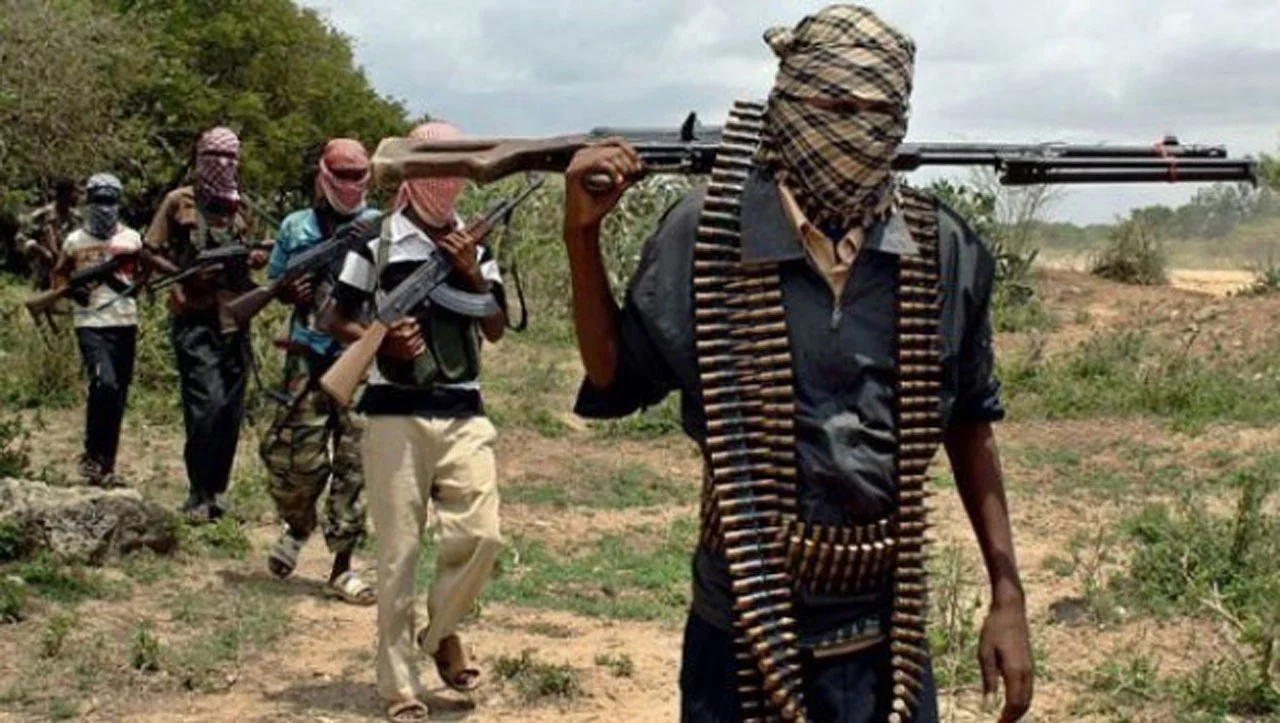
The question hangs in the air, thick as the smoke over a razed village. It’s whispered in shattered church sanctuaries, shouted at emergency town hall meetings, and wept into the dust of freshly dug graves. In the face of rampaging bandits, kidnappers, and terrorists—who show no mercy for age, gender, or creed—and a federal security apparatus that seems perpetually overwhelmed, the unthinkable is becoming thinkable.
Should Christians in Nigeria carry arms to defend themselves?
For a faith built on the words “turn the other cheek” and “love your enemy,” this isn’t a casual political debate. It is an eschatological crisis, fought with AK-47s and open Bibles.
Let’s be clear about the context. We are not talking about petty thieves. We are talking about “blood-thirsty bandits” (often identified as Fulani militia or ISWAP-affiliated groups) who, according to reports from the International Society for Civil Liberties & Rule of Law, have slaughtered thousands. They burn churches, abduct entire congregations, and demand ransoms that no subsistence farmer can pay. When the government deploys soldiers, they are often outnumbered, outgunned, or outmaneuvered.
In this vacuum of protection, the ancient cry of the shepherd rises again: If the watchman fails, who guards the flock?
The Case for Self-Defense (The Practical Argument)
Before we dive into theology, we must honor the reality of the Nigerian Christian. In 2024 alone, hundreds have been martyred. When the police station is 50 kilometers away and the army’s response time is measured in days, a machete is not a weapon; it is a prayer.
Many argue that Nehemiah’s principle applies here. When rebuilding the walls of Jerusalem, Nehemiah didn’t just pray; he stationed armed guards. “Those who carried materials did their work with one hand and held a weapon in the other” (Nehemiah 4:17).
Proponents of self-defense argue:
- The Sanctity of Life: The Sixth Commandment forbids murder, not self-defense. Letting your family be slaughtered while you do nothing is not holiness; it is negligence.
- Government’s Failure: Romans 13 says the state is “God’s servant, an agent of wrath to bring punishment on the wrongdoer.” When the state abandons that mandate, the right to preserve life reverts to the individual.
- The Legal Precedent: Nigeria’s constitution guarantees the right to own property and live. While the Firearms Act makes legal gun ownership almost impossible for civilians, the moral law, some argue, supersedes a failed civil law when death is imminent.
The Cross-Shaped Objection (The Theological Argument)
Yet, the church has wrestled with this for two millennia. The moment Peter drew his sword in the Garden of Gethsemane, Jesus rebuked him: “Put your sword back into its place. For all who take the sword will perish by the sword” (Matthew 26:52).
The pacifist tradition—deeply rooted in the early church (pre-Constantine)—argues that the church wins by losing. The blood of the martyrs is the seed of the church. If Christians militarize, they cease to be Christians in their primary identity and become just another ethnic militia.
Consider the brutal risk of escalation:
- Tribalization: If Christian communities arm themselves, it will accelerate the slide into a religious civil war. Bandits will then claim they were only responding to “Christian aggression.”
- The Corruption of the Heart: Violence changes the violent. Can a deacon who just shot a teenager (even a hostile one) lead communion the next Sunday without damage to his own soul?
- Where is the Witness? If the church looks exactly like the world—armed, vengeful, and fearful—what Gospel are we preaching?
The Sensible Middle: Collective Security over Cowboy Vigilantism
Perhaps the false choice is between unarmed passivity and lone wolf vigilantism. There is a third way: Organized, legal, community-based defense.
We see this in the “Civilian Joint Task Force” (CJTF) models in the North-East, though those have their own flaws. For the Christian community, this could mean:
- Legal Advocacy: Suing the government for dereliction of duty. Using the law as a shield before picking up a sword.
- Licensed Security: Pushing for the relaxation of licensing laws for registered churches and cooperatives to hire or form licensed security guards for the perimeter—not for revenge raids.
- Non-Lethal Deterrence: Shepherds with bows, arrows, and modern herding tech that alerts neighbors via radio tree networks.
The Verdict (For the Weary Believer)
Here is the hard truth: The Bible does not give a one-size-fits-all answer to asymmetric warfare.
If a bandit breaks into your home at 3:00 AM, holding a machete to your daughter’s throat, the time for theological debate is over. In that split second, protecting the innocent (Exodus 22:2-3, which justifies lethal force against a nighttime intruder) is a higher moral duty than pacifism.
However, the church should not form a militia. We must not militarize our worship. We must not turn our altars into arsenals.
What Nigerian Christians need is not just guns; it is justice.
Before we ask, “Should we carry weapons?”, we must ask the government: “Why have you forced us to ask this question?”
Until then, pray with your Bible in one hand. And if you are a father in a high-risk zone, forgive me for not judging you for keeping a machete sharp by the door. Your first duty is to the sheep in your house.
Lord, deliver us from the evil of having to make this choice. And if we must choose, grant us the wisdom to choose life, the restraint to choose mercy, and the courage to trust you even when the bandits howl.
Leave a Reply