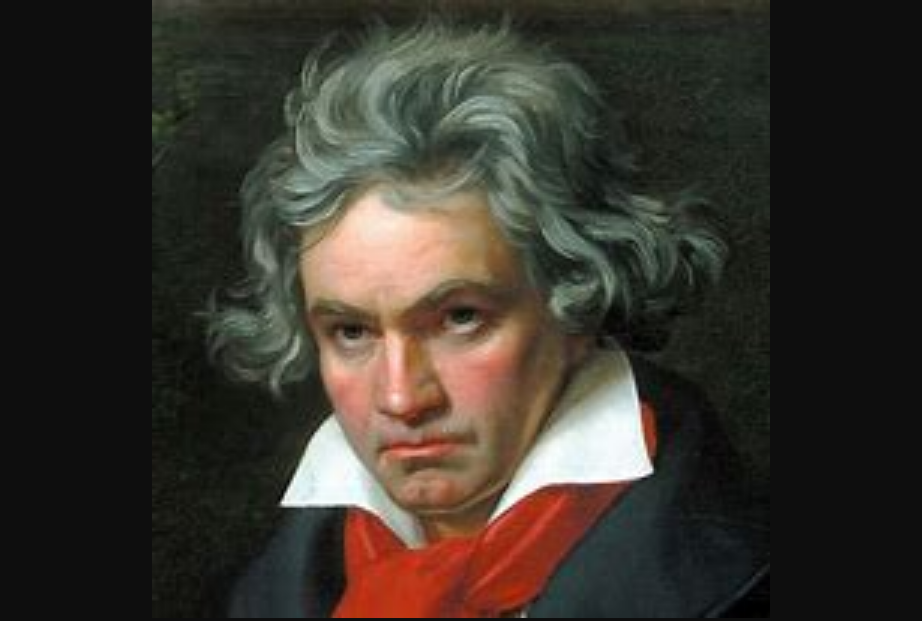
Beethoven had a likely genetic predisposition to liver disease and a hepatitis B infection months before his death, tests have revealed.
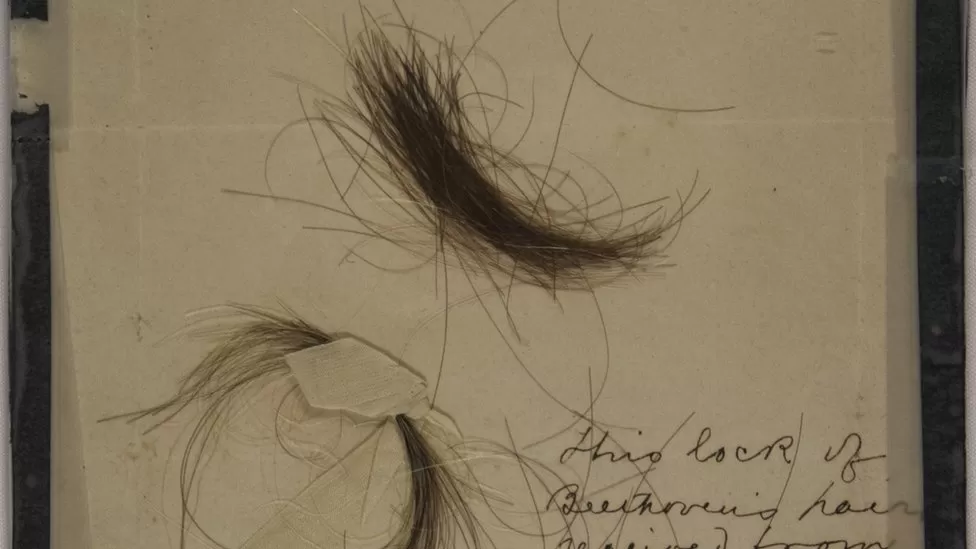
A team of researchers led by Cambridge University analysed five locks of hair to sequence the composer’s genome.
They were, however, unable to establish a definitive cause of his hearing loss.
Lead author, Tristan Begg, said genetic risk factors, coupled with Beethoven’s high alcohol consumption, may have contributed to his liver condition.
The international team analysed strands from eight locks of hair kept in public and private collections, in a bid to shed light on Beethoven’s health problems.
Five locks were deemed “authentic” by the researchers and came from a single European male.
Ludwig van Beethoven was born in Bonn, Germany, in 1770 and died at the age of 56 in Vienna, in 1827.
The prodigious composer and pianist suffered progressive hearing loss, which began in his mid to late 20s and led to him being functionally deaf by 1818.

Mr Begg said the team surmised from the composer’s “conversation books” – which he used in the last decade of his life – that Beethoven’s alcohol intake was regular, but the volumes he consumed were difficult to estimate.
“While most of his contemporaries claim his consumption was moderate by early 19th Century Viennese standards, this still likely amounted to quantities of alcohol known today to be harmful to the liver,” he said.
“If his alcohol consumption was sufficiently heavy over a long enough period of time, the interaction with his genetic risk factors presents one possible explanation for his cirrhosis.”
The team said, based on the genomic data, that Beethoven’s gastrointestinal issues were not caused by coeliac disease or lactose intolerance.
Johannes Krause, from the Max Planck Institute of Evolutionary Anthropology in Germany, said: “We cannot say definitely what killed Beethoven but we can now at least confirm the presence of significant heritable risk and an infection with hepatitis B virus.
“We can also eliminate several other less plausible genetic causes.”
Dr Axel Schmidt, of the Institute of Human Genetics at the University Hospital of Bonn, said: “Although a clear genetic underpinning for Beethoven’s hearing loss could not be identified, the scientists caution that such a scenario cannot be strictly ruled out.”
Genetic genealogists also identified what they describe as an “extra-pair paternity event” – a child resulting from an affair – in Beethoven’s direct paternal line.
Mr Begg added: “We hope that by making Beethoven’s genome publicly available for researchers, and perhaps adding further authenticated locks to the initial chronological series, remaining questions about his health and genealogy can someday be answered.”


Leave a Reply to meziesblog.comCancel reply