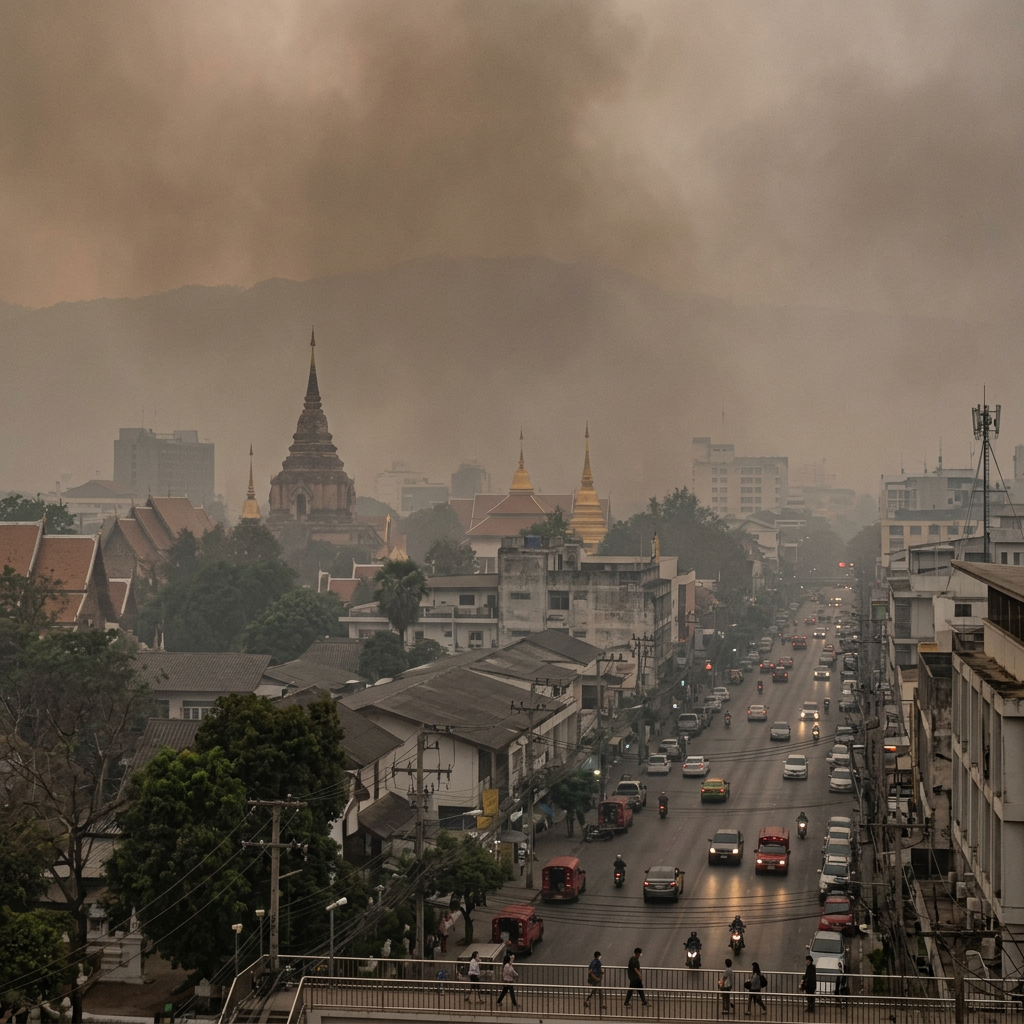
Parliament Approves Enhanced Transboundary Haze Pollution Act After Six-Hour Debate; Grace Fu Says International Cooperation Remains Essential to Combatting Annual Smoke Crisis
SINGAPORE — Singapore’s Parliament has unanimously passed significant amendments to its Transboundary Haze Pollution Act (THPA), granting the National Environment Agency (NEA) sweeping new powers to investigate and prosecute companies suspected of contributing to the region’s chronic haze problem. But the minister spearheading the legislation cautioned that the enhanced law alone cannot solve the complex transboundary issue, emphasizing that diplomatic engagement and international cooperation remain indispensable.
The Transboundary Haze Pollution (Amendment) Bill was passed on Wednesday (Nov 4) following an extensive debate that lasted approximately six hours and featured contributions from 24 Members of Parliament — 14 from the governing People’s Action Party (PAP), seven from the opposition Workers’ Party (WP), and three Nominated MPs. The bill represents the most substantial revision to the legislation since it first came into force in 2014.
‘Not a Silver Bullet’: Fu Emphasizes Limitations of Domestic Law
In her closing speech, Minister for Sustainability and the Environment Grace Fu addressed a wide range of concerns raised by MPs, including how the expanded powers would be exercised, potential impacts on businesses, and the fundamental limitations of Singapore’s legal reach beyond its borders.
“The THPA is not a silver bullet. It is one of many tools we must use to address the transboundary haze situation,” Fu said, underscoring the government’s realistic assessment of what domestic legislation can achieve against a problem that originates outside Singapore’s jurisdiction.
The minister acknowledged that even with the expanded powers, Singapore will face significant challenges in exercising them. Nevertheless, she affirmed the government’s commitment to doing everything within its authority to reduce incentives for unsustainable forestry and agricultural practices — the primary drivers of the annual smoke crisis that blankets the region.
“I emphasize that in doing so, the realities require us to accept the limitations of our laws and our agencies’ reach on conduct outside of Singapore,” Fu told the chamber.
“We seek to work collectively with foreign agencies. Our law enforcement powers do not extend into other countries’ borders, and we respect the laws and sovereignty of every state, just like how we would not accept foreign laws infringing on our sovereignty.”
Measured and Targeted Enforcement
Addressing MPs who sought greater clarity on how the expanded powers would be deployed, Fu assured Parliament that the NEA will implement its new authority in a “measured and targeted” manner. She outlined the criteria for issuing directions to appoint assessors, which will apply to three categories of entities:
- Those convicted of an offence or who fail to comply with actions under the Act
- Those known or suspected to have had business dealings with entities in the first category
- Those known or suspected to be “sufficiently related” to entities in the other two categories
“We will be measured and targeted in who we issue these directions to. The goal is to ensure that we have the means to assess the risks posed by entities operating in sectors or industries that tend to contribute to haze pollution in Singapore,” Fu explained.
The government will also clearly define what assessors need to do and how they will work with identified entities, with detailed rules to be established in subsidiary legislation. Depending on the assessment results, the NEA may direct companies to take remedial action, publicize adverse or qualified reports, prosecute offences, designate entities, or place them on notice.
Fu also confirmed that the proposed amendments would not override legal advice or litigation privilege — a reassurance likely aimed at addressing concerns from the business and legal communities about confidentiality protections.
MPs Raise Proportionality Concerns
Among the MPs who raised questions about proportionality in enforcement was Jessica Tan (PAP-East Coast), who sought assurances about safeguards to ensure fairness in the assessment process.
“Prevention must be swift, but accuracy matters too,” Tan said, while asking Fu how haze risk will be assessed. She noted that the designations could have significant implications for Singapore’s commercial relationships, financing arrangements, and business operations.
The concern reflects broader anxieties within the business community about the potential unintended consequences of the expanded legislation, particularly for companies that may have indirect or tenuous connections to entities responsible for haze-causing activities.
Shanmugam Explains Unique Legal Structure for Cross-Border Investigations
In a notable exchange, Senior Minister K Shanmugam addressed questions from MP Sylvia Lim (WP-Aljunied) about why a private legal firm — rather than the Attorney-General’s Chambers (AGC) — was appointed to coordinate Singapore’s anti-haze probes.
Shanmugam, who chairs the Homefront Crisis Ministerial Committee and serves as Coordinating Minister for National Security, explained that the AGC would face insurmountable obstacles operating in foreign jurisdictions.
“The answer is very simple. They may not be able to exercise their powers in a foreign jurisdiction because they would be treated as Singapore government agencies, and it’s quite likely that they would not even be given access to the country, let alone conduct investigations,” Shanmugam said.
“So it had to be structured as the companies appointing private firms to do the work — investigative firms, law firms, and others are now the companies’ appointees, and therefore they will have the ability to go into foreign jurisdictions.”
Law firm Davinder Singh Chambers has been appointed to advise on coordinating the work to ensure that necessary inquiries and investigations are properly conducted across different jurisdictions. Shanmugam noted that while countries may still find excuses to deny access, private firms are “less likely to be prevented from accessing foreign jurisdictions.”
The government, he said, had to think carefully and structure the arrangement “very carefully and quite elegantly” to avoid diplomatic issues with other countries. The assessors’ reports will be made available to government agencies, and the AGC will review them to determine what further actions can be taken in Singapore.
When Lim asked who would bear the costs of the coordinating law firm, Shanmugam was unequivocal: the companies under investigation would pay, as the firm is “treated as doing the work on behalf of all the companies.”
“It is only right that the taxpayers ought not to be paying for it. It ought to be paid by the companies, and provision has been made for that,” he said.
Compliance Costs for Businesses
Several MPs raised concerns about the compliance burden the amendments could place on Singapore businesses, particularly smaller enterprises that may have only indirect connections to haze-causing activities.
MP Lee Hong Chuang (PAP-Jurong East-Bukit Batok) noted that a Singapore trader or food manufacturer could be “several steps removed” from those directly responsible for the fires, yet still face onerous obligations under the new law.
Responding to these concerns, Fu said the government will seek to minimize compliance costs for small- and medium-sized enterprises (SMEs). Businesses will not be penalized if they did not know, or had no reason to believe, they were dealing with a designated entity, she said.
With designations, the government will be judicious in determining the scope of business restrictions and will provide reasonable transition arrangements where appropriate to minimize unnecessary disruptions to legitimate business activities.
“Our measures are targeted at entities responsible for causing or contributing to the haze, while avoiding onerous obligations for businesses operating legitimately and responsibly,” Fu said.
She added that the changes will be implemented “carefully and proportionately,” and that the NEA will continue working with other agencies, including the Monetary Authority of Singapore, to ensure effective implementation.
Background: A Persistent Regional Challenge
The Transboundary Haze Pollution Act was first enacted in 2014, following years of severe haze episodes that affected Singapore and neighboring countries. The legislation allows Singapore to take legal action against companies — regardless of nationality — that cause or contribute to haze pollution within the country’s borders.
However, enforcement has historically proven difficult due to the cross-border nature of the problem, the complexity of supply chains linking consumers to land-clearing activities, and the reluctance of some foreign governments to cooperate with Singapore’s investigations.
The amendments passed on Wednesday represent an attempt to strengthen Singapore’s hand in pursuing companies suspected of engaging in unsustainable land-clearing practices, while acknowledging the inherent limitations of domestic legislation in addressing a fundamentally transnational issue.
The unanimous passage of the bill — despite the lengthy debate and diverse concerns raised by MPs from across the political spectrum — suggests broad parliamentary consensus on the need for stronger measures, even as questions remain about their implementation and effectiveness.
As Fu made clear, however, Singapore’s legal arsenal is only one component of a broader strategy that must include diplomatic engagement, regional cooperation, and efforts to promote sustainable practices in the forestry and agricultural sectors. The haze problem, she suggested, will not be solved by legislation alone.
Leave a Reply