September 9 is one of those calendar dates that rewards a closer look. It carries the weight of a nation naming itself, a prison uprising that shocked a country, and the quiet beginning of a digital era. Here is a look at some of the most significant events that happened on this day.
A Nation Gets Its Name
On September 9, 1776, the Second Continental Congress formally adopted the name “United States of America,” replacing “United Colonies of North America”. It was a symbolic but powerful declaration that the colonies were no longer just a collection of territories but a unified sovereign entity.
California Joins the Union
In 1850, California was admitted as the 31st U.S. state. This came as part of the Compromise of 1850, a package of legislation that also settled Texas’s territorial claims and addressed the contentious issue of slavery in new territories.
The Attica Prison Uprising
On September 9, 1971, prisoners seized control of the maximum-security Attica Correctional Facility near Buffalo, New York, taking 42 staff members hostage and demanding improvements to inmate treatment and living conditions. The four-day siege ended tragically when state troopers retook the prison, resulting in 39 deaths, most killed by state fire.
A Step Toward Middle East Peace
In 1993, Israeli Prime Minister Yitzhak Rabin and PLO Chairman Yasser Arafat exchanged letters in which the PLO recognized Israel’s right to exist and renounced violence, while Israel recognized the PLO as representing the Palestinian people. This exchange occurred just days before the Oslo Accords were signed.
The First Computer “Bug”
On September 9, 1947, engineers working on the Harvard Mark II computer discovered a moth lodged in a relay, causing a malfunction. They taped the insect into their logbook with the note “First actual case of bug being found.” The term “bug” for a technical glitch had been used before, but this incident cemented it in computing lore.
Reagan Sanctions Apartheid South Africa
In 1985, President Ronald Reagan ordered economic sanctions against South Africa to target its apartheid system. The move came after years of domestic pressure and international condemnation of the white-ruled government’s racial policies.
A King’s First Speech
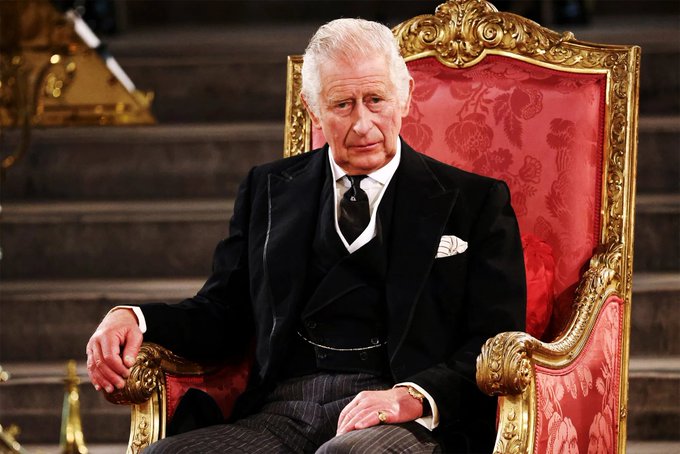
On September 9, 2022, King Charles III gave his first speech to Britain as its new monarch, vowing to carry on the “lifelong service” of his mother Queen Elizabeth II, who had died the day before. It was a moment of both personal grief and public duty, watched by millions around the world.
The Assassination That Preceded 9/11
On September 9, 2001, two al-Qaeda-linked suicide bombers disguised as journalists killed Ahmad Shah Massoud, the leader of Afghanistan’s Northern Alliance, in Takhar Province. The assassination, just two days before the September 11 attacks, removed a key opponent of the Taliban and al-Qaeda.
North Korea Declared
In 1948, the People’s Democratic Republic of Korea (North Korea) was declared. This formalized the division of the Korean peninsula into two separate states, a split that persists to this day.
Leave a Reply