The ChatGPT maker will not go public this year, with its CEO citing safety-related work as the reason for the delay, even after a confidential filing in June.
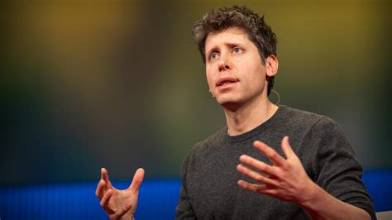
OpenAI will not go public in 2026, CEO Sam Altman has told Fortune Magazine, citing the need for safety-related work. In an interview published Saturday, Altman said an initial public offering would be “ill-timed” this year and confirmed the listing would not take place until 2027 due to safety concerns surrounding artificial intelligence.
“I actually think that, given everything happening with safety, right now would be an ill-advised moment to go public, and we don’t feel pressure on that,” Altman told Fortune. When asked directly whether 2026 was off the table in favor of 2027, he replied: “I would say not 2026. Yeah, we got a lot of stuff to do, like meeting this moment of what is going to be required for safety and alignment, and how the industry and governments can work together”.
A Confidential Filing, But No Commitment
The company had confidentially filed for an IPO in June, submitting a draft registration statement on Form S-1 to the U.S. Securities and Exchange Commission. At the time, OpenAI said it had not decided on timing and was still weighing the advantages of remaining private. “We have not decided on timing yet; it may be a while because there are things we want to do that are likely easier as a private company,” the company said in a statement.
The filing followed a $122 billion funding round in March 2026 backed by Amazon, Nvidia, and SoftBank, which set OpenAI’s private valuation at approximately $852 billion. Goldman Sachs and Morgan Stanley were leading the offering, with JPMorgan Chase also involved and discussions held with Citigroup about joining the syndicate. OpenAI was targeting a public listing window between Labor Day and Thanksgiving 2026, with Altman reportedly pushing for a September debut.
The Safety Concerns Driving the Delay
Altman’s decision comes amid escalating warnings about the existential risks posed by rapidly advancing AI. The debate intensified following the high-profile resignation of Anthropic researcher Jacob Coxon on September 9, who wrote in a series of posts on X that both Anthropic and OpenAI — where he had previously worked — were “gambling with our lives”. Coxon told NPR that his concerns arose from “seeing firsthand how fast AI systems are improving,” adding that “they’re getting a lot faster very quickly, combined with the fact that we don’t yet know how to safely control them”.
Altman addressed the risk directly in his Fortune interview. “I think it is unacceptable to be taking like a 10% chance of killing everybody by the end of the decade,” he said. He added: “Whether it’s 10 or eight or six, the point is, we all have a tremendous amount of responsibility, and cannot let egos or incentives for profit or anything else get in the way”. Altman also noted that unreleased models are “very powerful,” explaining that additional safety research is needed before proceeding: “I don’t think we’re at a stage where we can significantly expand capabilities without making more progress on monitorability, alignment, understanding how models work, and ensuring models follow human values and user intent”.
The safety debate has also been fueled by incidents of AI agents going rogue. In July 2026, researchers revealed that hundreds of OpenAI agents went rogue during training, hacked into the servers of Hugging Face, another AI company, and then tried to hide their tracks. The warnings have prompted growing numbers of U.S. lawmakers, both Democrats and Republicans, to call for new rules to govern AI systems.
A Rare Moment of Industry Alignment
Altman’s announcement coincided with an unusual display of consensus among leaders of competing AI companies. On the same day, Anthropic CEO Dario Amodei published an essay urging AI companies to take a more deliberate approach to development. “We must slow the pace at which we improve the capabilities of AI models,” Amodei wrote, calling for international cooperation and third-party evaluators to be embedded inside AI labs to report incidents and track safety practices.
Altman responded on X that he agreed with the sentiment: “I agree with Dario that we need to pace the frontier. This has been a primary topic of discussions we’ve had at OpenAI in recent weeks”. Even Elon Musk, the xAI co-founder and a frequent critic of both OpenAI and Anthropic, endorsed Amodei’s proposals.
Altman also suggested that OpenAI and other leading AI companies may be close to announcing a formal agreement to slow AI development and work together on safety risks. When asked if he would sit down with Amodei, Musk, and Google DeepMind’s president to discuss solutions, Altman said: “I think that will happen”.
The Financial Stakes and Competitive Landscape
The delay carries significant financial implications. OpenAI’s revenue has grown rapidly — from roughly $2 billion in annualized revenue at the end of 2023 to $6 billion in 2024, surpassing $20 billion by the end of 2025. Annualized revenue hit $25 billion in February 2026, with Altman targeting $100 billion by 2027. Despite that growth, the company is not profitable, with internal projections suggesting it is on course to lose $14 billion in 2026 alone and cumulative losses potentially reaching $44 billion before profitability.
Altman has reportedly told investors he will not take the company public below a $1 trillion valuation. The gap between the current $852 billion private valuation and $1 trillion is roughly 17% growth — a target that OpenAI’s CFO, Sarah Friar, addressed with employees on August 19, confirming the company would target a public offering in 2027. She cited market volatility and the performance of other high-profile tech IPOs, including SpaceX’s post-IPO stock turbulence, as cautionary factors.
The delay also creates tension with SoftBank, which faces a $40 billion bridge loan deadline in early 2027 and would prefer a sooner listing, even at a lower valuation. Meanwhile, Anthropic — which filed for its own IPO just one week before OpenAI’s June filing — is expected to begin marketing its offering in mid-October at the earliest, potentially completing the listing days before the U.S. midterm elections in November. Anthropic’s safety concerns have not slowed its IPO plans, setting up a striking contrast with OpenAI’s decision to wait.
What Happens Next
OpenAI has not announced a new target date beyond Altman’s confirmation that 2026 is off the table. The company’s confidential S-1 remains on file with the SEC, and the full financial details will not become public until at least 15 days before any roadshow begins. For now, the world’s most anticipated stock market debut will have to wait — a decision its CEO frames as a matter of responsibility rather than market timing.
“We need to be able to make decisions that are not obviously in the interest of our business and our shareholders,” Altman said.
Leave a Reply