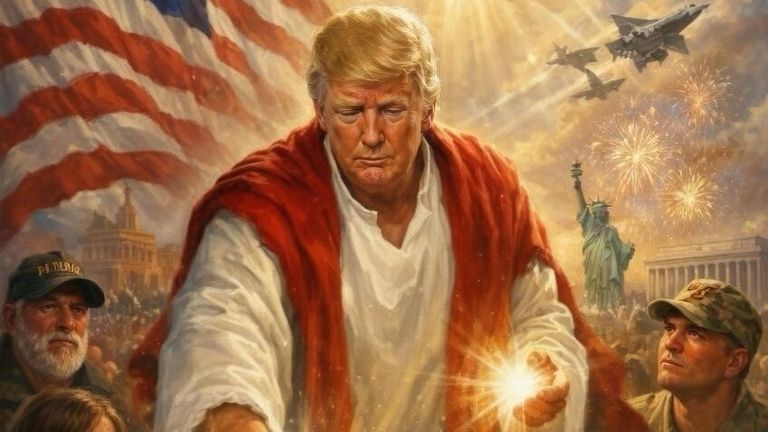
Kazakhstan’s President Kassym-Jomart Tokayev has embraced President Donald Trump’s transactional approach to foreign policy, describing the U.S. leader as a figure “sent by heaven” as the two nations rapidly expand their economic partnership.
According to a Sunday report in The New York Times, Kazakhstan has aggressively pursued closer ties with Washington during Trump’s second term, securing a wave of business agreements and billions in planned U.S. investment. Tokayev, who visited Washington in November 2025, praised Trump as “a great leader” and a statesman “sent by heaven.” The outreach reflects Kazakhstan’s long-standing “multivector” foreign policy, which seeks to balance relations among Russia, China, the United States, and other global powers while attracting foreign investment.
Trump’s administration has largely emphasized business opportunities over traditional U.S. concerns about democracy and human rights, making access to Kazakhstan’s vast reserves of critical minerals and strategic trade routes a top priority. The shift has been welcomed in Astana, where officials see economic cooperation with Washington as a way to diversify partnerships without abandoning ties to Moscow or Beijing. During Tokayev’s visit to Washington last year, Kazakh companies signed 29 agreements with U.S. firms worth more than $17 billion, including a tungsten mining project, an agreement with Nvidia and Firebird to build an artificial intelligence data hub, a satellite internet deal involving Amazon’s Project Kuiper, and a $4.2 billion purchase of rail equipment from Wabtec.
The momentum has continued. Earlier this month, the U.S. International Development Finance Corporation signed a letter of interest to help modernize Kazakhstan’s telecommunications infrastructure through investment in Tele2, a major wireless provider. Kazakhstan also announced agreements with Nvidia and Firebird worth up to $10 billion to develop its ambitious “Data Center Valley” project, which officials hope will make the country one of the world’s leading AI hubs by 2027, generating billions in exports and thousands of high-skilled jobs.
Analysts caution that Kazakhstan’s growing partnership with Washington carries geopolitical risks. Tokayev moved quickly after his White House visit to reassure Russian President Vladimir Putin of Kazakhstan’s continued strategic ties with Moscow, underscoring the delicate balancing act required by the country’s multivector foreign policy. Still, Kazakhstan’s leadership appears convinced that Trump’s deal-focused approach offers new opportunities for investment, technology, and long-term economic growth while expanding U.S. influence in a region traditionally dominated by Russia and China.
Leave a Reply