The Birth of a Commonwealth: Canada’s Road to Nationhood
Perhaps no event better encapsulates the spirit of July 1 than the birth of modern Canada. On July 1, 1867, the British North America Act took effect, transforming a collection of disparate colonies into a self-governing dominion of Great Britain. The provinces of Ontario, Quebec, New Brunswick, and Nova Scotia united under a single federal government, creating what would become the second-largest country on Earth.
This was not merely a bureaucratic rearrangement. It was an act of political imagination—the deliberate construction of a nation that would stretch from the Atlantic to the Pacific, binding together English and French, Catholic and Protestant, old loyalists and new immigrants. The day has since been celebrated as Canada Day, a national holiday that marks not independence from Britain but a distinct form of nationhood within the British Empire.
What makes this event particularly remarkable is its peaceful character. In an era when nations were often forged through revolution and bloodshed, Canada’s birth was negotiated through legislation and diplomacy. The British North America Act represented a template for gradual, constitutional decolonization that would later inspire other dominions across the Commonwealth.
The Longest Day: The Somme Offensive Begins
War, however, has also marked this date with indelible tragedy. On July 1, 1916, at 7:30 on a summer morning, whistles blew across the trenches of the Somme valley in France. The British and French armies launched what was supposed to be the war-winning offensive against German forces.
The first day of the Battle of the Somme remains one of the bloodiest single days in military history. The British Army suffered nearly 60,000 casualties—more than 19,000 dead—in a matter of hours. Entire communities in Britain, Ireland, and across the empire lost their young men in a single morning. The battle would drag on for four and a half months, claiming over a million casualties on all sides, with no clear victor.
Yet even amidst this horror, there were moments of haunting humanity. That same morning, as soldiers went over the top, some kicked footballs toward the German lines. One of those footballs, inscribed with the words “The Great European Cup, The Final, East Surreys v Bavarians, Kick Off at Zero,” now sits in a museum—a surreal artifact of the collision between sport and slaughter.
Independence and Identity: A Day for New Nations
July 1 has proven to be a favored date for declarations of independence and national identity. In 1777, Vermont became the first American colony to abolish slavery, a radical act of moral leadership that predated the broader abolition movement by decades. The small republic, which would not join the United States until 1791, made a profound statement about the compatibility of liberty and equality.
More than a century later, on July 1, 1960, Ghana marked its transition to a republic, severing its last constitutional ties to the British Crown. Under the leadership of Kwame Nkrumah, Ghana became the first African colony to achieve independence, and its Republic Day celebrations on July 1 symbolized the dawn of a new era for the continent. The day was observed as a public holiday for decades until 2019, when it was redesignated as a ceremonial day—a move that sparked debate about national memory and civic values.
Also on July 1, 1960, Somalia achieved its independence and unification, merging the former Italian Somaliland and British Somaliland into a single republic. This act of national consolidation represented the fulfillment of pan-Somali aspirations and the rejection of colonial partition.
The Atomic Age: Testing the Unthinkable
Science and destruction converged on July 1, 1946, when the United States conducted Operation Crossroads at Bikini Atoll in the Marshall Islands. The first atomic bomb test of the operation, code-named Able, was detonated over a fleet of 95 target ships, including the battleship USS Nevada.
The images from that day are seared into the historical record: the mushroom cloud rising over the lagoon, the ships silhouetted against the blinding flash, the scientific observers watching from a safe distance as humanity demonstrated its newfound capacity for annihilation. A second test, Baker, would follow on July 25, with an underwater detonation that sent water nearly 6,000 feet into the air and sank or damaged 75 vessels.
These tests marked the beginning of the nuclear age in earnest—a period when the superpowers competed to develop ever-more-destructive weapons while the world held its breath. The term “Bikini” would soon be borrowed for a two-piece swimsuit, an ironic juxtaposition of destruction and frivolity that captured the strange spirit of the postwar era.
Yet the nuclear story on July 1 extends beyond weapons. In 1997, the Space Shuttle Columbia launched on the STS-94 mission, carrying the Microgravity Science Laboratory to conduct experiments that would inform the construction of the International Space Station. This was a reflight of a mission cut short by a faulty fuel cell—a testament to humanity’s persistence in pursuing knowledge even after setbacks.
Tragedy on the Home Front: The Chilwell Explosion
While the battles of the First World War raged on the continent, a different kind of catastrophe struck the British home front on July 1, 1918. At 7:10 in the evening, a catastrophic explosion tore through the National Shell Filling Factory at Chilwell, Nottinghamshire.
Eight tons of TNT detonated without warning, flattening large parts of the plant and damaging properties within a three-mile radius. The blast was heard 30 miles away. One hundred thirty-four workers were killed, and 250 were injured—the greatest loss of life from a single accidental explosion during the First World War.
The scene was described by an eyewitness, worker Lottie Martin: “Men, women and young people burnt, practically all their clothing burnt, torn and disheveled. Their faces black and charred, some bleeding with limbs torn off, eyes and hair literally gone”.
Yet in the midst of this horror, there was heroism. Works Manager Arthur Bristowe tipped burning TNT from conveyor belt trays, preventing a further 15 tons from detonating. Within half an hour, fires were under control. Remarkably, repairs were carried out overnight, and some of the next morning’s day-shift returned to work.
The Birth of Modern Healthcare: Medicare Begins
On July 1, 1966, a quiet revolution in American healthcare began. The Medicare federal insurance program went into effect, providing health coverage to millions of elderly Americans for the first time.
This was the culmination of decades of political struggle. President Harry Truman had proposed national health insurance in 1945; it took twenty-one years and the political skills of President Lyndon Johnson to bring it to fruition. The program would transform American medicine, creating new incentives, new regulations, and new expectations about the government’s role in healthcare.
Medicare’s implementation on July 1 was a logistical triumph as well as a policy one. Hospitals, doctors, and insurance companies had to coordinate on an unprecedented scale to ensure that coverage began seamlessly. The program would later be expanded to include disabled individuals and those with end-stage renal disease, becoming one of the most popular and enduring social programs in American history.
The Silent Revolution: The Motion Picture Production Code
Culture, too, has felt the weight of July 1. In 1934, Hollywood began enforcing its Production Code, subjecting motion pictures to formal censorship review. The code, also known as the Hays Code, prohibited depictions of “sexual perversion,” “miscegenation,” “excessive or lustful kissing,” and a host of other content deemed objectionable.
This was not merely a matter of prudishness. The code represented a compromise between the film industry and religious groups who threatened boycotts, and between studios who wanted to avoid government censorship and those who saw an opportunity to restrict their competitors. For three decades, the code shaped American cinema, forcing filmmakers to find creative ways to suggest what they could not show.
The code’s enforcement on July 1, 1934, marked the beginning of Hollywood’s “Golden Age” of studio-produced, code-compliant films—an era that produced some of cinema’s greatest works even as it constrained artistic expression. It would not be until the late 1960s that the code was replaced by the modern rating system.
Sporting Beginnings: The Tour de France and the Olympics
July 1 has also been a day of sporting firsts. On July 1, 1903, the first Tour de France bicycle race began in Paris. Sixty riders set out on a 2,428-kilometer journey divided into six stages, a grueling test of endurance that would become the world’s most famous cycling race.
The first Tour was a promotional stunt for a newspaper, L’Auto, designed to boost circulation in a competitive market. Its founder, Henri Desgrange, conceived a race that would be “the most difficult in the world” and that would “last more than a month.” The inaugural winner, Maurice Garin, completed the race in 94 hours and 33 minutes—a time that would be unthinkably slow by modern standards but represented extraordinary endurance for the era.
The following year, on July 1, 1904, the Summer Olympics commenced in St. Louis, Missouri, as part of the World’s Fair. These games were a chaotic affair, marred by organizational problems and controversies, but they represented the first Olympics held in the United States and helped establish the modern Olympic movement.
The End of an Era: The Warsaw Pact Disbands
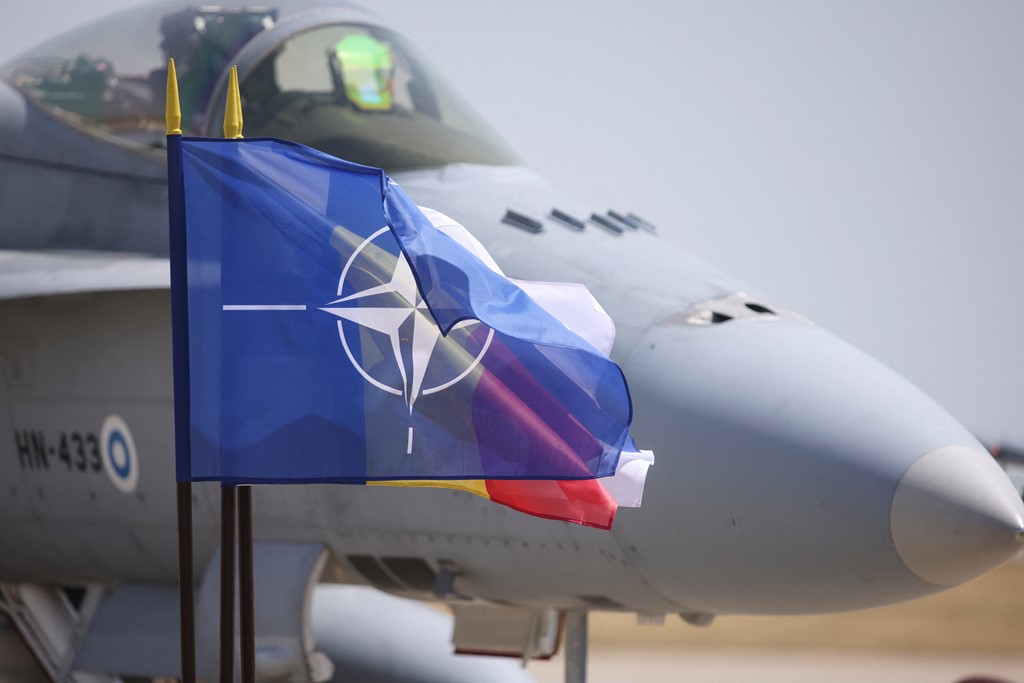
The end of the Cold War found a fitting symbol on July 1, 1991, when the Warsaw Pact formally disbanded. The military alliance of the Soviet Union and its Eastern European satellites had been founded in 1955 as a counterweight to NATO. Its dissolution marked the final collapse of the Soviet sphere of influence in Europe.
The signing ceremony in Prague was a subdued affair, reflecting the exhaustion of decades of confrontation. The leaders of the pact’s member states—now independent nations charting their own courses—gathered to formally end an alliance that had once seemed permanent. The Warsaw Pact’s dissolution cleared the way for the expansion of NATO and the integration of Eastern European countries into Western institutions.
A Cultural Tradition: Bulgaria’s July Morning
Not all July 1 events are political or military. In Bulgaria, the day is marked by “July Morning,” a unique cultural tradition that began in the 1980s. Young people, influenced by the global hippie movement, began gathering at the breakwater in Varna to play guitars, sing, and stay up all night to greet the sunrise on July 1.
The tradition was a quiet form of protest against the restrictions of the communist regime—an assertion of individuality and freedom in a system that demanded conformity. Today, Bulgarians of all ages gather on the Black Sea coast, in the mountains, and by reservoirs to welcome the first rays of light. It has become a celebration of free spirit and national identity, a reminder that even under oppressive regimes, human beings find ways to express their essential freedom.
The Sinking of the Montevideo Maru
War’s cruelty found a particularly tragic expression on July 1, 1942, when the American submarine USS Sturgeon torpedoed and sank the Japanese transport ship Montevideo Maru off the coast of Luzon in the Philippines.
Among those killed were 1,050 Allied prisoners of war being transported to Hainan Island. These were Australian soldiers and civilians captured in the fall of Rabaul, along with other Allied personnel. The submarine’s crew had no way of knowing that the ship carried prisoners; the Japanese did not mark POW transports. The sinking remains one of the worst maritime disasters in Australian history and a haunting reminder of the fog of war.
The First Flight of Naval Aviation
On a more hopeful note, July 1, 1911, marked the first flight of the U.S. Navy’s first aircraft, the Curtiss A-1 Triad, from Lake Keuka at Hammondsport, New York. During a five-minute flight, the airplane reached an altitude of 25 feet.
This modest beginning launched naval aviation, which would become a decisive force in World War II and beyond. The Triad was designed to take off from and land on water, a crucial capability for naval operations. Its first flight on July 1 represented the marriage of two technologies—the airplane and the ship—that would transform warfare and global power.
Revolutions and Coups: Nigeria’s Bloody July
The politics of post-colonial Africa have also left their mark on July 1. In 1966, Nigeria experienced a bloody counter-coup, regarded as the bloodiest in the country’s history. The coup was in revenge for an earlier coup in January of the same year and resulted in widespread violence and instability.
The events of July 1966 helped re-establish political security for the north in a Nigeria that had been unitarized. But the violence and its aftermath deepened ethnic divisions and set the stage for the Nigerian Civil War that would erupt the following year. The coup remains a painful chapter in Nigerian history, a reminder of the fragility of post-colonial institutions.
The Closing of an Era: Boston Naval Shipyard
On July 1, 1974, the oldest active shipyard in the U.S. Navy, the Boston Naval Shipyard in Massachusetts, closed its gates after 174 years of service. Among the ships built there were the 74-gun ships of the line Independence, Vermont, and Virginia, as well as numerous destroyers and other vessels.
The closure marked the end of an era in American naval history. The shipyard had been a center of maritime activity since the early days of the republic, building the ships that fought the War of 1812, the Civil War, and two world wars. Its closure reflected the changing nature of naval warfare and the consolidation of shipbuilding at larger facilities.
Leave a Reply