There are dates on the calendar that pass with little remark, and then there are dates that seem to attract history like a magnet. June 22 is emphatically the latter. Across centuries, continents, and industries, this single day has witnessed events of staggering consequence—from the outbreak of the largest military operation in human history to the quiet establishment of an observatory that would forever change how we see the stars; from sporting moments that transcended athletics to become global cultural touchstones to scientific breakthroughs and heartbreaking tragedies.
This is the story of June 22—a day that has shaped our world in ways both profound and unexpected.
The Shadow of War: June 22 and the Fate of Nations
Perhaps no single event on June 22 carries the weight of what unfolded in 1941. On that morning, Nazi Germany launched Operation Barbarossa, the invasion of the Soviet Union—the largest military operation in history. More than 150 German army divisions poured across a 3,000-kilometer front stretching between the Baltic and the Black Sea. It was a gambit of breathtaking ambition, one that would ultimately prove catastrophic for the Third Reich and pivotal to the Allied victory in World War II.
The invasion triggered a cascade of events across Eastern Europe. In Lithuania, the June Uprising against the Soviets began on the same day, as resistance movements saw an opportunity in the chaos of the German advance. The date would become so seared into the Soviet consciousness that it later inspired the “22 June Song,” a haunting musical memorial to the day the war came to the Soviet people.
But June 22’s martial significance extends far beyond the 20th century. On this day in 1815, Napoleon Bonaparte abdicated for the second and final time as Emperor of the French. It was the definitive end of an era—the final curtain on the Napoleonic Wars that had convulsed Europe for over a decade. The Little Emperor, who had once dominated the continent from Madrid to Moscow, was now finished, destined for exile on the remote South Atlantic island of St. Helena.
A century before Napoleon’s final fall, on June 22, 1865, the CSS Shenandoah fired the last shot of the American Civil War in the Bering Strait—a surreal and distant epilogue to the conflict that had torn the United States apart. The Confederate raider, unaware that the war had effectively ended months earlier, continued its commerce-raiding mission in the far reaches of the Pacific before finally surrendering. It was a fittingly strange conclusion to a war that had been defined by strange and terrible ironies.
Go back further still, and June 22 reveals itself as a day of ancient turning points. In 168 BC, Roman forces under Lucius Aemilius Paullus defeated Macedonian King Perseus at the Battle of Pydna, ending the Third Macedonian War and enabling Rome to annex Macedonia. The victory cemented Roman dominance over the Greek world and expanded Roman influence across the Eastern Mediterranean. Nearly five centuries later, in 217 BC, Ptolemy IV of Egypt defeated Antiochus III the Great of the Seleucid kingdom at the Battle of Raphia, one of the most significant military encounters of the Hellenistic era.
Science and the Stars: When Knowledge Advanced
June 22 has also been a day of profound significance for science and human understanding—though not always in ways that were comfortable for the seekers of truth.
The most famous scientific event on this date occurred in 1633, when Galileo Galilei was forced by the Roman Inquisition to recant his “heretical” position that the Earth orbited the Sun. The great astronomer, now elderly and broken, knelt before the cardinals and renounced the heliocentric model that modern science has long since proven correct. It was one of history’s most famous conflicts between science and religious authority—a moment that has come to symbolize the tension between empirical truth and institutional power. (The Vatican would not formally apologize for its handling of the Galileo case until 1992.)
But June 22 also saw the establishment of one of the world’s most important scientific institutions. On this day in 1675, King Charles II of England established the Royal Greenwich Observatory. The observatory would go on to become the center of astronomical research in the English-speaking world, and its location—the Prime Meridian—would eventually become the reference point for global timekeeping and navigation. Every map, every GPS coordinate, every time zone in the world traces back, in some sense, to the work that began at Greenwich on that June day.
The day has also witnessed significant moments in exploration. On June 22, 1863, explorers John Hanning Speke and James Augustus Grant described their discovery of the sources of the Nile at a meeting of the Royal Geographical Society in London. The identification of Lake Victoria as the Nile’s source was one of the great geographical revelations of the 19th century, solving a mystery that had fascinated travelers since ancient times.
Even the mundane has its place in the history of June 22 invention. On this day in 1880, Edward Gough of Allentown, Pennsylvania, received patent number 229,117 for an oil-wick lamp. It was a modest innovation—a small improvement to a common household object—but it reminds us that progress often comes in increments, not revolutions.
The Sweet Science and the Beautiful Game: Sports Legends Born
If there is a single event that defines June 22 in the popular imagination, it is surely what happened in Mexico City on this day in 1986. In the quarterfinals of the FIFA World Cup, Argentine soccer legend Diego Maradona scored not one but two of the most famous goals in football history.
The first was the “Hand of God”—a goal scored with his fist, illegally, against England, a country still smarting from the Falklands War four years earlier. Maradona would later describe it as “a little with the head of Maradona, a little with the hand of God”—a phrase that captured both his genius and his cheek. Minutes later, he scored the “Goal of the Century,” weaving past five English defenders in a mesmerizing run that is still replayed endlessly today. Argentina won 2-1 and would go on to beat West Germany in the final. In one afternoon, Maradona transformed himself from a great player into a global icon—and gave the world a moment that still sparks debate and wonder four decades later.
Eight years earlier, on June 22, 1938, another sporting event carried geopolitical weight that dwarfed the confines of the arena. At Yankee Stadium in New York, before 70,000 spectators, American boxer Joe Louis knocked out German Max Schmeling in just two minutes and four seconds. The fight was freighted with symbolism: Louis, an African American, representing not just his country but his race against Schmeling, who had become a symbol of Nazi Aryan supremacy. When Louis demolished Schmeling in the first round, it was more than a boxing victory—it was a blow against the ideology that was then consuming Europe. (Louis had lost to Schmeling two years earlier, making the victory all the sweeter.)
The boxing history of June 22 extends even further. On this day in 1937, Joe Louis won the world heavyweight championship for the first time, knocking out James J. Braddock in the eighth round at Chicago’s Comiskey Park. And in 1949, Ezzard Charles beat Jersey Joe Walcott in 15 rounds at Comiskey Park for the heavyweight title. June 22, it seems, has a particular affinity for heavyweight boxing.
The day has seen other sporting milestones as well. In 1994, the Houston Rockets beat the New York Knicks 90-84 in Game 7 of the NBA Finals to win their first championship. In 1981, John McEnroe delivered his famous “You cannot be serious” rant at Wimbledon during a first-round match—a moment that, like Maradona’s goal, transcended its sport to become part of popular culture.
And on June 22, 1927, South African tennis player Billie Tapscott caused a stir at Wimbledon by breaking with convention and not wearing stockings in her first-round match. It was a small act of rebellion, but one that spoke to larger changes sweeping through society.
Culture, Music, and the Arts: Creativity on a June Day
June 22 has also been a day of cultural milestones—moments when art, music, and entertainment left their mark on the world.
In 1955, Disney’s animated classic “Lady and the Tramp” had its premiere. The film, with its iconic spaghetti-sharing scene, would become one of the studio’s most beloved works and a touchstone of American popular culture. In 1977, Walt Disney Productions released “The Rescuers,” the first Disney animated film to receive a sequel.
The world of music has also been well-represented on this date. On June 22, 1963, a 13-year-old Stevie Wonder released his first single, “Fingertips”—the first live non-studio recording to reach number one on the Billboard charts. It was the beginning of one of the most remarkable careers in popular music history.
In 1973, David Bowie released “Life on Mars?” as a single, a song that had originally appeared on his album “Hunky Dory” and would become one of his signature works. The same year, Neil Young released his tenth album, “Rust Never Sleeps,” which peaked at number eight on the charts and featured enduring songs like “Powderfinger” and “My My, Hey Hey”. In 1979, Queen released their double live album “Live Killers”. And in 1992, Elton John released his fourth studio album, “The One”.
The film world has its own June 22 connections. In 2009, the biographical sports drama “The Damned United” was released, telling the story of Brian Clough’s tumultuous 44-day reign as manager of Leeds United. And in the broader world of entertainment, June 22, 1981, saw Mark David Chapman plead guilty to the murder of John Lennon—a grim coda to one of the most shocking events of the previous decade.
Tragedy and Disaster: The Darker Side of the Date
For all its moments of triumph and discovery, June 22 has also witnessed its share of tragedy.
On June 22, 1939, a devastating earthquake struck Accra, the capital of the Gold Coast (now Ghana), killing seventeen people and injuring more than 135 others, while causing damage amounting to hundreds of thousands of pounds. The tremors shook the entire region of the Gold Coast, Ashanti, Dahomey, and Western Nigeria.
In 2003, more than 100 people were killed when a ruptured fuel pipeline exploded and caught fire at a remote village in southeastern Nigeria. It was a grim reminder of the human cost of the oil industry that powers so much of the modern world.
In 2010, at least 60 people were killed and hundreds went missing after a derailed train plunged into a ravine in the Republic of the Congo. The same year, floods and mudslides in northeastern Brazil killed at least 31 people in the states of Alagoas and Pernambuco.
More recently, on June 22, 2022, a powerful earthquake struck a mountainous region of eastern Afghanistan, killing at least 1,000 people and injuring at least 1,500 others. It was one of the deadliest earthquakes to hit the country in decades, a catastrophe that compounded the suffering of a nation already beset by war and poverty.
Even infrastructure failures have marked the date. On June 22, 2009, a Metro commuter train slammed into the back of another train waiting to enter a station in Washington, D.C., killing nine people, including a train operator, and leaving dozens injured. It was the deadliest accident on the Metro system since it opened in 1976.
Politics, Law, and Social Progress
June 22 has also been a day of significant political and legal milestones—moments when the arc of history bent, however slightly, toward justice.
On June 22, 1944, President Franklin D. Roosevelt signed the Servicemen’s Readjustment Act of 1944, more popularly known as the G.I. Bill. The legislation provided tuition coverage, unemployment support, and low-interest home and business loans to returning World War II veterans. It was one of the most transformative pieces of social legislation in American history, creating the modern American middle class and opening the doors of higher education to millions who would otherwise never have had the chance.
On June 22, 1970, President Richard Nixon signed an extension of the Voting Rights Act of 1965 that lowered the minimum voting age to 18. The 26th Amendment would be ratified the following year, but the June 22 signing was the crucial step that made it possible. It was a recognition that if young men could be drafted to fight in Vietnam, they deserved the right to vote.
On June 22, 1772, the Somerset v Stewart court case in England found that slavery was unsupported by English common law. The ruling was a milestone in the abolitionist movement, establishing a legal precedent that would be cited for generations in the fight against human bondage.
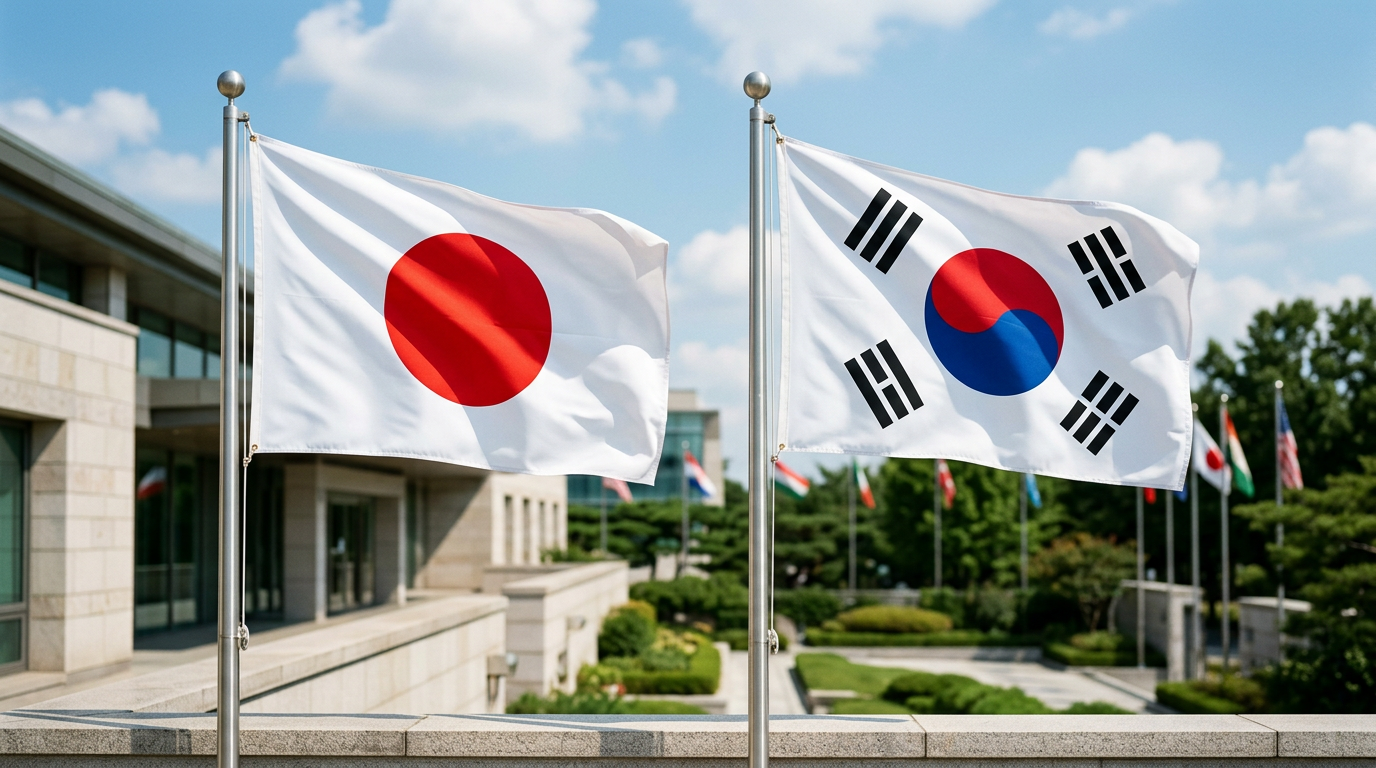
On June 22, 1965, Japan and South Korea signed the Treaty on Basic Relations, normalizing diplomatic relations between the two countries. The treaty was a crucial step in the post-war reconstruction of East Asia, though tensions between the two nations would persist for decades.
In 1992, the U.S. Supreme Court, in R.A.V. v. City of St. Paul, unanimously ruled that hate crime laws that banned cross-burning and similar expressions of racial bias violated free-speech rights. The decision was controversial, pitting the protection of free expression against the need to combat racial intimidation—a tension that continues to define American jurisprudence.
And on June 22, 1977, John N. Mitchell became the first former U.S. attorney general to go to prison, beginning a sentence for his role in the Watergate cover-up. It was a stark reminder that even the highest officials are not above the law—a principle that the Watergate scandal had dramatically affirmed.
Crime and Infamy
The darker side of human nature has also found its place on June 22. On this day in 2011, after evading arrest for 16 years, mob boss James “Whitey” Bulger was captured in Santa Monica, California. Bulger, who had been one of the FBI’s most wanted fugitives, was finally brought to justice—a moment that closed one of the most notorious chapters in American organized crime history.
On June 22, 2012, former Penn State assistant football coach Jerry Sandusky was convicted by a jury on 45 counts of sexually assaulting ten boys over 15 years. The conviction sent shockwaves through the world of college sports and raised profound questions about institutional accountability and the protection of children.
A Day Like No Other
What emerges from this survey of June 22 is a portrait of a date that has borne witness to the full range of human experience—triumph and tragedy, discovery and destruction, justice and injustice, creation and catastrophe. From the battlefields of ancient Macedonia to the football pitches of Mexico City; from the observatories of 17th-century England to the patent offices of 19th-century Pennsylvania; from the boxing rings of New York to the earthquake-shattered villages of Afghanistan—June 22 has been a day of consequence.
It is a reminder that history does not happen on a schedule. It does not wait for convenient moments. It unfolds on ordinary Tuesdays and Thursdays, on dates that seem unremarkable until the events that transpire on them make them unforgettable. June 22 is one of those dates—a day that, across the centuries and around the world, has proven itself to be anything but ordinary.
What will the next June 22 bring? Only time will tell. But if history is any guide, it will be a day worth remembering.
Leave a Reply