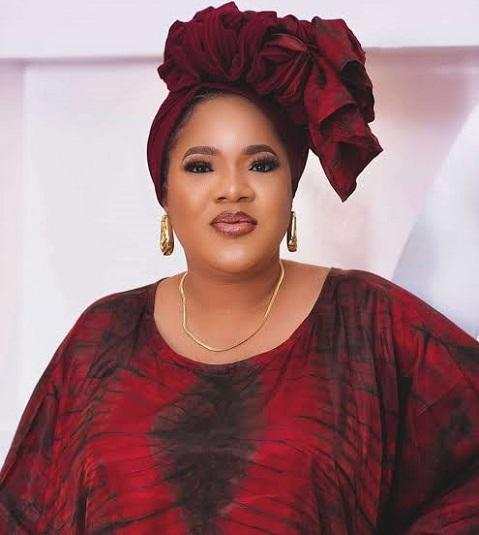
Few celebrity moments have dominated Nigerian social media conversations this week quite like the viral video of Nollywood actress Toyin Abraham greeting billionaire businessman Razaq Okoya and his wife, Shade Okoya.
What appeared to be a simple exchange at a public event quickly transformed into a nationwide debate about respect, culture, class, and the expectations placed on public figures in modern Nigeria.
The video, which spread rapidly across social media platforms, showed the award-winning actress kneeling to greet the influential couple, a gesture deeply rooted in Yoruba culture and widely recognized as a traditional sign of respect. However, what might have passed unnoticed in another era quickly became a lightning rod for online discussion.
Within hours, Nigerians were divided.
Some social media users praised the actress for demonstrating humility despite her celebrity status, while others questioned whether such gestures should still be expected in contemporary society, particularly from accomplished women who have built successful careers of their own.
As reactions intensified, Toyin Abraham chose not to remain silent.
Instead, the actress addressed the controversy directly, offering insight into the values and upbringing that shaped her decision.
According to reports carried by several entertainment newspapers and blogs, Abraham explained that her actions were guided not by social status or wealth but by the cultural principles instilled in her from childhood.
“I was raised that way,” she reportedly stated while responding to criticism surrounding the now-viral clip.
The statement quickly became one of the most quoted responses in Nigerian entertainment media, resonating with many people who viewed the incident through the lens of cultural identity rather than celebrity dynamics.
For many Nigerians, especially within Yoruba communities, kneeling to greet elders is more than a formality. It is a longstanding tradition that symbolizes respect, good upbringing, and appreciation for age and experience. The practice remains common across homes, religious gatherings, family events, and public ceremonies.
Yet the controversy surrounding Abraham’s gesture highlights an increasingly common tension in Nigerian society—the intersection of tradition and modernity.
As younger generations become more influenced by global culture, questions frequently arise regarding which customs should be preserved and which should evolve. Social media has amplified these conversations, creating spaces where cultural practices are debated in real time before audiences of millions.
The Toyin Abraham incident became a perfect example.
While supporters viewed the actress’s actions as admirable, critics argued that respect should not necessarily require physical gestures that some perceive as outdated. Others questioned whether celebrity status should alter traditional expectations.
The resulting discussion extended far beyond the actress herself.
Comment sections became battlegrounds for broader debates about gender roles, cultural heritage, and changing societal norms. Thousands of Nigerians shared personal experiences, with many recounting how they were taught similar values growing up.
Several commentators defended Abraham’s position, arguing that respecting elders does not diminish personal achievement or independence.
“Being successful doesn’t mean abandoning culture,” one social media user wrote in a widely shared post.
Another argued that traditions such as kneeling or prostrating to greet elders remain important aspects of Nigerian identity and should not be viewed through purely Western perspectives.
Others, however, maintained that respect can be expressed in different ways and that cultural practices naturally evolve over time.
Amid the ongoing discussion, one fact remained clear: Toyin Abraham had unintentionally sparked one of the week’s most significant cultural conversations.
The actress is no stranger to public attention.
Over the years, Abraham has established herself as one of Nollywood’s most bankable stars, known for her versatility, entrepreneurial success, and ability to connect with audiences across different demographics. Her films consistently perform strongly at the box office, and her influence extends well beyond the entertainment industry.
Because of her visibility, even seemingly ordinary actions often attract extraordinary scrutiny.
This reality reflects the changing nature of celebrity culture in the digital age. Today’s public figures are no longer evaluated solely on their professional achievements. Their personal choices, interactions, and everyday behavior frequently become subjects of public discourse.
For Abraham, the incident demonstrates how quickly a brief moment can become a national conversation.
What began as a simple greeting evolved into a discussion about values that many Nigerians hold dear.
The involvement of the Okoya family added another dimension to the story. As one of Nigeria’s most prominent business families, the Okoyas occupy a unique position within the country’s social landscape. Their presence at high-profile events often attracts attention, and interactions involving them frequently generate media coverage.
However, the focus of the debate ultimately shifted away from wealth or influence and toward the broader question of cultural identity.
How should traditions be preserved in a rapidly changing society?
Can modern success coexist with longstanding customs?
Should cultural expressions of respect remain unchanged, or should they adapt to contemporary realities?
These questions continue to shape public discourse across Nigeria, and the Toyin Abraham episode has become the latest chapter in that ongoing conversation.
Despite the criticism, Abraham’s response appears to have strengthened support among many fans who admired her willingness to stand by her beliefs. Rather than apologizing or attempting to avoid the discussion, she openly embraced the values she says were instilled in her from childhood.
In doing so, she transformed a moment of controversy into an opportunity for reflection.
Whether one agrees with her perspective or not, the conversation surrounding the viral video has highlighted the enduring influence of culture in Nigerian society.
As social media continues to blur the boundaries between private moments and public debates, incidents like these remind us that celebrity stories often reveal deeper truths about the communities that consume them.
For Toyin Abraham, what started as a respectful greeting became a national talking point. For many Nigerians, however, the discussion was never really about a celebrity kneeling.
It was about identity, tradition, and the values that continue to shape life in one of Africa’s most culturally diverse nations.
Leave a Reply