Pension Reform Proposals Trigger New Political Debate
Germany’s long-running debate over the future of its pension system moved back to center stage today as the federal pension commission formally presented recommendations intended to stabilize retirement financing in the coming years.
The commission’s recommendations are expected to ignite difficult negotiations inside Chancellor Friedrich Merz’s governing coalition. While policymakers broadly agree that reforms are necessary, there is far less consensus on how the burden should be shared between workers, employers and the state. According to German media analyses, the challenge now is transforming technical recommendations into legislation that could be implemented as early as next year.
Political observers note that pension reform has become one of the most sensitive domestic issues facing Berlin. Germany’s population is aging rapidly, and the number of retirees is increasing faster than the number of contributors to the pension system. This imbalance has fueled concerns about sustainability and intergenerational fairness.
Economists interviewed by several publications argued that delaying reform would only increase costs in the future. At the same time, labor unions and social organizations warned against measures that could effectively reduce retirement benefits or raise the retirement age without adequate safeguards.
The debate is expected to dominate domestic politics throughout the summer, particularly as coalition partners seek common ground before legislative proposals reach parliament.
Public Broadcasting Funding Faces Constitutional Test
Another major story attracting national attention today is the hearing before Germany’s Federal Constitutional Court regarding the financing of public broadcasters ARD and ZDF. The dispute centers on a planned increase in the broadcasting contribution that was approved by an independent commission but blocked by Germany’s federal states.
The increase, originally intended to take effect in January 2025, became a political flashpoint amid broader concerns about household costs and public spending. Public broadcasters argue that stable funding is essential to fulfill their constitutional mandate, while critics contend that the institutions must first undertake significant reforms and cost reductions.
The court’s eventual ruling could have far-reaching consequences not only for public broadcasting finances but also for the relationship between political authorities and publicly funded media organizations. Media experts say the case raises fundamental questions about editorial independence and the protection of public-interest journalism.
The proceedings are being closely watched across Europe, where many countries face similar debates over the future financing of public broadcasters in an increasingly fragmented media environment.
Economic Sentiment Improves Despite Persistent Structural Weaknesses
Germany’s economic outlook received a modest boost after new data indicated a stronger-than-expected rebound in investor sentiment. The ZEW economic sentiment index rose significantly in June, reflecting greater optimism among financial market experts. Analysts linked the improvement partly to easing geopolitical concerns and hopes that inflationary pressures tied to energy markets may moderate.
ZEW President Achim Wambach said hopes for a reduction in geopolitical tensions had contributed to a less pessimistic outlook regarding inflation. His assessment echoed a broader sense among investors that some of the uncertainties weighing on Europe’s largest economy may be beginning to ease.
Yet economists cautioned against interpreting the survey as evidence of a full recovery. While expectations improved, indicators measuring the current economic situation remained deeply negative. Several analysts emphasized that Germany continues to face substantial structural challenges, including weak productivity growth, high energy costs and sluggish private investment.
The cautious mood is reinforced by recent Bundesbank assessments suggesting that government spending on infrastructure and defense has become the primary factor preventing economic contraction. Without those expenditures, economists argue, Germany could already be experiencing a renewed downturn.
Business leaders interviewed in various publications stressed that confidence alone will not restore growth. Many called for faster planning approvals, reduced bureaucracy and greater incentives for private-sector investment.
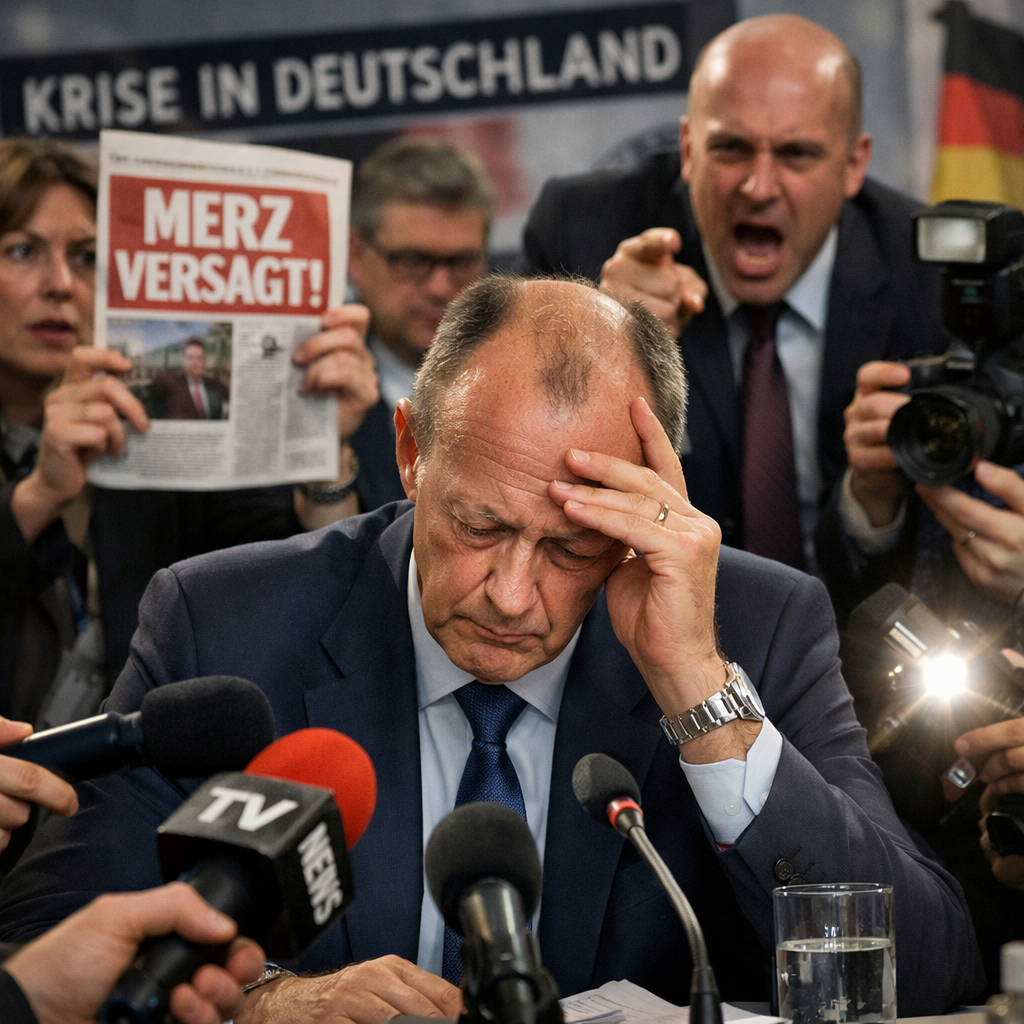
Mounting Pressure on Chancellor Friedrich Merz
Economic concerns continue to shape perceptions of Chancellor Friedrich Merz and his coalition government. Nearly a year after taking office, the administration remains under pressure to demonstrate tangible progress on growth, migration, energy policy and social reform.
Political commentators note that the coalition was formed with ambitious promises to modernize infrastructure, strengthen competitiveness and restore confidence in government after a period of political uncertainty. However, persistent economic stagnation and internal disagreements have complicated implementation efforts.
Several newspapers highlighted growing public frustration with slow reform progress. Critics argue that coalition disputes have distracted from urgent policy priorities, while supporters maintain that the government inherited significant structural challenges that cannot be solved quickly.
The coming months are expected to be crucial for Merz’s administration as it seeks to advance pension reform, address economic weaknesses and maintain coalition unity.
Defense Industry Expansion Marks New Franco-German Partnership
One of the most significant industrial developments reported today involves the Franco-German defense company KNDS. Germany and France have finalized an agreement that gives both governments equal 40 percent holdings in the company, paving the way for a future stock market listing.
KNDS, known for producing military equipment including Leopard 2 tanks and Caesar artillery systems, has become a central player in Europe’s defense modernization efforts. The restructuring is widely viewed as a strategic move designed to strengthen Europe’s defense-industrial base and support long-term military readiness.
Industry experts interviewed by European media described the agreement as a milestone in Franco-German cooperation. They argued that access to public capital markets could help finance future acquisitions, research programs and production expansion at a time when European governments are increasing defense spending.
The development comes amid broader efforts across Europe to reduce dependence on external suppliers and enhance strategic autonomy in defense technology.
Boris Pistorius Remains Central Figure in Security Policy
Germany’s changing defense posture continues to attract public attention, with Defense Minister Boris Pistorius remaining one of the country’s most influential political figures. Analysts say Pistorius has become the public face of Germany’s military modernization program following Russia’s invasion of Ukraine and subsequent shifts in European security policy.
His push to strengthen the Bundeswehr has included increased spending, procurement reforms and efforts to expand military capabilities. Supporters credit him with communicating security challenges in clear and direct language, while critics argue that structural reforms are progressing too slowly.
Defense policy has become one of the few areas where broad political consensus remains possible, although debates continue over funding levels, procurement priorities and the balance between national and European initiatives.
Military planners have repeatedly emphasized that Germany’s economic strength must be matched by adequate defense capabilities if the country is to play a leading role within Europe.
Bayer Faces Renewed Scrutiny Over Glyphosate Complaint
Environmental and agricultural policy also returned to the spotlight after reports that a complaint concerning glyphosate and compliance with international standards was partially accepted. The development places renewed attention on agricultural giant Bayer and the broader debate surrounding herbicide regulation.
Environmental organizations argue that stronger safeguards are necessary to protect ecosystems and public health, while farming groups stress the importance of maintaining effective crop-protection tools. The dispute reflects wider tensions between sustainability goals and agricultural productivity across Europe.
The issue is expected to remain politically sensitive as European regulators continue reviewing environmental standards and agricultural policies.
Home Office Debate Continues Across German Workplaces
Germany’s changing work culture remains a prominent topic in business reporting. Interviews published today examined the future of remote work and hybrid employment models, an issue that continues to divide employers and employees.
In one widely discussed interview, workplace researcher Florian Kunze argued that many employees working from home actually spend more time working than they do in traditional office settings. He warned companies against imposing rigid return-to-office mandates, suggesting that forced policies can damage morale and productivity.
“Im Homeoffice arbeiten die Leute länger als im Büro,” Kunze said, arguing that flexible work arrangements often result in higher levels of commitment and longer working hours than many managers assume.
The comments reflect ongoing debates within German corporations about balancing flexibility, collaboration and organizational culture. While some executives favor greater in-office attendance, many employees continue to value remote work arrangements introduced during the pandemic years.
Labor market specialists note that flexible working conditions have become an important factor in recruitment and retention, particularly in sectors facing skilled-worker shortages.
Economists Debate Germany’s Growth Strategy
German economic commentators today devoted significant attention to the question of how the country can restore stronger long-term growth. Interviews with leading economists highlighted competing visions for industrial policy, energy transition and competitiveness.
Economist Gabriel Felbermayr, speaking in an interview cited by German media, criticized previous government responses to high fuel prices and argued that policymakers should focus on structural reforms rather than short-term relief measures. He also discussed the role of international competition and the opportunities presented by technological transformation.
Many economists agree that Germany’s challenges are not solely cyclical. Instead, they point to deeper issues including demographic decline, investment gaps and productivity constraints. According to recent analyses, the country risks a prolonged period of weak growth unless substantial reforms are implemented.
Business organizations have repeatedly called for faster digitalization, more efficient public administration and greater investment in infrastructure. These themes are likely to feature prominently in upcoming budget and reform discussions.
Germany Watches Europe and the World
German newspapers are also devoting extensive coverage to international developments that could affect the country’s economy and foreign policy. Among the most closely followed stories are negotiations involving the United States and Iran, which have implications for energy markets and inflation across Europe. Reports described “encouraging progress” in diplomatic contacts, although significant obstacles remain.
Elsewhere, German media continue to analyze the long-term consequences of Brexit a decade after the referendum, examining political instability in Britain and evolving European relationships.
International reporting also highlighted trade relations with China, migration issues, European security cooperation and ongoing debates over Europe’s strategic autonomy. For Germany, whose economy depends heavily on exports and global supply chains, developments abroad remain inseparable from domestic economic prospects.
As today’s coverage demonstrates, Germany finds itself navigating a complex mix of domestic reform pressures, economic uncertainty, demographic challenges and geopolitical change. Pension reform, economic competitiveness, defense modernization and media financing are all competing for attention as policymakers attempt to chart a course through a period of profound transformation.
Leave a Reply