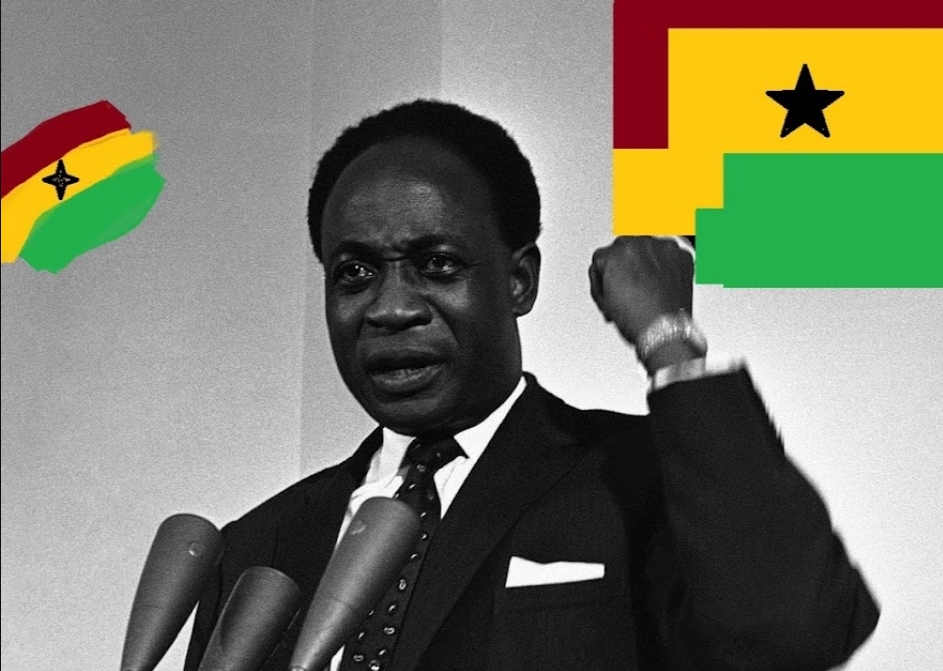
According to Biobriefs, Kwame Nkrumah remains one of the most iconic figures in African history. Known as the founding father of modern Ghana and a prominent advocate for African liberation, Nkrumah’s life and achievements continue to inspire many around the world.
This biography dives into his life story, his commitment to African independence, and his lasting legacy.
Kwame Nkrumah Wiki Profile
Full Name: Francis Kwame Nwia Kofi Nkrumah
Date of Birth: September 21, 1909
Place of Birth: Nkroful, Gold Coast (now Ghana)
Died: April 27, 1972, at age 62
Nationality: Ghanaian
Occupation: Politician, Author, Pan-Africanist
Famous For: Leading Ghana to independence and advocating for African unity
Kwame Nkrumah Early Life and State of Origin
Kwame Nkrumah was born on September 21, 1909, in Nkroful, a village in the Western Region of the Gold Coast (modern-day Ghana). His early life was shaped by the experiences of British colonialism and the hopes of a continent yearning for independence. Nkrumah’s mother, Elizabeth Nyanibah, raised him as a single parent. Nkrumah showed exceptional intellectual potential from a young age, which led to opportunities to pursue further education, despite coming from modest beginnings.
Kwame Nkrumah Education
Nkrumah’s education played a pivotal role in shaping his worldview and fostering his vision for a free and united Africa. He attended Achimota School in Accra, Ghana, and later trained as a teacher at Prince of Wales College. Recognizing the need to continue his education, he moved to the United States, enrolling at Lincoln University in Pennsylvania in 1935. Here, he earned a Bachelor of Arts degree in economics and sociology and later went on to complete a master’s degree in philosophy and education.
His time in the United States exposed him to ideologies such as Marxism, socialism, and Pan-Africanism, which became fundamental to his vision for Africa. Nkrumah continued his studies at University College London after moving to England in 1945. It was in London that he met influential African and Caribbean activists, further fueling his commitment to the Pan-African movement.
Kwame Nkrumah Career and Rise to Prominence
Kwame Nkrumah’s political journey began in earnest when he returned to the Gold Coast in 1947. He became General Secretary of the United Gold Coast Convention (UGCC), an organization advocating for independence. However, Nkrumah’s radical vision clashed with the UGCC’s more conservative approach, leading him to form his own party, the Convention People’s Party (CPP), in 1949. The CPP’s slogan, “Self-Government Now,” resonated deeply with the people of the Gold Coast.
In 1951, Nkrumah was arrested for organizing protests against colonial rule. His imprisonment only strengthened his popularity, and he was elected to the Legislative Assembly while still in jail. Upon his release, he was appointed as the Leader of Government Business and later became the Prime Minister of the Gold Coast. In 1957, Nkrumah led Ghana to independence, making it the first sub-Saharan African country to achieve independence from colonial rule.
Pan-African Vision and Achievements
As Prime Minister and, later, President of Ghana, Nkrumah dedicated himself to Pan-Africanism. He was instrumental in establishing the Organization of African Unity (OAU) in 1963, which aimed to promote solidarity among African states and eliminate colonial influence. His leadership helped Ghana emerge as a hub for revolutionary movements across Africa, supporting other independence movements.
Nkrumah initiated numerous ambitious projects, including the construction of the Akosombo Dam for hydroelectric power, aimed at industrializing Ghana. His goal was to transform Ghana into a self-sufficient and prosperous nation, a vision that influenced leaders across the continent.
However, his policies faced both internal and external opposition. Nkrumah’s socialist ideologies and alliances with the Soviet Union drew criticism from Western powers, and his focus on industrialization led to economic difficulties. In 1966, while he was on a diplomatic trip to North Vietnam and China, Nkrumah’s government was overthrown in a coup d’état, forcing him into exile.
Kwame Nkrumah Personal Life: Relationship and Children
Kwame Nkrumah married Fathia Rizk, an Egyptian woman, in 1957, symbolizing the unity between African nations. The marriage was arranged by Egyptian President Gamal Abdel Nasser, reflecting the strong diplomatic relations Nkrumah established with Egypt. Together, they had three children: Gamal, Samia, and Sekou Nkrumah. Fathia supported her husband’s vision and remained by his side through the many challenges of his political career.
Nkrumah was known to be intensely dedicated to his work, often sacrificing personal time with his family to advance his vision for Ghana and Africa. His commitment to African unity meant that his family life was closely intertwined with his public life, and his legacy is celebrated by his descendants to this day.
Later Years and Exile
Following the coup in 1966, Nkrumah lived in Guinea, where he was welcomed by President Ahmed Sékou Touré. Touré made him an honorary co-president of Guinea, a symbolic gesture recognizing Nkrumah’s contributions to the African liberation struggle. While in exile, Nkrumah continued to write and publish works on African unity and anti-colonialism. His influential books include “Africa Must Unite,” “Neo-Colonialism: The Last Stage of Imperialism,” and “Class Struggle in Africa.”
Nkrumah spent his later years in Conakry, Guinea, where he continued to work towards his vision of African solidarity and self-governance. However, his health deteriorated, and he was diagnosed with cancer. He was eventually flown to Romania for medical treatment, where he died on April 27, 1972, at the age of 62.
Leave a Reply