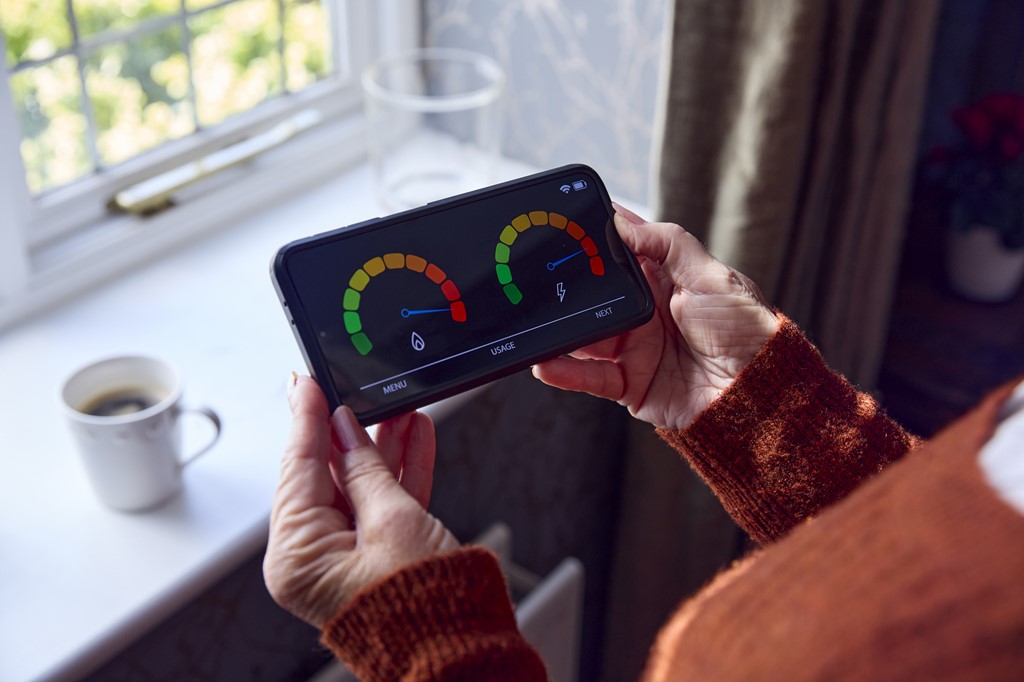
The energy price cap limits what utility companies can charge customers for a daily standing charge and each kilowatt-hour of gas and electricity they use.
Regulator Ofgem releases the cap quarterly and estimates how much the average household would typically pay over a year at the new unit price.
This figure, £1,717, assumes a household with 2.4 people living in it consuming 2,700 kWh for electricity and 11,500 kWh for gas.
The real annual cost per customer will be different depending on how much energy you actually use. If you use more gas and electric than £1,717 buys, you will pay more.
With prices fluctuating significantly at each quarterly release over the last four years, the use of a yearly figure is also quite an imperfect basis for medium-term household budgeting.
Here’s what is actually capped:
- Each unit of electricity: 24.5p per kWh (up from 22.36p)
- Each unit of gas: 6.24p per kWh (up from 5.48p)
- Electric standing charge: 60.99p (up from 60.12p)
- Gas standing charge: 31.66p (up from 31.41p)
Ofgem’s price cap only applies to people in England, Scotland and Wales on standard variable or default tariffs.
This is most households, whether you pay by direct debit or a prepayment meter.
It doesn’t apply to the small numbers of people still on fixed-rate tariffs.
Leave a Reply