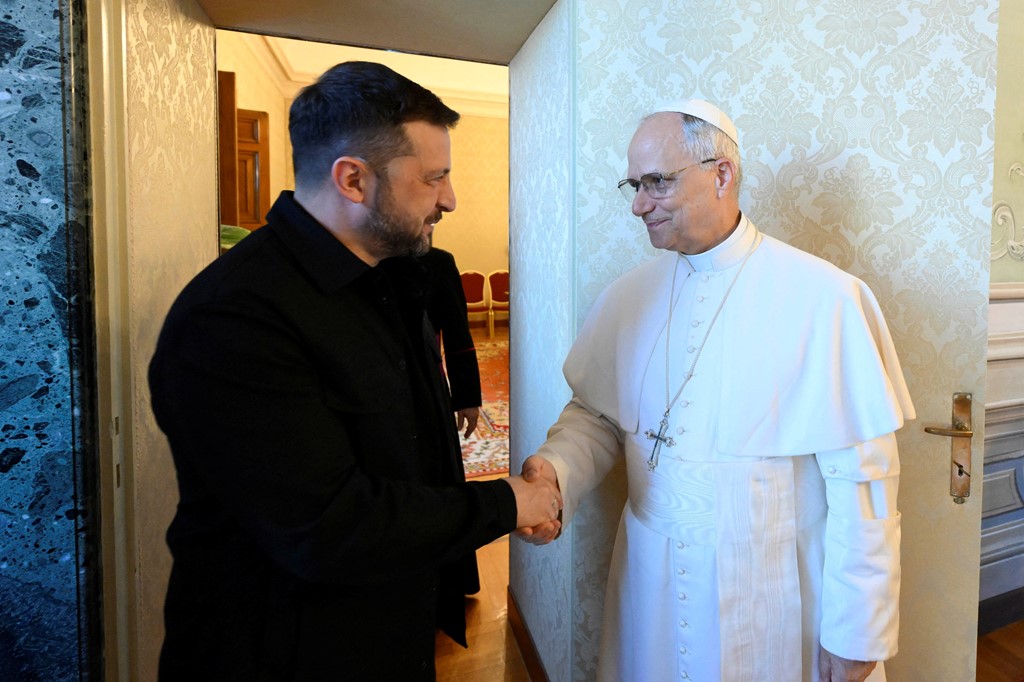
Europe’s leading stories today include escalating tensions surrounding the Russia–Ukraine war, attacks on commercial shipping in the Black Sea, nationwide student protests in France, a major cyberattack affecting French supermarkets and renewed debate over the United Kingdom’s future relationship with the European Union. European financial markets have also risen, while EU officials are preparing for discussions on migration, energy security and support for Ukraine.
1. Black Sea Ship Attacks Raise Maritime Security Concerns

Two ships were reportedly hit by drones off Bulgaria’s Black Sea coast on October 13, with one vessel sinking, according to reports citing Bulgarian Prime Minister Rumen Radev. Eleven crew members from the sunken vessel were reported missing, prompting concerns about the safety of commercial shipping in the region.
The incidents have raised concerns about the wider consequences of the Russia–Ukraine conflict for maritime trade, regional security and the movement of essential goods. Germany’s foreign minister condemned attacks on merchant vessels, warning that such incidents threaten international shipping and global food security.
The attacks add to pressure on European governments to strengthen maritime monitoring and protect commercial routes in the Black Sea.
2. Ukraine Questions Prospects for an Energy Ceasefire

The war between Russia and Ukraine remains a major focus of European diplomacy. Ukrainian President Volodymyr Zelenskyy said Russia had not heeded US President Donald Trump’s call for an energy ceasefire, while Ukrainian officials reported continued Russian attacks on energy infrastructure.
Ukraine has reportedly paused attacks on Russian oil refineries for two days following the US announcement, but Zelenskyy has rejected the idea of maintaining a ceasefire without reciprocal action by Moscow.
The disagreement highlights the difficulty of achieving even a limited reduction in hostilities. European officials are also discussing continued military and economic support for Ukraine, particularly as the continent approaches winter, when attacks on energy infrastructure could have serious consequences for households and industry.
3. France Faces Nationwide Student Protests

France has experienced another day of demonstrations over problems affecting the country’s education system. Student protests have focused on teacher shortages, overcrowded classrooms and deteriorating school buildings. Climate activist Greta Thunberg also joined students demonstrating in Paris, according to live reporting.
French unions reported that approximately 480,000 people joined protests and mobilisation activities, although the figure represents the unions’ reported estimate.
The demonstrations reflect growing frustration among students, educators and families over educational resources and working conditions. The scale of participation will likely intensify pressure on the French government to respond to concerns about staffing, infrastructure and the quality of public education.
4. Cyberattack Disrupts French Supermarkets
A cyberattack affecting supermarket refrigeration systems has disrupted food retail operations in France, with reports describing spoiled fresh and frozen food, empty shelves and financial losses.
The incident has highlighted the vulnerability of modern retail systems, where refrigeration, inventory management and other essential operations depend on interconnected digital infrastructure.
A disruption to temperature-control systems can quickly threaten food safety and force retailers to discard products. The reported incident therefore raises concerns extending beyond digital security to supply-chain resilience and consumer protection.
The episode is another reminder that cyberattacks can cause physical and economic consequences when they affect critical commercial systems.
5. UK Debate Over Closer European Union Relations Intensifies

British politician Andy Burnham has called for a longer-term discussion about the UK’s relationship with the European Union, reopening debate over the economic and political consequences of Brexit. His remarks represent a more explicit willingness to discuss closer European integration than some recent Labour leadership positions.
Options such as closer cooperation on trade, energy and the single market could feature in future discussions. However, full EU membership would involve major political and legal questions, and there is no indication that Britain is about to rejoin the bloc.
The debate comes as the UK and EU continue to face shared challenges involving economic competitiveness, security and international trade. The outcome of future discussions could influence businesses, workers and cross-border cooperation.
6. European Stock Markets Rise as Oil Prices Ease
European equities strengthened on Tuesday, with the STOXX 600 rising 0.61% to 639.54 points in morning trading, its highest level since October 6. London’s FTSE 100 gained approximately 0.8%, supported by financial stocks.
Lower oil prices and declining government bond yields helped improve investor sentiment. Chemical companies and banks recorded gains, while technology stocks weakened amid concerns about intensifying competition from Chinese semiconductor manufacturers.
Luxury stocks also came under pressure after LVMH reported weaker-than-expected third-quarter sales, reflecting softer demand in China. Investors were watching for further corporate earnings and important German economic data.
The market movements illustrate the competing forces shaping Europe’s economy: hopes for easing energy pressures, concerns about borrowing costs and uncertainty over global demand.
7. EU Leaders Prepare Tougher Migration Measures
European Commission President Ursula von der Leyen has urged EU leaders to strengthen measures against irregular migration ahead of discussions scheduled for later in the week. Her proposals include expanding the crisis-response capabilities of the EU border agency, Frontex, and increasing the rate at which people ordered to leave the bloc are returned.
The proposals follow concerns about migration pressures at the EU’s external borders, including a reported surge in crossings into the Spanish enclave of Ceuta from Morocco earlier in the summer.
Migration remains a divisive issue among European governments. Supporters of stricter controls argue that the bloc needs more effective border management, while critics warn that accelerated deportations and processing arrangements outside Europe could undermine asylum protections.
The forthcoming discussions are likely to test how EU members balance border security, cooperation with neighbouring countries and their obligations to people seeking international protection.
8. Spain Sees the Launch of a New Centrist Political Party
Spanish lawyer Miriam González Durántez has launched a new centrist political party, Democracia21, adding another development to the country’s changing political landscape. The initiative criticises established political parties for prioritising short-term political interests over long-term solutions to issues such as housing affordability, bureaucracy and the departure of young people.
The party’s emergence comes amid wider European debate over the future of traditional political movements and the growth of nationalist and populist parties.
Its eventual influence will depend on public support, organisational development and its ability to translate its platform into electoral success.
9. Pope Leo XIV Expected to Undergo Lung Surgery
Pope Leo XIV left the Vatican for Rome’s Gemelli University Hospital on October 13 for an expected operation to remove a small growth from one of his lungs, according to reporting carried by The Guardian. His public engagements were reportedly cancelled until the following Tuesday.
The reported procedure marks a significant health development during the early period of his papacy. Further information about the outcome of the operation and his recovery would be important for understanding its effect on his public duties.
10. European Officials Face Difficult Decisions on Energy and Security
Energy security and defence remain central to discussions among European officials. The European Commission’s October 13 briefing included questions about phasing out Russian energy imports, supplies of liquefied natural gas from the United States, support for Ukraine and the implications of attacks on shipping in the Black Sea.
These issues are closely connected. Europe must maintain reliable energy supplies while managing the economic consequences of geopolitical tensions and reducing strategic dependence on Russia. At the same time, governments face pressure to support Ukraine, protect maritime commerce and strengthen defence capabilities.
The decisions taken in the coming days could shape Europe’s energy policies, diplomatic priorities and security cooperation in the months ahead.
Leave a Reply