
Employee turnover rates can be calculated per month or year and expressed as a percentage of overall workforce. The formula is:
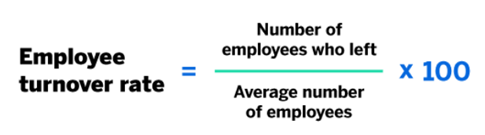
The equation does not distinguish between functional and dysfunctional turnover. For example, an employee’s decision to leave due to dismissal based on negative attitudes or low performance is considered functional turnover. Employees in this circumstance do not wish to leave but understand they are not valuable to the employer. Dysfunctional turnover occurs when top performers leave because competitors have offered them higher salaries and more favourable work conditions, or the current employer has been insensitive to matters affecting the wellbeing of employees. When the sum of employees who left within a period (month, quarter, or year) is divided by the average of those recruited/working within same period, and multiplied by one hundred, we have our employee turnover rate. This implies that if an organization with one hundred and forty (140) employees should lose twenty-six within a year, employee turnover for the period would be approximately 18.6%.
2.2.4 Calculation of Employee Retention
Employee retention explores why people work in a particular organization for a long time without searching for better job prospects. In the context of this study, retention is a direct opposite of turnover, but while turnover investigates the variety of reasons that influence resignations, retention concentrates on identifying and implementing the most effective strategies that ensure employees do not quit their jobs. Organizations have varying turnover and retention rates.
However, the retention rate of experienced workers can be calculated using a stability index, which is comparable to turnover calculator but applicable to the whole organization or selected parts. The formula for stability index calculator is:
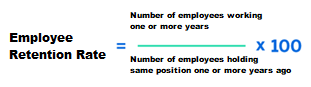
That is, the total number of employees with one or more years’ experience in the organization x 100, divided by the total number of employees holding same positions within the last year or more.
Leave a Reply