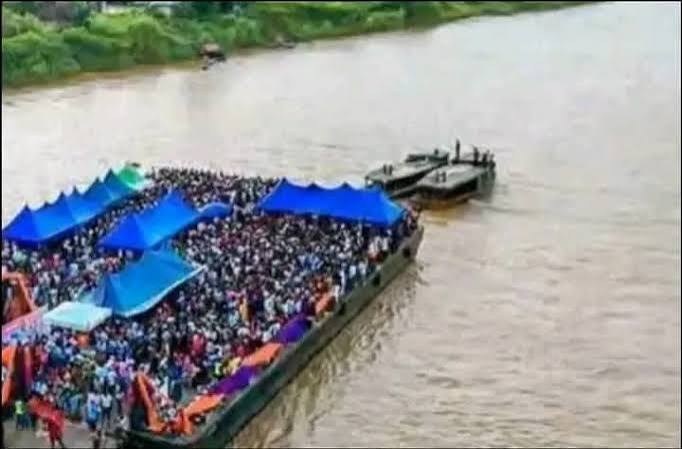
The fatal boat accident in Bayelsa State has remained one of Nigeria’s most significant national stories, following reports of rising casualties, renewed concerns about water transportation safety and calls for accountability.
The accident occurred on Friday, November 20, when an overloaded passenger boat travelling from Ayama to Ukubie in Southern Ijaw Local Government Area of Bayelsa State capsized. The passengers were reportedly travelling to attend a funeral when the tragedy struck.
The National Emergency Management Agency (NEMA) confirmed that at least 24 people had died in the incident in its initial casualty report. Subsequent Nigerian media reports on November 23 put the death toll at 29, indicating that the casualty figure was still being updated. The different figures should therefore be treated as developing reports rather than a single conclusively reconciled total.
President Bola Tinubu expressed condolences to the victims’ families and directed federal disaster-response agencies to support rescue and recovery operations.
In his reaction, Tinubu said:
“Those who lost their lives in the tragedy did not deserve to die that way.”
The president also expressed sympathy with the Bayelsa State Government and the affected communities, promising federal support for emergency response activities.
Governor Douye Diri ordered an investigation into the circumstances surrounding the accident. He disclosed that the ill-fated boat had no passenger manifest and that most of the passengers were not wearing life jackets.
The governor described the incident as an unfortunate tragedy and called for accountability where negligence or violations of marine transportation regulations were established.
He also announced plans to establish a Maritime Task Force through the Ministry of Marine and Blue Economy to monitor water transportation activities and enforce safety regulations.
The Bayelsa State Government reiterated the importance of passenger manifests, life jackets, responsible boat operations and compliance with established marine transportation standards.
Commissioner for Information Ebiuwou Koku-Obiyai warned:
“Overloading, speeding, recklessness and traveling without life jackets must stop.”
She added:
“No journey is worth a life.”
The tragedy has renewed discussions about the need for stronger regulation of inland waterways, particularly in riverine communities where boats are important means of transportation.
It also raises questions about the enforcement of passenger limits, availability of life-saving equipment, emergency response arrangements and the responsibilities of boat operators.
Nigeria’s waterways support transportation, fishing, commerce and movement between communities. However, repeated accidents demonstrate that the benefits of water transportation must be accompanied by effective safety monitoring and enforcement.
Leave a Reply