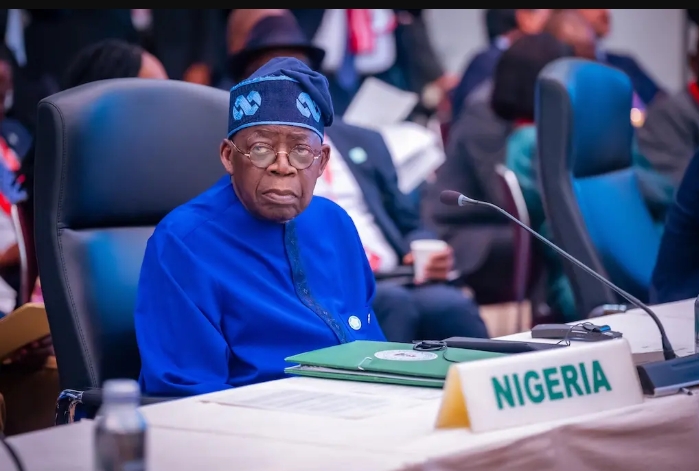
President Bola Tinubu, represented by Vice-President Kashim Shettima, officiated the ceremony in Cross River State, declaring “Lagos is not our enemy” as the project aims to create a second major maritime gateway and serve landlocked Sahel nations
Nigeria has begun construction of a $3.5 billion deepwater port in Bakassi, Cross River State, marking a significant step toward reducing the overwhelming concentration of the country’s foreign trade at Lagos ports. The groundbreaking ceremony, held on November 13, 2026, was performed by Vice-President Kashim Shettima on behalf of President Bola Tinubu .
The Bakassi Deep Seaport is designed with a 20-meter water depth to accommodate large ocean-going vessels that currently bypass Nigerian waters, and it will be linked to a planned 260-kilometer superhighway to transport cargo to inland markets and neighboring landlocked countries . The project is being developed under a public-private partnership model, with an initial financing approval of $2.27 billion, while the African Export-Import Bank (Afreximbank) is acting as the mandated lead arranger for the broader $3.5 billion facility .
“Lagos Is Not Our Enemy”
President Tinubu used the occasion to directly address long-standing speculation that federal authorities or commercial interests in Lagos had deliberately stifled port development elsewhere. “There is a rumour I hear in some corners. That the West, Lagos, or Abuja never wanted a port to work anywhere outside Lagos. If that were true, would I be standing here today with a shovel in my hand?” he said, as reported by Premium Times .
He emphasized that the new facility is intended to complement, rather than compete with, the existing ports in Lagos, which currently handle more than 80% of Nigeria’s foreign trade. “Lagos is not our enemy. Lagos is our elder brother in trade,” Tinubu said. “No country eats with one hand. No country carries all its load on one shoulder. That shoulder will break” .
The President framed the project as a national economic imperative, noting that concentrating trade through a single gateway creates vulnerabilities. “When over 80% of our foreign trade flows through Lagos, and Lagos alone, that is not strength,” he stated. “That risks congestion: ships queueing, goods delayed, and prices rising in the markets of Calabar, Onitsha, and Maiduguri. The nationalist in me cannot stand that. This project is not against Lagos. It is for Nigeria. When Lagos is free, Nigeria breathes. When Calabar works, Nigeria walks on two legs” .
A Decades-Long Journey
The project, first conceived in 2014 during the administration of former Governor Liyel Imoke, had languished for years due to political, administrative, legal, and environmental hurdles . Cross River State Governor Bassey Otu recounted that the initiative was nearly abandoned until the current federal administration provided decisive support.
“When this project was conceived by the immediate past administration in the state some years ago, its implementation was encumbered by political, environmental, and legal bottlenecks,” Otu said at the ceremony. “Arising from this hurdle, our hope of realising the project was dimmed until President Tinubu took over” .
The Governor confirmed that the state had completed critical preparatory work, including an Environmental Impact Assessment, hydrographic, geotechnical, and geophysical surveys, and secured federal approvals. A shareholders’ agreement ratified in February 2025 established Bakassi Deep Seaport Ltd. as the special-purpose vehicle, with UAE-based port developer Arise IPP Ltd. acquiring an 80% stake and the state government retaining 20% .
A Gateway for the Sahel
Beyond serving Nigeria’s domestic logistics needs, the Bakassi port is positioned as a regional maritime hub. Abubakar Dantsoho, Managing Director of the Nigerian Ports Authority, said the facility would provide a viable alternative gateway for landlocked West African nations.
“Africa accounts for 16 of the world’s 44 landlocked countries, with four located in West Africa. These include Mali, Niger, Burkina Faso and Chad, with a combined population of approximately 101 million people,” Dantsoho said. “The Bakassi Deep Sea Port therefore presents an important opportunity to strengthen regional trade connectivity, facilitate access to international shipping routes and position Nigeria as a preferred maritime gateway for the wider West and Central African markets” .
The NPA is separately developing a 275-kilometer, six-lane Calabar-Ogoja-Gakem highway to serve as the port’s primary evacuation corridor, connecting the coast to Nigeria’s north-central and north-eastern regions .
Economic Ambitions
President Tinubu projected that unlocking Nigeria’s blue economy through expanded port infrastructure could generate as much as $44 billion annually by capturing regional cargo traffic currently handled by neighboring countries .
The Bakassi project also carries symbolic weight for Cross River State, which lost the Bakassi Peninsula to Cameroon following a 2002 International Court of Justice ruling, along with associated oil revenues. “The peninsula was not the end of your story, but the beginning of your next chapter,” Tinubu said, addressing the state’s historical loss. “The same water that took something from you will now bring something back. The Atlantic that people feared will now feed your children” .
The port’s development is expected to stimulate investment in logistics, trade, fishing, shipping, tourism, and shipbuilding. Governor Otu noted that selected Cross River residents are already undergoing specialized training for construction and operational roles, with a focus on indigenous manpower development alongside foreign technical expertise .
Leave a Reply