
You’re living in The Matrix and you don’t even realize it.
All right, that’s being dramatic. But it is true that many of the assumptions you make about life, the universe, and everything in between might not be entirely certifiable and are, as it so happens, based on tall tales, shoddy information, and, in egregious cases, outright falsities. To help you parse through this information overload, we’ve gathered the 30 most common misconceptions of all time. So read on, and correct the record once and for all.
- Toilet Seats Are Full of Germs
It’s one of the most commons misconceptions that the seats of a toilet are full of germs—after all, the bathroom is hardly the most sanitary place. But a study conducted by the University of Arizona found them to in fact be relatively clean, thanks to the fact that they are often disinfected or washed. In fact, they were found to have 10 times fewer germs than cell phones.

- Alcohol Warms You Up
It feels good to have a sip of whisky on a cold day, but that burning sensation is not some kind of interior warmth, as you are often told that it is. In fact, alcohol dilates blood vessels, causing blood to be pumped closer to the skin, leading to a drop in your core body heat. So, if you’re cold, reach for a blanket, not a flask.

- Cracking Knuckles Leads to Arthritis
Yes, cracking your knuckles is extremely annoying and distracting to those around you, but this displacement of “synovial fluid” from in between your joints does not lead to arthritis as is often claimed.
Though folks at Harvard Medical School’s blog do point out something knuckle-crackers should keep in mind: “Chronic knuckle-crackers were more likely to have swollen hands and reduced grip strength. And there are at least two published reports of injuries suffered while people were trying to crack their knuckles.”.
- The Earth Orbits Around the Sun
Actually, the Earth does not orbit around the Sun. Before you think we are some kinds of flat-earth conspiracy theorist, let Cathy Jordan, a Cornell University Ask an Astronomer contributor, explain: “Technically, what is going on is that the Earth, Sun and all the planets are orbiting around the center of mass of the solar system,” she writes. “The center of mass of our solar system is very close to the Sun itself, but not exactly at the Sun’s center.”

- Caffeine Dehydrates You
Drinking coffee makes you dehydrated, goes the common theory. While caffeinated drinks do have a slight diuretic effect (making you have to hit the head), researchers have not found any increased risk of dehydration in coffee drinkers compared to non-drinkers.

- Coffee Comes from Beans
Why wouldn’t it? You buy a pound of “beans” at the store and a major coffee chain is named “Coffee Bean.” But the name doesn’t actually make any sense, since coffee in fact comes from the pit inside the coffee fruit. If we were being accurate, we would refer to them as “coffee seeds.”
- Sugar Can Be as Addictive as Heroin
Some brain imaging studies have found that sugar activates similar parts of the brain as seriously addictive drugs, like heroin. But as Hisham Ziaudden, an eating behavioral specialist, explains: “In neuroimaging, there is no clear-cut sign of addiction.” Just because that part of the brain is activated, doesn’t mean that the person experiencing it is actually addicted to the substance.
- Sharks Smell Blood from a Mile Away
Many a good (and ridiculous) scary movie scene has relied on the fear of sharks’ super-sensitive sense of smell, being able to detect a single drop of blood in an ocean. But as the American Museum of Natural History explains, “While some sharks can detect blood at one part per million, that hardly qualifies as the entire ocean.”

- Penguins Mate for Life
We love the heartwarming stories of adorable penguins who meet their match and stay in a committed relationship for life. Humans have so much to learn from these creatures, right?
Well, though it’s true that penguins are monogamous, they do not stay that way for life, and many change partners from one season to the next.
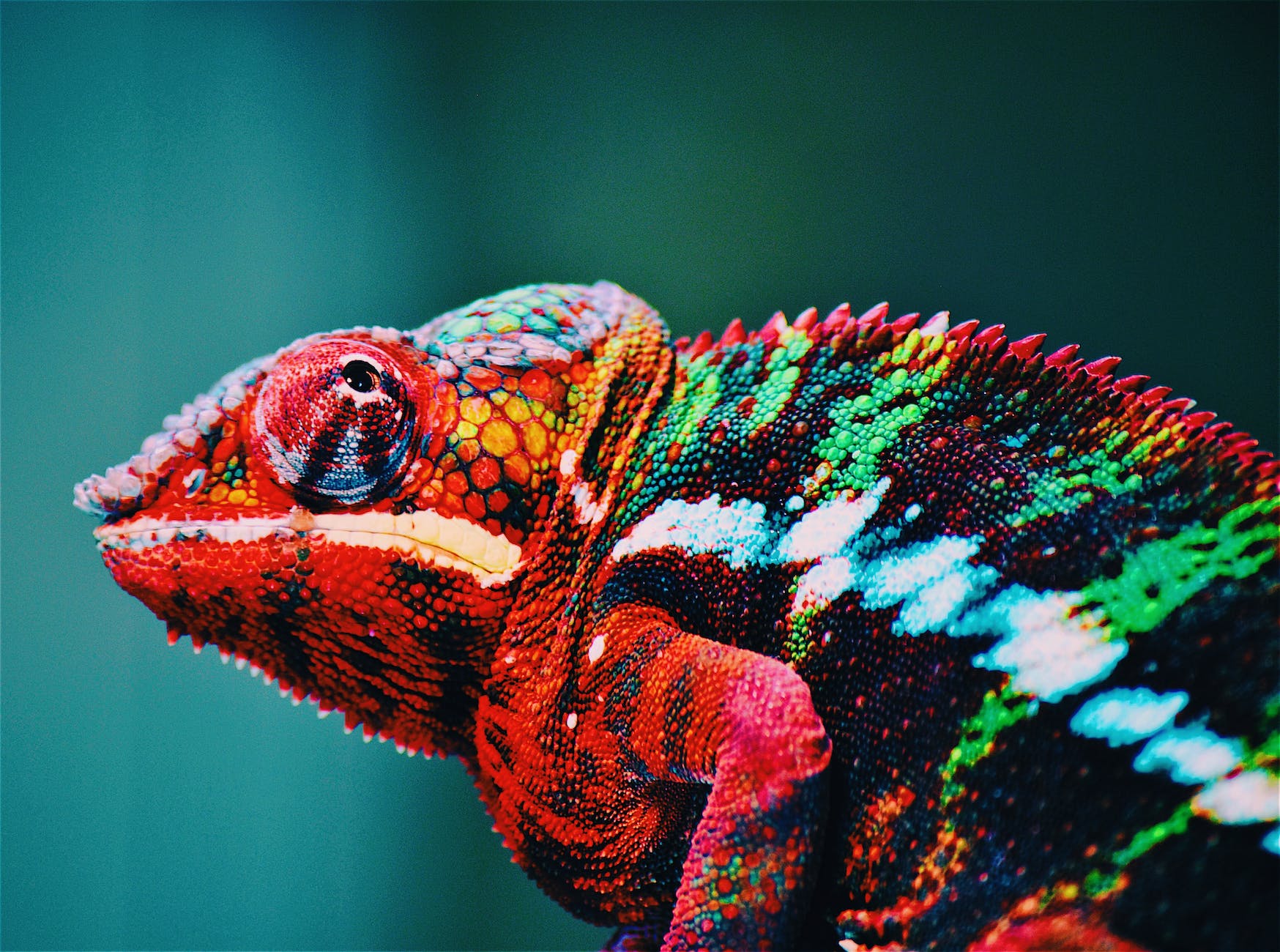
- Chameleons Change Their Color Depending on Their Surroundings
If you set a chameleon on a red surface, it turns red; put it on something yellow, and yellow it becomes. In fact, the creature’s mood, temperature, and the light hitting it are what influences coloration. As the Naked Scientists explain, “a calm chameleon is a pale green color. When it gets angry, it might go bright yellow, and when it wants to mate, it basically turns on every possible color it can which shows that it’s in the mood. This is not unique to chameleons.”
- Police Require a Waiting Period Before Filing a Missing Person’s Report
You might get the impression from watching police procedurals that there the police don’t like to jump the gun on reporting a missing person—generally asking the concerned friend or family member to wait 24 to 48 hours before the report can be filed…to really be sure the person is really missing. In fact, there is no waiting period at all. If you suspect someone is missing, report it.

- Deodorant Causes Cancer
Stories persist that studies have found a connection between breast cancer and the use of antiperspirants—by allowing chemicals to enter the body through the pores or small cuts in the skin. But, if you’re an antiperspirant user you will be glad to hear that according to Debbie Saslow, PhD, director of breast and cervical cancer for the American Cancer Society: “There is absolutely no scientific evidence that antiperspirants cause or even increase a woman’s risk for breast cancer.”
- Einstein Flunked Math
We love the story of how Albert Einstein struggled in his studies and, according to some spurious accounts, even failed out of math class. But in fact, according to a biography of the genius by the Albert Einstein Archives, he received high marks in his classes (even if the teachers did not see him as a remarkable kid). If he didn’t take to school, it had more to do with the fact that he didn’t like “the school’s expected mindless obedience and discipline aimed at instilling authoritarian civic virtues.”

- Humans Have Five Senses
Sight, smell, taste, touch, and hearing. Are we forgetting any? About 15 others, according to some neuroscientists who include among our sense such capabilities as nociception (the ability to feel pain), chronoception (ability to feel the passing of time), and equilibrioception (sense of balance).

- Napoleon Bonaparte Was Short
Anyone who has been accused of having “a Napoleon complex” was probably not the tallest guy in the room. But while the perception persists that this historical giant was in reality a tiny guy, it’s based on little actual fact. In truth, he was a respectable (especially in France at that time) 5’7.

Leave a Reply