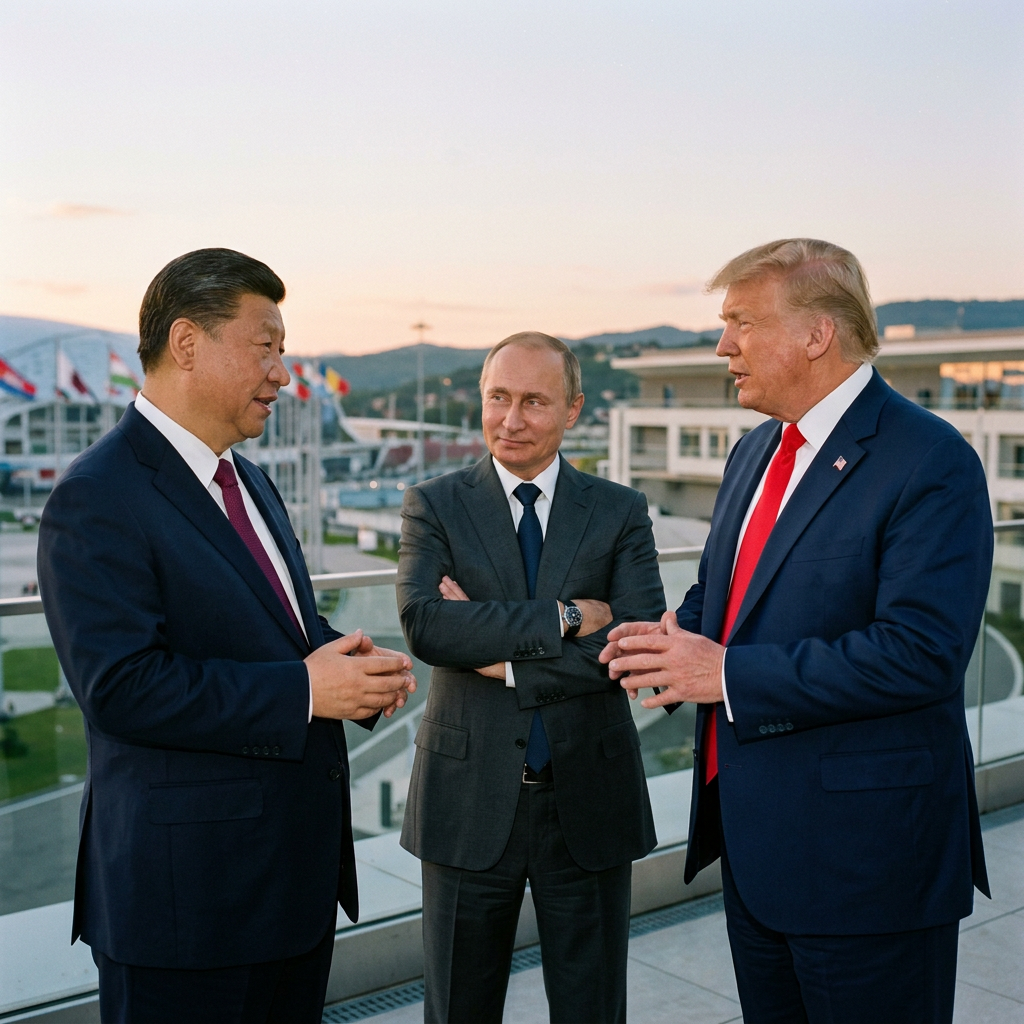
China has announced that President Xi Jinping will hold a landmark trilateral meeting with United States President Donald Trump and Russian President Vladimir Putin this week, with discussions expected to focus on global peace, nuclear disarmament and strategic stability among major world powers.
The meeting, scheduled for Thursday, November 19, will take place in Shenzhen, southern China, on the sidelines of the Asia-Pacific Economic Cooperation (APEC) leaders’ summit. It will mark the first trilateral engagement involving the three presidents, bringing together leaders whose countries occupy influential positions in international security, economic affairs and global diplomacy.
Beijing confirmed the planned meeting on Monday, November 16, describing it as an important diplomatic opportunity to address international security challenges and strengthen stability in relations among major powers.
Chinese Foreign Ministry spokesperson Mao Ning said the three leaders would use the occasion to discuss issues affecting international peace and security.
According to Mao, the presidents would hold “in-depth exchanges on safeguarding world peace and promoting strategic stability in major-power relations”.
She described the proposed engagement as an event of considerable diplomatic importance, saying: “It will be of ground-breaking significance.”
The announcement has attracted international attention because of the geopolitical differences and competing strategic interests involving Washington, Beijing and Moscow. Their discussions could provide an indication of how the three governments intend to approach some of the most pressing international challenges.
Trump Expected to Raise Nuclear Disarmament and Iran War
President Trump is expected to use the meeting to discuss reducing nuclear weapons stockpiles, an issue that remains central to international security negotiations.
US officials have also indicated that Trump intends to raise the ongoing war involving Iran during his discussions with the Chinese and Russian leaders.
However, the American president is not expected to address Russia’s war in Ukraine during the trilateral engagement, according to US officials.
The decision to leave Ukraine out of the anticipated discussions is particularly significant given the conflict’s international implications and the continuing disagreement between Western governments and Moscow over its resolution.
Washington’s interest in nuclear disarmament also presents an important diplomatic challenge. The United States and Russia possess the world’s largest nuclear arsenals, making their positions essential to any meaningful international agreement on reducing nuclear weapons.
China, meanwhile, has consistently maintained that Washington and Moscow should first reduce their considerably larger nuclear stockpiles before Beijing considers participating in negotiations concerning its own arsenal.
This position reflects China’s longstanding reluctance to enter nuclear disarmament negotiations under arrangements it considers unequal to the existing military capabilities of the three countries.
Consequently, the Shenzhen meeting could provide an opportunity for the leaders to exchange views on nuclear security, although expectations of an immediate breakthrough remain uncertain.
Ukraine Conflict Remains a Sensitive Diplomatic Issue
Although Ukraine is not expected to feature prominently in Trump’s discussions with Xi and Putin, the conflict remains an important consideration in relations between the three powers.
European governments have repeatedly maintained that any diplomatic settlement concerning Ukraine must involve European countries because of their direct security interests and geographical proximity to the conflict.
German President Frank-Walter Steinmeier recently disclosed that Xi had expressed reservations when the possibility of including Ukraine in the proposed trilateral discussions was raised.
According to Steinmeier, the Chinese president showed “irritation” over the suggestion that the three leaders should discuss the conflict without adequately considering Europe’s position.
Speaking to German broadcaster ARD, Steinmeier said Xi had made his position clear.
“He explicitly pointed out that this is a European conflict, in which the Europeans must also be at the table,” Steinmeier told ARD.
The remarks underline China’s position that European countries should have a voice in discussions about a conflict that directly affects their regional security.
They also highlight the diplomatic complications surrounding efforts to resolve the Ukraine war, particularly when major international powers seek to influence negotiations.
Beijing Positions Meeting as an Opportunity for Global Stability
China’s decision to describe the proposed meeting in terms of global peace and strategic stability reflects Beijing’s interest in strengthening its diplomatic standing in international affairs.
The participation of the American, Chinese and Russian presidents would bring together three countries with considerable military, economic and political influence.
Their discussions could cover broader questions concerning international security, nuclear weapons, diplomatic cooperation and the management of disagreements among major powers.
For Beijing, hosting the engagement alongside the APEC summit also offers an opportunity to demonstrate China’s role as an important centre of international diplomacy.
The meeting comes at a time when tensions involving major powers continue to influence international relations, while conflicts and disagreements in different regions create additional pressure on global security arrangements.
Although the three governments have different foreign policy priorities, their willingness to participate in direct discussions suggests an interest in maintaining diplomatic communication on issues of shared concern.
International Attention Turns to Shenzhen
The planned November 19 meeting is expected to attract considerable international attention because of its potential implications for relations among Washington, Beijing and Moscow.
While China has presented the engagement as an opportunity to promote world peace, the extent to which the leaders can reach common positions on nuclear disarmament, Iran and other international security concerns remains to be seen.
The absence of Ukraine from the expected agenda also leaves important questions about Europe’s involvement in any future diplomatic efforts to address the conflict.
Nevertheless, bringing Xi, Trump and Putin together for direct discussions represents a significant diplomatic development.
The outcome of their engagement could offer fresh indications of how the world’s major powers intend to manage their competing interests and respond to challenges affecting international peace and stability.
Leave a Reply