Explained: Why is fuel rising in cost again?
Basically, the cost of oil has gone up – by nearly $12 since the start of July to $86.86 a barrel.
The reason is that producer group OPEC+ has reduced supply in a self-interested attempt to thwart sagging oil prices.
Leading cartel member Saudi Arabia says it is concerned about the uncertain outlook for demand for fuel in the months ahead amid global economic weakness.
But the West has accused OPEC+ of manipulating oil prices and undermining the global economy through high energy costs.
Another accusation is that OPEC+ is siding with member Russia – which relies on revenue from oil.
Falling fuel costs have helped stem inflation across the world – the current spike is obviously bad news on that front and our business reporter James Sillars is crafting some analysis this morning on what it could mean for our pockets.
As we told you earlier, drivers have seen the biggest rise in fuel prices for more than 20 years.
Petrol went up 6.68p a litre and diesel by 8p, adding around £4 to a tank.
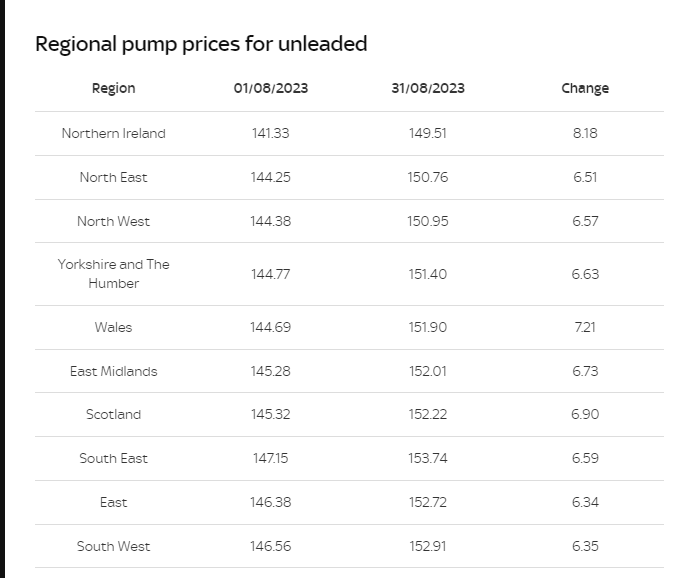
The average price per litre for petrol now sits at 152.25p, but it’s even higher across some parts of the UK.
The most expensive region to purchase your unleaded is the South East where it costs around 153.74p per litre – about £84.55 for a full 55-litre tank.
The cheapest place is Northern Ireland, where it costs an average of 149.51 per litre – around £82.23 for a tank.
The average price of diesel currently sits at 154.25p per litre, but reaches highs of 156.10p in the South East.
The cheapest place to get it is in Northern Ireland, where it averages 151.64p per litre.

Leave a Reply