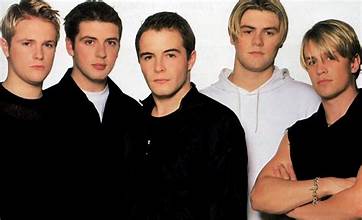
Pop music is obsessed with the concept of the “original lineup.” We mourn the loss of a founding member like we’re losing a piece of history. For Westlife, the Irish boyband that soundtracked the late ’90s and early 2000s, the lineup has never been a static picture. The iconic band that sang “Flying Without Wings” started as five, morphed into a successful four-piece, took a hiatus, reunited, and—for several high-profile tours—performed as just three current members. This is the definitive story of how Westlife’s roster has changed over nearly three decades.
It’s much more than a simple “he said, he said” pop drama. The evolution from five to three involves a surprising origin story, a shocking departure by a member who felt he was drowning, a “mutual” split driven by a rival boyband, and a terrifying, life-threatening medical emergency that forced a beloved singer to step back .
Chapter One: How the Fab Five Were Forged
Like all great origin stories, Westlife didn’t spring fully formed from a record label’s mind. The seeds were planted in the small Irish town of Sligo in 1996. Three school friends, Shane Filan, Mark Feehily, and Kian Egan, were performing in a local musical production of “Grease” when they realized their harmonies could be something special .
They quickly formed a six-member vocal group with three other friends, bouncing between the names “Six As One” and “IOYOU” as they honed their craft . Their big break came when Boyzone’s legendary manager, Louis Walsh, caught wind of them. Walsh took them under his wing and brought them to London to meet the executives—most notably a young music mogul named Simon Cowell .
Cowell saw potential, but he also saw clutter. In a ruthless move that would become his trademark, Cowell insisted that half of the original six members be let go. Only the core trio from Sligo—Shane, Mark, and Kian—survived the cut . To fill the gaps, Walsh held open auditions in Dublin, eventually handpicking two blond, charismatic newcomers: a former football goalkeeper named Nicky Byrne and a standout singer named Brian McFadden . With the lineup finally set, the group rebranded as Westlife in 1998 and signed a massive recording contract with RCA Records .
The “Fab Five”—Shane, Mark, Kian, Nicky, and Brian—dominated the charts, collecting UK number ones like trading cards and selling out arenas worldwide. They had the harmonies, the choreography, and the signature white suits. But inside this machine of perfection, cracks were starting to appear.
Chapter Two: The Crisis of 2004 (Bryan McFadden)
In March 2004, the pop world was rocked. Bryan (or Brian) McFadden, the band’s charismatic co-lead vocalist, announced he was quitting the band immediately . The decision came as Westlife was in the middle of a world tour and still enjoying incredible commercial success, making his departure seem spontaneous to fans. However, for McFadden, the collapse had been brewing for years.
In recent tell-all interviews, especially during a candid 2024 podcast appearance with his former bandmate Nicky Byrne, McFadden laid his soul bare. He admitted that he made the choice out of severe personal burnout. “I look back now and can see as a 24-year-old I made a very selfish decision,” he admitted on the podcast . After the birth of his two young daughters, Molly and Lily-Sue, with his then-wife Kerry Katona, the constant touring felt unbearable. He later elaborated on his headspace at the time: “I can be very selfish, I don’t think of other people when I make those decisions. I’m very impulsive and at the time my head felt swamped” .
Publicly, the “Official Story”—focusing on family—was that he simply needed to be home to prioritize his kids. However, in later years, McFadden admitted it went beyond that. He confessed to jumping on a plane to Australia without telling his bandmates because “I couldn’t stand any more” . “We had it all – money, fame, beautiful women, amazing cars – but in the end it just wasn’t making me happy,” he revealed in a 2016 interview . Interestingly, McFadden has since clarified that his exit was not about bad blood; he maintained that his six years in the band were “the greatest six years of my life” . Rather, it was a mental health crisis and a desperate need to escape the relentless pressure of the pop machine.
Chapter Three: The Era of the Fab Four
It is a testament to Westlife’s professional bond that they didn’t fall apart when McFadden left. The remaining core—Shane, Mark, Nicky, and Kian—stepped up. After a brief period of adjustment, they decided to carry on as a four-piece, a lineup that would define the middle era of their career .
Proving they were more than the sum of their parts, Westlife released some of the most mature and beloved music of their career during this quartet phase. Albums like Face to Face (2005) and The Love Album (2006) kept them at the top of the charts. They continued to tour the globe, filling the vocal gap left by Bryan with impressive harmonization and strengthening their image as seasoned veterans of the industry rather than just teen idols .
Chapter Four: The 2012 “Ammunition” Split
For the next seven years, the “Fab Four” seemed unbreakable. But by late 2011, the enthusiasm had dimmed. On October 20, 2011, Westlife stunned fans by announcing they would be splitting up for good at the end of their 2012 farewell tour .
At the time, the band gave a vague, poetic reason: it “wasn’t special anymore.” Shane Filan later admitted that the boys simply “genuinely weren’t enjoying” the experience the way they used to . However, history suggests a far more inconvenient truth. Years later, Nicky Byrne dropped a bombshell: it was One Direction. “We decided that we hadn’t enough fight in them to compete with One Direction,” he revealed in an interview . As Louis Walsh’s new creation (One Direction) exploded onto the scene in 2012, Westlife realized the boyband landscape had shifted dramatically. Rather than fighting for airplay against a younger, hungrier act, they chose to bow out gracefully and protect their legacy. It was a strategic retreat, leaving the battlefield to the new kids on the block.
Chapter Five: The 2018 Reunion & A Modern Quartet
The break lasted six years. In 2018, the lads—now fathers and businessmen—felt the pull of the stage again. They announced a major reunion that included a stadium tour and a new album, Spectrum . Notably, while the band teased a five-person reunion, it was confirmed that Bryan McFadden would not be returning. The “Fab Four” would remain the “Core Four” . Recharged and collaborating with pop hitmaker Ed Sheeran, they released “Hello My Love,” a track that gave them a fresh, modern feel while retaining their classic balladry .
Epilogue: A Current Trio Dedicated to Health
As Westlife celebrates its 25th anniversary, the lineup has faced its most unexpected change yet. On stage, you might only see Shane Filan, Kian Egan, and Nicky Byrne . Where is Mark Feehily?
In 2024, Mark bravely revealed that he was stepping away from touring due to a severe and prolonged health battle. The operation was supposed to be routine, but shortly after a surgery in August 2020, he felt a sharp pain and rushed to the emergency room. The diagnosis was terrifying: a life-threatening post-operative complication that had developed into sepsis . “I was told it was a complication from the surgery. I developed life-threatening sepsis and needed immediate surgery to save my life,” he shared . Over the following years, Feehily underwent a total of four procedures. He has repeatedly emphasized that he has not left the band, and the other three members are holding the fort with his explicit blessing, eagerly awaiting his return to the stage when he is fully healed .
From a scrappy six-piece in a Sligo school hall, to a record-breaking quintet, to a surviving quartet, and now a resilient supporting trio, Westlife’s journey is one of the most compelling dramas in pop history. They have survived burnout, outlasted rival bands, and supported a brother through a health crisis. They continue to prove that while the number on stage might fluctuate, the heart of Westlife remains the same.
Leave a Reply