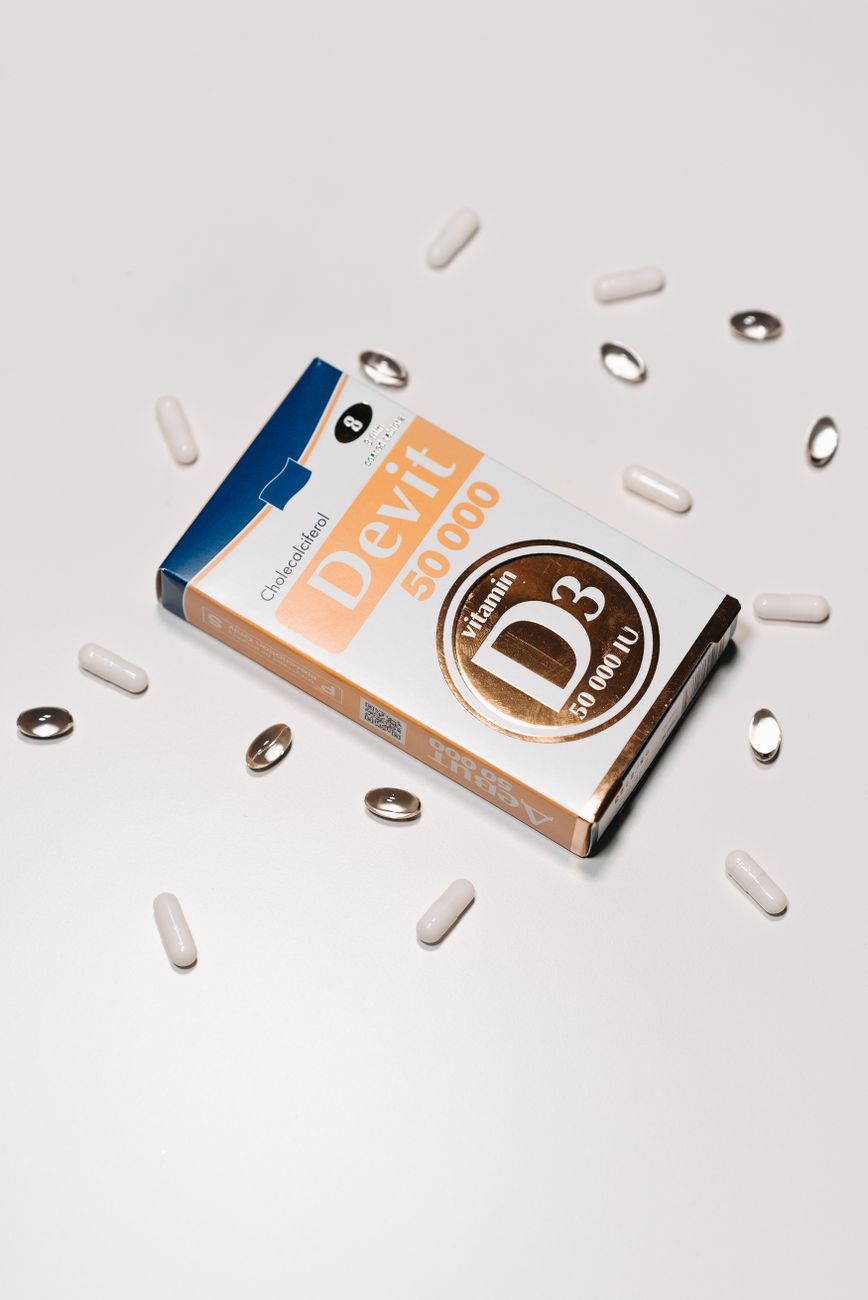
Vitamin D deficiency means your body does not have enough of the vitamin to keep your bones, muscles, and immune system working properly. It is common, often causes no obvious symptoms at first, and is easily confirmed with a simple blood test. When symptoms do appear, they can include tiredness, bone or muscle aches, muscle weakness, and low mood. Most adults need around 600 to 800 IU (15 to 20 micrograms) per day from sunlight, food, and supplements combined, although recommendations vary by country, age, and individual risk.
Because the body makes vitamin D mainly when skin is exposed to sunlight, levels tend to drop in autumn and winter, especially in northern regions where the sun sits low in the sky or barely rises. Understanding the signs, causes, and practical fixes can help you protect your health through the darker months.
What Is Vitamin D and Why Does It Matter?
Vitamin D is a fat-soluble vitamin that works more like a hormone than a typical nutrient. Its best-known job is helping your body absorb calcium and phosphorus from food, which are essential for building and maintaining strong bones and teeth. Without enough vitamin D, the body cannot properly use the calcium you eat, no matter how much you consume.
Beyond bone health, vitamin D plays a role in normal muscle function and in the immune system’s ability to respond to infections. Researchers are also studying its links to mood, heart health, and chronic disease, though many of these findings are still being investigated and the evidence is not yet conclusive. What is well established is that a long-term shortage can weaken bones and muscles.
What Are the Symptoms of Vitamin D Deficiency?
Many people with low vitamin D have no noticeable symptoms, which is why the problem often goes undetected for months or years. When symptoms do occur, they tend to be vague and can easily be mistaken for other conditions. Common signs include persistent fatigue, general aches and pains, bone pain (particularly in the lower back, hips, or legs), muscle weakness or cramps, and frequent infections. Some people also report low mood or feeling down during the winter months.
Prolonged, severe deficiency can cause more serious problems. In children, it can lead to rickets, a condition that softens and weakens growing bones and may cause bowed legs, delayed growth, and bone pain. In adults, it can cause osteomalacia, which leads to soft bones, pain, and a higher risk of fractures. Because these symptoms overlap with many other health issues, a blood test is the only reliable way to know whether low vitamin D is the cause.
What Causes Vitamin D Deficiency?
The most common cause is simply not getting enough sun exposure. Your skin produces vitamin D when it is exposed to ultraviolet B (UVB) rays, but the amount depends on the season, time of day, and where you live. In locations far from the equator, the sun is too low in winter for the skin to make meaningful amounts of vitamin D, regardless of how much time you spend outside. Spending most of the day indoors, wearing clothing that covers most of the skin, and consistently using sunscreen can also reduce production.
Several other factors raise your risk. People with darker skin have more melanin, which reduces the skin’s ability to produce vitamin D from sunlight. Older adults make less vitamin D in the skin and often spend more time indoors. Obesity can lower circulating levels because vitamin D is stored in body fat. Conditions that affect absorption, such as celiac disease, Crohn’s disease, and some surgeries, can also contribute, as can kidney or liver disease and certain medications. A diet low in vitamin D-rich foods adds to the problem, since few foods contain much of it naturally.
How Is Vitamin D Deficiency Diagnosed?
Doctors diagnose deficiency with a blood test that measures 25-hydroxyvitamin D, the main circulating form of the vitamin. Results are reported in nanomoles per liter (nmol/L) or nanograms per milliliter (ng/mL). A level below roughly 25 to 30 nmol/L (about 10 to 12 ng/mL) is generally considered deficient, while levels between that range and around 50 nmol/L (20 ng/mL) may be classed as insufficient. Exact cutoffs differ between health organizations, so your doctor will interpret the result in the context of your age, health, and risk factors.
Routine screening is not recommended for everyone. Testing is usually offered to people who have symptoms, belong to a higher-risk group, or have a condition that affects bone health or absorption.
How Much Vitamin D Do You Need?
Recommended intakes vary slightly between countries. In the United States, the recommended daily amount is 600 IU (15 micrograms) for most adults up to age 70 and 800 IU (20 micrograms) for those over 70. In the United Kingdom, official advice is for adults and children over the age of one to consider taking 10 micrograms (400 IU) daily during autumn and winter, and year-round for those at higher risk. Nordic recommendations are similar, with higher suggested amounts for older adults.
Some people with a confirmed deficiency need a higher short-term dose to restore their levels, but that should be prescribed or guided by a healthcare professional rather than self-selected. It is also possible to take too much. Very high doses over a long period can cause a buildup of calcium in the blood, leading to nausea, weakness, kidney problems, and other complications. The commonly cited upper limit for adults is 4,000 IU (100 micrograms) per day unless a doctor advises otherwise.
Best Food Sources of Vitamin D
Food alone rarely provides enough vitamin D, but it can contribute meaningfully. The richest natural sources are oily fish such as salmon, herring, mackerel, trout, and sardines. Cod liver oil is also very high in vitamin D, although it is also rich in vitamin A, so it should be taken in moderation and avoided during pregnancy unless advised otherwise. Egg yolks, beef liver, and mushrooms exposed to ultraviolet light provide smaller amounts.
Many countries also fortify common foods to help close the gap. Milk, plant-based milk alternatives, breakfast cereals, orange juice, and margarine are often fortified, so check the label to see how much you are getting. Including a few of these foods regularly can help, but many people still need a supplement during the darker months.
Vitamin D vs. D3: What Is the Difference?
There are two main forms of vitamin D in supplements and food. Vitamin D2 (ergocalciferol) comes from plant and fungal sources, while vitamin D3 (cholecalciferol) is the form your skin makes and is found in animal-based foods like oily fish and egg yolks. Both can raise your blood levels, but research generally suggests that D3 is more effective at raising and maintaining them. This is why D3 is the most commonly recommended form for supplements.
If you follow a vegan diet, look for D3 made from lichen, which is a plant-based source, or choose a D2 supplement. Taking your supplement with a meal that contains some fat can also help your body absorb it better.
How to Get Enough Vitamin D Safely
The best approach combines several sources. Spend time outdoors when the sun is strong enough, which in many northern regions only applies in the spring and summer months. Short, regular periods of sun exposure on bare skin are typically enough for most people, and there is no need to burn. Sun protection remains important for preventing skin damage and skin cancer, so avoid prolonged exposure without protection.
Eat vitamin D-rich and fortified foods, and consider a daily supplement during autumn and winter or if you belong to a higher-risk group. If you suspect you are deficient, speak to a doctor or pharmacist before starting a high-dose supplement, especially if you take medication or have a medical condition.
When to See a Doctor
Talk to a healthcare professional if you have ongoing fatigue, bone or muscle pain, or muscle weakness, or if you are in a high-risk group such as older adults, people with limited sun exposure, or those with absorption problems. Children who show signs of delayed growth, bowed legs, or bone pain should also be assessed promptly. A simple blood test can confirm your levels and guide the right treatment.
Key Takeaways
Vitamin D deficiency is common, easy to overlook, and simple to correct. Your body relies on sunlight to make most of its vitamin D, which makes autumn and winter the highest-risk period, particularly in northern regions. Aim to eat vitamin D-rich foods, get safe sun exposure when possible, and consider a supplement if your doctor recommends one. If you are unsure whether your levels are low, a blood test can give you a clear answer.
Leave a Reply