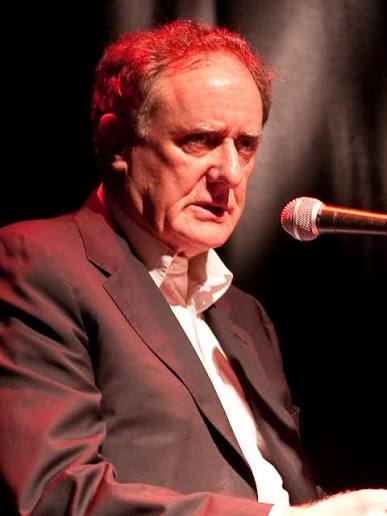
Veteran journalist says he shed tears on hearing of Charles Haughey’s death in 2006 but says the former taoiseach would have hated his upcoming book and viewed it as a ‘betrayal’
The journalist Vincent Browne (82), whose long-awaited book on former taoiseach Charles Haughey is to be published next week, feels “a bit bad” about what he’s written.
Charles Haughey: Glory, Greed and Guns paints a deeply unflattering picture of a man who was a central focus of Browne’s long and high-profile career, with the author’s proximity to his subject one of its key ingredients.
During a lengthy interview in his home in Dún Laoghaire, Co Dublin, Browne says he liked Haughey because he was so intelligent and able, and also because he was funny, mischievous, and a rogue.
“But I got on very badly with him while he was taoiseach,” he says.
“It was only in his last years that I became friendly with him … I was meeting a clever, funny, resourceful, outrageous man, in his last years and on his way to death, and I wasn’t judging him. This was just friendship and that’s it.”
By then Haughey, suffering from cancer, was light-bodied and frail. His reputation had been shredded by inquiries into his personal finances. And he was also, according to Browne, “desolate” because of the absence of his “one true love”, the social diarist Terry Keane. Haughey died in 2006; Keane in 2008.
Haughey and Browne, who had known each other since the late 1960s, would drink white wine and talk about the people they’d known.
“One of his charms was he never spoke well of anybody,” Browne says, smiling. “That was very funny.”
Former taoiseach Bertie Ahern (“there wasn’t much to him,” Browne quotes Haughey as saying) and former taoiseach Jack Lynch (“the biggest sh*t of them all” – again, Haughey, according to Browne) were among those disparaged by Haughey and defended by Browne, he says.
“He had almost a contempt for PJ [Mara, Haughey’s long-time press adviser],” says Browne, who liked Mara. “And PJ did so much for him.”
The book’s prologue, The Final Years, is a moving portrait of a man reduced by illness and age. Haughey, once so arrogant, now dozes off mid-conversation, and needs help from his wife, Maureen, when negotiating the stairs in Abbeville, the 15-bedroom “Gandon mansion” in Kinsealy, Co Dublin, that they bought in 1969.
“I shed tears on hearing of his death on the morning of 13 June 2006,” Browne writes. “He would have hated this book and probably would have regarded it as a betrayal.”
Does he have any contact now with the Haughey family? “I never knew the family,” he says.
The book does not hold back in its condemnation of Haughey. The former leader of Fianna Fáil was taoiseach three times: December 1979 – June 1981, March – December 1982 and 1987-1992. He is described as having, amongst other matters, plotted to use public money to buy arms and ammunition for the nascent Provisional IRA at a time (1969/70) when its leadership – which Browne says included Gerry Adams, although Adams has always denied this – believed Britain could be forced out of Northern Ireland by way of violence and killing. Browne describes their “campaign of slaughter” as having been “futile”.
Haughey also, the book says, lied on oath when on trial for the arms plot (he was found not guilty); lived a life of at times farcical indulgence – shirts from Paris embossed with his initials CJH – using money sourced from the rich and powerful; evaded tax; and was party to a “criminal” offshore banking scheme run by his friend, Des Traynor, the main architect of the secretive Ansbacher deposits system.
And as if that is not enough, Haughey is portrayed as a foul-mouthed (“I don’t fk fat women”) serial groper and boor prone to losing his temper and being cruel and abusive to others. He once pushed journalist Stephen Collins up against the wall and told him to “fk off” when Collins, then a reporter with the Irish Press and later political editor with The Irish Times, asked him a question he didn’t like. A photographer had to intervene.
And then there is the detail about Haughey’s relationship with Keane who, in May 1999, gave an interview to the Sunday Times about their 27-year affair. The former wife of chief justice Ronan Keane, she also went on The Late Late Show to talk about it and the hurt caused to Haughey’s family and her own.
“There is no question,” says Browne. “He absolutely loved her. Even after the Sunday Times and The Late Late Show and so on.”
He is not so sure that Keane loved Haughey.
Keane was friendly with the writer June Levine, who was living with the psychiatrist Ivor Browne in an “unprepossessing basement flat” in Dún Laoghaire, according to the book. The two couples socialised in the flat. Browne and Levine “purchased a waterbed for their own enjoyment, but when Charlie and Terry saw it, they insisted on also savouring its delights”.
Ivor Browne, who got to know Haughey “fairly well” via Keane, described him as a narcissist, says Browne. “And I think that’s a proper description … [Haughey] got the idea that he was different, above us all … He developed a sense of entitlement.
“He was a very talented person, and he abused that talent in ways that were obnoxious. He had the ability to be the best taoiseach we’ve ever had, and he squandered it.”
Haughey, says Browne, may have had no particular political beliefs or interests at all, other than what served his personal ambition. He had no interest in policies to address deprivation. His involvement in the thwarted plot to buy arms (and 250,000 rounds of ammunition) for the Provisional IRA may have been designed to ensure he would not be outflanked by his party colleague, Neil Blaney, when the time came for Fianna Fáil to replace Lynch as leader.
Born in 1925, Haughey grew up in poor circumstances but was a bright student. He went to secondary school and University College Dublin on a scholarship. It seems he became involved in politics because some of his school friends were from political families. He trained as an accountant but left the firm of Haughey Boland to pursue a political career.
His wife was a daughter of the then taoiseach, Seán Lemass. Within a year of being elected for Dublin North-East, in 1957, Haughey bought a “sumptuous” property, Grangemore, in Raheny, on 45 acres, and began to live a lifestyle hugely beyond what he could afford on the basis of his income from politics. This was to remain the case for the rest of his days.
Browne believes Keane, and the former Haughey Boland accountant Traynor – the key figure in Haughey’s secretive financial arrangements – encouraged Haughey’s developing narcissism and sense of entitlement. He thinks Haughey, because he was so clever, “had this idea that he was special”.
Browne’s book creates the impression that at the same time as he and Haughey were nominal antagonists, with Browne questioning Haughey’s suitability for high office, they were also sharing a sense of mischief and fun.
“Yes, but at the time when Haughey was taoiseach we were at each other’s throats,” he says. And it was only in Haughey’s last years that they really became friends.
“I think some people, reading the book, will wonder, here you are, almost in love with this fella [in the prologue], and then you do him down in the rest of the book. My wife, Jean, kept saying [when he was writing the book]: ‘But you liked him, you liked him.’ But you have to tell the truth.”
Haughey’s political career was not without achievement, Browne says, but, “on the balance of his achievements and his depredations, I’m afraid the depredations win”.
In the book Browne writes that Keane once came up to him in a bar and said, “I’ve just been f**king a friend of yours for four days.” This man, and another of her lovers, a member of Fine Gael, he writes, told Browne she would sometimes phone Haughey from the bed without revealing she was in bed with another man.
Asked if it was fair to include such details in the book, Browne says he did so “because it influenced [Haughey] quite a bit and he was often terribly upset by her”.
He thought the four days story was funny. “Maybe I took it too far with that. But her influence on him was a huge factor, I think, and she often made his life miserable.”
Last month saw the publication of Fearless! Vincent Browne’s Magill and Ireland in the 1980s by Kevin Rafter. The book details the excitement around the magazine Browne founded, with its long-form journalism and occasional agenda-setting scoops. Later in the decade, Browne was editor of the Sunday Tribune, and a shareholder. Both were exciting publications with precarious finances.
At one stage, in 1977, desperate for investment, Browne asked Haughey if he would put money into Magill. “That was ridiculous, outrageous, and a terrible thing to have done,” he says. Haughey said no.
Browne edited Magill from 1977 to 1982, followed by Colm Tóibín.
Journalists who worked with Browne in Magill, according to Rafter’s book, variously described him as charming, generous, ambitious, talented, passionate, charismatic, crusading, dogged and funny, but also obstinate, obsessive, contrarian, baffling, inconsistent, destructive, caustic, mad and a bully.
I read out the list and ask if it ever occurred to him that he and Haughey might have shared certain characteristics, or recognised something in each other. “That never occurred to me,” he says. “I thought we were going to talk about the [Haughey] book?”
I say that among the reasons people will find his book interesting is that it is a book about Haughey written by him, Browne. That he was obviously close to Haughey.
He says it is not fair to put to him allegations about him made in Rafter’s book as he has not read it. He appears to get upset and his eyes get wet. We move on to another topic.
Later, when he is expressing the view that Haughey had no interest in improving the plight of the poor, I say that he, Browne, during his career, regularly upbraided the government for not doing more to address inequality. Yet he had a reputation as an employer for being intimidating and a bully, including in relation to young women.
“I thought this [interview] was about the book,” he says. “You want to talk about me.”
Both, I say. He says: “If the contention is that, as a human being, I was deficient. I agree.” Anyone, I say, could say that. Was it the case that he could be mean and bullying with his staff? “Well, I never intended that,” he says.
Later I quote Tóibín’s observation, in Rafter’s book, that Browne was “very much a member of the establishment with huge anti-establishment feeling as well” and that he moved easily in the social world of establishment figures.
Browne says he acquired “social capital” by attending what he described as a “posh” school – Castleknock College. It gave him an ability to move easily in certain circles. “Posh” schools, he argues, impact society and students negatively. “It’s quite insidious, I think.”
Later he returns to the issue of what was said about him in the Rafter book.
“I think what you read from the book is grossly unfair and exaggerated,” he says. He says he remains friends with most of the people from those days. “Not with Toibín, but with most people.”
He says that as far as he can recall, he only lost his temper once (with Tribune journalist Aileen O’Meara). “I apologised, in public,” he says, within the hour.
Later in his career Browne had a late-night radio show and founded Village Magazine in 2004. He also hosted the Tonight with Vincent Browne show, on what was then TV3, now Virgin Media, from 2007 to 2017, where his abrasive interviewing style made some government politicians loath to go on the programme.
Despite being advised to shut it down, he persisted with the loss-making Village. It ceased publication in 2008 and was relaunched under a new owner.
“I kept it going and my mortgage, all sorts of things” were affected. “I think I lost €1.8 million, which was a huge amount. I would have been in real trouble financially had I not been on TV3 for 10 years.”
One of the factors that caused him not to close the magazine, he says, even though he knew he should, was that “I loved writing. I loved being a journalist.”
Charles Haughey: Glory, Greed and Guns will be published by Eriu.
Leave a Reply