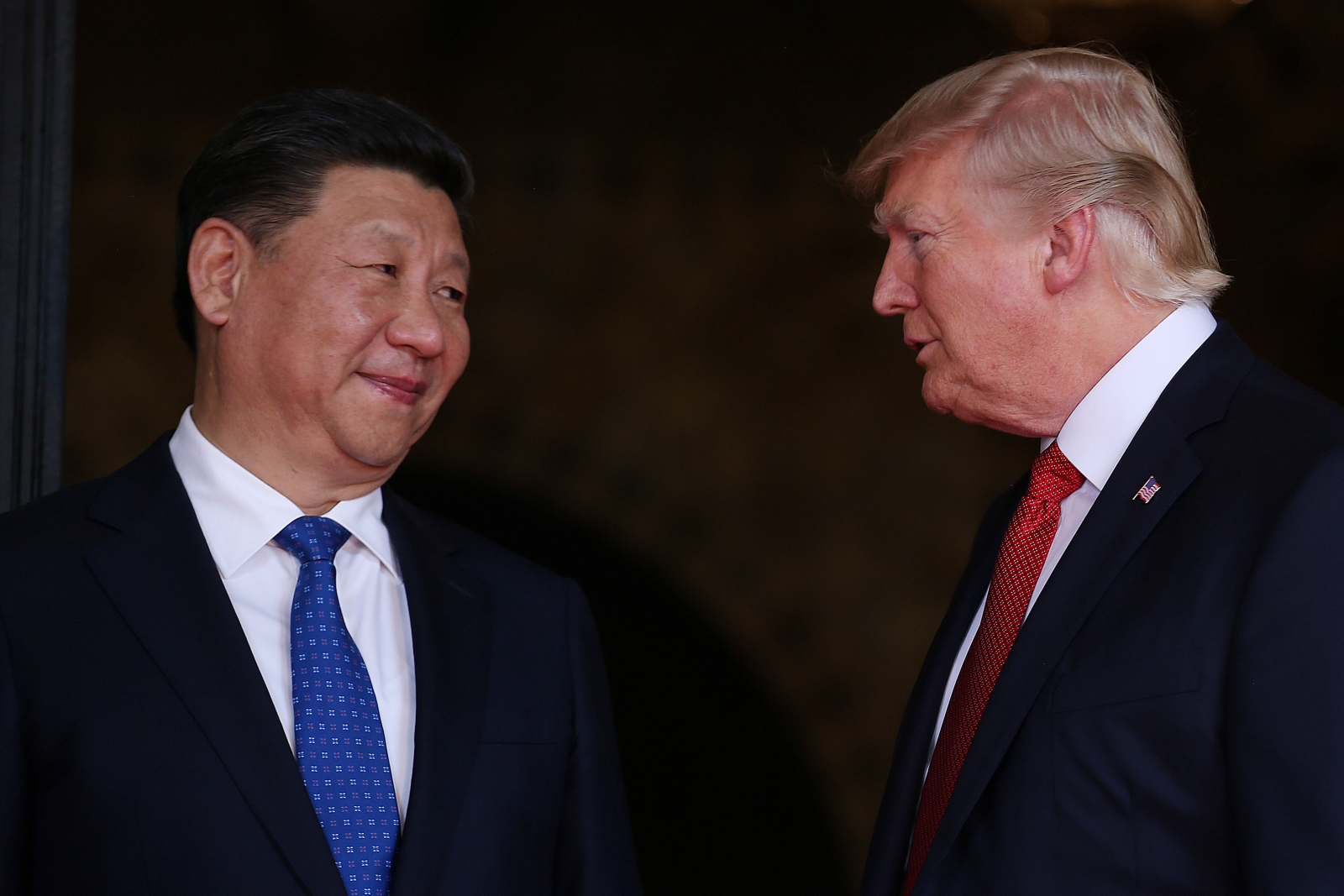
SHENZHEN, China — November 20, 2026
The diplomatic warmth displayed by United States President Donald Trump and Chinese President Xi Jinping during their latest meeting at the Asia-Pacific Economic Cooperation (APEC) summit in Shenzhen may not be enough to resolve the persistent disagreements threatening relations between the world’s two largest economies.
Although both leaders have demonstrated a willingness to improve bilateral relations through diplomatic engagement and reciprocal gestures, unresolved trade disagreements, restrictions on advanced artificial intelligence (AI) technology and changing political dynamics in Washington could undermine the fragile understanding between the two countries.
Xi’s decision to personally welcome Trump at Shenzhen Airport marked an unusual diplomatic gesture. Since becoming China’s president in 2013, Xi had not personally received another visiting leader at an airport.
The Chinese president waited on the red carpet when Trump’s Air Force One arrived in Shenzhen on November 18. The two leaders briefly embraced before proceeding towards their waiting vehicles, accompanied by cheering performers and an elaborate welcoming ceremony.
The reception reciprocated Trump’s earlier gesture in September, when he welcomed Xi at Joint Base Andrews, a US military installation outside Washington.
Their latest encounter was the third meeting between the two presidents this year and took place alongside the APEC summit.
Xi described bilateral relations as enjoying overall stability and positive momentum, while Trump praised what he considered a special relationship between the two countries.
Nevertheless, analysts believe the goodwill displayed during the summit could face serious challenges as Washington continues to introduce restrictions affecting China’s technology industry and the two governments struggle to finalise outstanding trade arrangements.
Diplomatic gestures reflect growing emphasis on reciprocity
The exchange of diplomatic courtesies between Trump and Xi demonstrated the importance both governments attach to maintaining communication and avoiding an escalation of bilateral tensions.
Guo Shan, a research economist and partner at Hutong Research, described Xi’s decision to welcome Trump personally at the airport as a reciprocal gesture.
James Chen, an assistant professor of diplomacy and international relations at Tamkang University in Taipei, suggested that the Chinese president had provided Trump with an opportunity to strengthen his international standing following the Republican Party’s setbacks in the US midterm elections.
“Xi extended Trump a warm welcome and lavish hospitality, while Trump elevated Xi’s international stature to unprecedented heights,” Chen told CNA.
During their September meeting, the two presidents reportedly agreed that bilateral relations should be guided by respect, fairness and reciprocity.
Their latest discussions also produced an agreement to develop an action plan aimed at establishing a constructive relationship based on strategic stability.
Xi emphasised the importance of direct engagement between national leaders, describing head-of-state diplomacy as irreplaceable.
William Yang, senior analyst for Northeast Asia at the International Crisis Group, interpreted Xi’s remarks as a message directed towards Washington and the wider American foreign policy establishment.
According to Yang, Beijing was highlighting the benefits of maintaining diplomatic communication and the progress achieved through engagement over the preceding year.
Guo also argued that continued discussions between the two governments had helped preserve the trade truce originally reached in October 2025. The arrangement was subsequently extended until January 10, 2027.
Trump expressed confidence in his personal relationship with Xi, telling the Chinese leader: “I think as long as you and I are in charge of things, we’ll never have a problem.”
However, the political circumstances surrounding the American president have changed following the November 3 midterm elections, in which Democrats secured control of both chambers of Congress.
The outcome could reduce Trump’s ability to implement agreements reached with Beijing, particularly where congressional approval or cooperation from other political institutions becomes necessary.
“The room for Trump to deliver whatever he promised has declined after the midterms,” Guo said.
Chim Lee, senior analyst at the Economist Intelligence Unit, noted that Beijing continues to regard Trump as an important influence capable of restraining more confrontational voices within the American political establishment.
“China also sees that Trump can be a stabilising factor within all of the different risk factors that can emerge in the US,” Lee said.
US restrictions on AI chips threaten diplomatic progress
Technology competition remains one of the most sensitive issues in US-China relations, particularly regarding access to advanced semiconductors and artificial intelligence infrastructure.
AI chips were among the major subjects attracting attention ahead of the Trump-Xi meeting. However, neither Trump’s opening remarks nor China’s official account of the discussions addressed the issue directly.
The White House had also not released its own account of the meeting at the time of the report.
Trump nevertheless discussed semiconductor technology during an interview with Fox News earlier in the week. He suggested that Washington could permit China to purchase Nvidia’s advanced Blackwell chips in two or three years, when the technology would no longer represent the company’s most sophisticated offering.
Meanwhile, the US Commerce Department introduced tighter export controls designed to prevent Chinese companies from accessing advanced American AI chips through data centres located in third countries.
The regulations, which became effective on November 19, require licences for shipments of the affected chips to Singapore, Malaysia, Thailand, Indonesia and Brazil. US-headquartered companies are exempted from the restrictions.
China reacted strongly to the decision.
The Chinese commerce ministry expressed serious dissatisfaction with Washington’s move and warned that Beijing would introduce countermeasures if the American government proceeded with additional restrictions.
During his discussions with Trump, Xi reportedly called for disagreements between the countries to be handled constructively rather than allowed to escalate.
“Beijing has prepared for a worst-case scenario, but unless it is compelled to respond, it would prefer to keep a low profile and wait for Washington’s next move,” Chen said.
Washington has also demonstrated some reluctance to introduce more aggressive restrictions against China.
According to US media reports, Trump postponed tougher limitations on semiconductor exports.
When journalists asked him on Monday about disagreements within his administration over the appropriate approach towards Beijing, Trump responded: “I don’t think you want to insult China just before you get there.”
The disagreement over semiconductor exports has also exposed divisions within Trump’s cabinet.
Treasury Secretary Scott Bessent reportedly expressed frustration over delays by the Commerce Department, led by Howard Lutnick, in restricting exports of certain Nvidia chips to China.
Chen argued that the disagreement appeared to reflect an internal political and policy struggle within the American administration rather than a wider confrontation between Washington and Beijing.
Nevertheless, China’s willingness to tolerate further American restrictions may be limited.
Lee identified the Multilateral Alignment of Technology Controls on Hardware (MATCH) Act, introduced in the US Congress in April, as another potential source of tension.
The proposed legislation seeks to restrict China’s access to semiconductor manufacturing equipment.
“These are likely to be a pretty big red line for China, and China has made it very clear that if you touch on some of the major issues, (they) will be willing to retaliate,” Lee said.
There is already a precedent for such retaliatory measures.
In September 2025, Washington expanded export restrictions to cover subsidiaries of companies already placed on its blacklist. China responded the following month by introducing extensive restrictions on rare-earth exports.
Both governments eventually suspended the measures as part of their trade truce.
Trump and Xi differ over international AI regulation
Apart from disagreements over semiconductor exports, the two presidents also expressed different approaches to the regulation and governance of artificial intelligence.
Speaking to APEC leaders on Thursday, Trump declared that the United States opposed “any form of globalist regulation” of AI.
China’s official account of the discussions indicated that Xi supported international cooperation to ensure that artificial intelligence remained under human supervision.
According to the Chinese readout, Xi said the two countries should “ensure that AI is always under human control”.
Trump subsequently told Fox News that he and Xi supported moderate AI regulations intended to improve safety and that their governments could cooperate in developing appropriate safeguards.
Reuters also reported on the American president’s comments.
Washington had proposed an AI notification mechanism in September, but Guo suggested that prospects for meaningful discussions on AI safety had weakened following allegations surrounding Nvidia chips being diverted to China.
She observed that the disagreements within the American administration had created uncertainty for Beijing about which officials could be trusted to negotiate technology-related arrangements.
“China sees that there is an internal fight in the US and they don’t really know who they can talk to,” she added.
Outstanding trade commitments put US-China relations under pressure
Trade negotiations remain another major test of the relationship between Trump and Xi.
During their bilateral meeting, Trump said the two countries had agreed to reduce tariffs affecting US$30 billion worth of trade on each side, an arrangement he described as the “30-for-30” deal.
“We have split up the tariffs and done it in a very fair way,” Trump said.
However, the American president also used the meeting to encourage Beijing to increase purchases of agricultural products from the United States.
“I’ll be asking you to do some more for our farmers,” Trump told Xi at the beginning of their Thursday discussions.
The request reflects Washington’s continuing concern about China’s agricultural purchasing commitments.
Before the APEC summit, American officials reportedly indicated that Beijing had not completely fulfilled its promises to purchase additional American agricultural products.
Guo acknowledged that China had already increased its purchases but explained that Beijing wanted Washington to reduce tariffs on Chinese consumer goods before agreeing to further commitments.
“Fair treatment has to be on both sides,” she said.
The proposed trade arrangement had still not been finalised as of the previous week, according to Reuters.
Guo questioned the prospects for a broader agreement if the two governments could not implement even relatively limited purchasing commitments.
“If we cannot deliver even on this small amount of products, then how do we talk about the broader deal?” she said.
The outstanding agricultural commitments demonstrate that diplomatic goodwill does not automatically translate into practical economic cooperation.
Both governments continue to have competing interests, and the willingness of either side to make additional concessions will depend partly on whether the other delivers on existing promises.
US-China Board of Trade seeks to maintain communication
Despite continuing disagreements, Washington and Beijing have established mechanisms intended to prevent trade disputes from escalating into a wider economic confrontation.
Officials from both countries held the first meeting of their Board of Trade through a video conference on November 13, according to China’s commerce ministry.
The ministry announced on Thursday that the board’s agriculture working group would soon hold its first meeting.
However, William Yang expressed reservations about the level of agreement and the details already established by officials responsible for developing the board’s operating arrangements.
Chim Lee offered a more cautious interpretation of the initiative, suggesting that its immediate purpose was to maintain communication rather than deliver a comprehensive solution to every outstanding disagreement.
“Essentially the idea of this meeting is really just to say, ‘Let’s just keep talking, we are not trying to just flip the table’,” Lee said.
The continued operation of such diplomatic and economic channels could help both governments manage disagreements without immediately resorting to retaliatory measures.
Nevertheless, the effectiveness of these arrangements will depend on whether Washington and Beijing can translate discussions into concrete agreements.
December G20 meeting offers another diplomatic opportunity
Trump and Xi are expected to meet again in December at the G20 Leaders’ Summit in Miami.
The anticipated encounter could provide another opportunity to consolidate the understanding reached during the APEC summit and address outstanding trade and technology disputes.
However, Yang expressed less optimism about the longer-term prospects for the relationship.
He expects the political environment to become more competitive after the new US Congress begins its work in January, potentially encouraging another cycle of retaliatory economic measures.
China could respond to renewed American pressure by imposing additional restrictions on rare-earth exports, an area where Beijing possesses considerable influence over global supply chains.
Yang warned that the opportunity to preserve the current diplomatic understanding was becoming increasingly limited.
“The window to really preserve this detente is closing,” he said.
The developments surrounding the Trump-Xi meeting demonstrate that personal diplomacy remains important in managing relations between Washington and Beijing. Their reciprocal gestures, continued discussions and willingness to maintain communication have helped prevent some disagreements from developing into more serious confrontations.
However, semiconductor restrictions, artificial intelligence governance, agricultural purchasing commitments and domestic political pressures continue to create significant obstacles.
Although both presidents have expressed interest in maintaining stable relations, the durability of their understanding will ultimately depend on whether diplomatic assurances can be converted into practical economic and political cooperation.
Leave a Reply