Good morning from Meziesblog! Here is today’s summary of top stories from across the United Kingdom, compiled from leading newspapers and verified sources.
1. PM Starmer Battles Labour Mutiny After Historic Local Election Defeat
Prime Minister Keir Starmer is fighting for his political life after more than 70 Labour MPs publicly called for his resignation or demanded a clear departure timetable. The revolt follows last Thursday’s local elections in which the governing Labour Party lost over 1,400 council seats, control of the Welsh parliament, and slipped to third place in Wales behind Plaid Cymru and Reform UK.
Speaking in central London on Monday, Starmer accepted responsibility for the “stark and painful” results but refused to step down, warning that leadership instability would plunge Britain into “chaos.” “What we witnessed with the last government was the chaos of constantly changing leaders, and it cost this country a huge amount,” he said. “A Labour government would never be forgiven for inflicting that on our country again”.
Dissent has spread beyond the backbenches. Several junior ministers have resigned from their posts in protest, and multiple cabinet members are reportedly urging Starmer to arrange an “orderly handover.” Under Labour’s internal rules, a formal leadership challenge could be triggered if 81 MPs – one‑fifth of the parliamentary party – back a challenger.
In a defiant speech, Starmer announced a series of policy resets aimed at regaining public trust: nationalising British Steel, seeking a new agreement with the EU (including a youth mobility scheme), and strengthening youth apprenticeships and jobs guarantees. He also delivered a blistering attack on Reform UK leader Nigel Farage, labelling him a “liar” and vowing to block far‑right agitators from entering the country for a planned Tommy Robinson‑led demonstration on Saturday (see story 2).
On Tuesday morning, Starmer convened an emergency cabinet meeting at Downing Street as speculation mounted over potential successors. Former deputy prime minister Angela Rayner is widely seen as a possible contender, though she has not formally declared a challenge. In a statement, Rayner said Starmer must “meet the moment and set out the change our country needs”.
Elsewhere, the Scottish National Party (SNP) retained its position as the largest party in Holyrood, while Plaid Cymru overtook Labour to become the leading party in the Senedd for the first time in a century. First Minister Michelle O’Neill of Northern Ireland called the outcome a “seismic political shift” that could reshape the UK’s constitutional landscape.
For more in‑depth analysis, read our companion piece: “Keir Starmer and Labour are hanging on by a thread – is Britain entering a new multi‑party era?” .
2. Home Office Vows to Block Far‑Right Agitators from Entering UK
Prime Minister Starmer announced that “far‑right agitators” will be barred from entering the UK ahead of a major protest scheduled for Saturday in central London. Organisers expect more than 100,000 people to attend the “Unite the Kingdom” rally led by Tommy Robinson.
The Home Secretary has already used her powers to cancel the permission to enter or remain for seven individuals linked to the demonstration. In a speech on Monday, Starmer said the event was “designed to confront and intimidate this diverse country” and confirmed that additional foreign speakers could be blocked from travelling to Britain. “That is why this Labour Government will block far‑right agitators,” he declared.
Meanwhile, UK Music has called on the Prime Minister to use next week’s King’s Speech to honour his manifesto commitment to crack down on online ticket touts, warning that post‑Brexit barriers are also harming British musicians’ ability to tour in Europe.
3. Bank of England Holds Rates at 3.75% – But Inflation Risks Loom
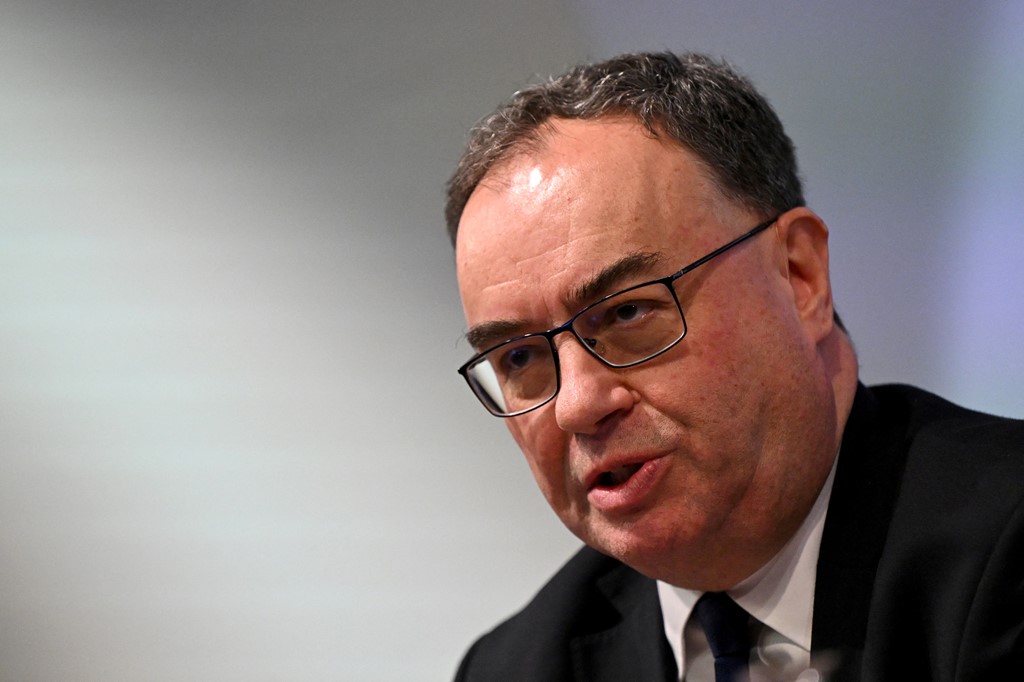
The Bank of England on Thursday kept its benchmark interest rate unchanged at 3.75% but warned that further tightening may be necessary if the war in the Middle East continues to drive up energy costs. Governor Andrew Bailey described the current rate as a “reasonable place given the situation of the economy and the unpredictability of events in the Middle East.” The Monetary Policy Committee voted 8‑1 to hold, with one member favouring a 0.25‑percentage‑point increase.
The central bank lowered its growth forecasts for 2026 and 2027, now expecting GDP expansion of just 0.7% to 0.8% this year and 0.8% to 1.0% in 2027 – down from earlier projections. In a worst‑case scenario, inflation could spike to 6.2% in the first quarter of 2027 if oil prices remain near $130 per barrel and gas prices rise further.
4. Record Dentists but NHS Access Worsens, BDA Warns
A record 48,000 dentists are now registered to work in the UK, but patients may still find it harder to get an NHS check‑up, the British Dental Association warned exclusively to the Mirror. The influx of foreign‑trained dentists – who for the first time outnumbered UK‑trained joiners last year – will not solve the oral health crisis because the government only funds enough NHS treatment for half of England’s population, the BDA said.
BDA chair Eddie Crouch compared current government efforts to “a futile bid to fill a leaky bucket.” England invests almost half less per capita in dental services than Scotland, and the NHS dental budget has been frozen at around £3 billion for over a decade – a real‑terms cut of roughly £1 billion.
Health Secretary Wes Streeting has promised to reform the “flawed” dental contract, which currently sees dentists making a loss on complex NHS treatments, driving them toward private work. The BDA estimates that restoring a fully universal NHS dental service for everyone in England would require an extra £1.5 billion annually.
In other health news, the government will announce legislation in the King’s Speech to create a single patient record for every person, to be shared across all NHS providers. Health Secretary Streeting described the £10 billion digitisation as a “gamechanger” that will save lives by allowing paramedics and hospital doctors to access a patient’s full medical history instantly.
5. MPs Warn of University Insolvency Crisis “Without Clear Government Plan”
The Education Committee published a damning report today warning that the government has no clear plan for universities facing insolvency and that student protections are inadequate. The higher education sector is under “unprecedented” financial pressure, with universities already cutting staff, freezing recruitment, closing departments and selling assets to stay afloat.
In a separate development, the government has been criticised for axing bursaries for overseas applicants hoping to become trainee physics and modern foreign languages teachers without notice. The Department for Education said the decision to “pause” overseas eligibility was taken because recruitment had improved, but critics accused ministers of pulling the plug without warning, jeopardising future teacher supply in key subjects.
The Prime Minister, meanwhile, will meet with apprentices today to announce an overhaul of the apprenticeship system, vowing to “tear up the status quo that failed young people” and break down barriers to opportunity. The move follows Labour’s heavy local election losses and is seen as part of Starmer’s attempt to regain working‑class support that has drifted toward Reform UK.
6. Unseasonal Snow and a Climate Crossroads
The UK is braced for an unexpected late‑May cold snap, with up to 36 hours of snow forecast across parts of northern England and Scotland as temperatures plummet to 0°C. The Met Office has warned of persistent rain showers, localised thunderstorms in London, and a significant wintry system expected to deliver about 30 hours of snowfall from Tuesday afternoon.
Meanwhile, the local election results have raised fresh questions about the UK’s net‑zero trajectory. Reform UK, which gained over 1,400 seats, campaigned on a promise to “scrap crazy Labour‑Tory Net Zero targets and cut your energy bills.” With the party now controlling a number of local councils, observers expect fierce debates over the removal of Climate Emergency Declarations and a potential reversal of local climate action.
On a more positive environmental note, community‑led electric car‑sharing schemes in the East Midlands are showing a way forward, helping residents cut emissions and reduce oil demand at a time when the Iran war is pushing up global energy prices.
7. London Synagogue Arson, Tube Attack, and Terror Arrest Lead Crime News
A 45‑year‑old man has been charged with arson with intent to endanger life following an attack at a former synagogue in east London last week, British police confirmed on Tuesday.
In a separate incident, a man in his 20s is fighting for his life after an attack at Charing Cross Tube station in central London; police have arrested three men – aged 18, 20 and 24 – on suspicion of attempted murder.
Dramatic footage emerged of the moment police used tasers to subdue a knife‑wielding suspect after two men were stabbed in Golders Green, north London. The suspect, who is being held on suspicion of terrorism‑related offences, was arrested following a tense confrontation.
Elsewhere, police in Manchester arrested a man on suspicion of making an explosive device after crews descended on Canal Street following reports of “chemical substances” found in a hotel room.
8. UK Bets Big on Quantum Leap and AI
The government has announced a £2 billion funding boost for quantum innovation, including a new £1 billion programme to procure large‑scale quantum computers. Details of the initiative – dubbed ProQure: Scaling UK Quantum Computing – will be unveiled next week. The Chancellor, speaking at the annual Mais lecture, said Britain has a “real opportunity” to shape the “next era of computing,” which could redefine medicine, energy and materials science.
In a separate development, the UK will publish an AI Hardware Plan in June, targeting 5% of a projected $1 trillion global chip market. While the plan includes a £100 million investment in domestic chip design, manufacturing will still depend on Taiwan and the United States.
9. Adam Peaty Returns for Glasgow 2026 as England Names Commonwealth Squad
Three‑time Olympic champion Adam Peaty will today be named in Team England’s 42‑strong swimming squad for this summer’s Commonwealth Games in Glasgow – 12 years after he won his first major international title at the same venue. Peaty has his sights set on making history by winning gold at a fourth consecutive Games.
In football, England manager Thomas Tuchel has described his side as “underdogs” for next year’s World Cup, warning they have “no chance” of succeeding unless they unite as a team. The Three Lions can qualify for the tournament if they beat Latvia in Riga on Tuesday and Serbia fail to beat Albania or Andorra.
Elsewhere, the British Horseracing Authority has issued fresh guidance after a significant rise in equine influenza cases in the wider UK horse population, urging trainers and racing staff to tighten biosecurity measures, though it stressed that there have been no reported cases in licensed training yards.
10. Zoe Ball “Hot Favourite” to Host Strictly as Search for New Presenter Heats Up
Zoe Ball has emerged as the hot favourite to land the coveted role of Strictly Come Dancing host alongside Emma Willis, after Tess Daly and Claudia Winkleman’s shock departure from the BBC show last year. Rumours have been rife about who might step into the famous shoes, with both Ball and Willis now reportedly in advanced talks with BBC executives.
Strictly fans can expect an official announcement in the coming weeks as the BBC prepares for the new series this autumn.
Leave a Reply