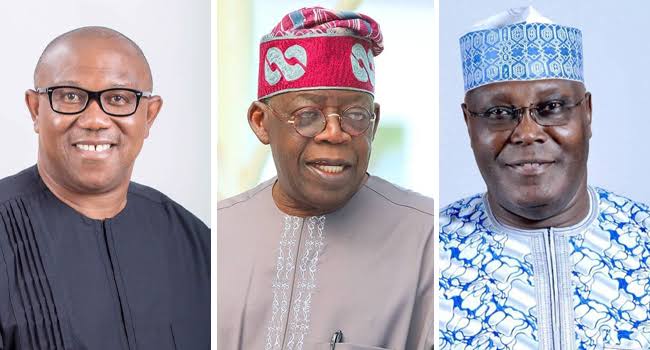
1. Peter Obi Accuses Tinubu Government of Targeting Him
Former Labour Party presidential candidate Peter Obi, now associated with the Nigeria Democratic Congress (NDC), has accused President Bola Tinubu’s administration of targeting him. The allegation comes amid growing political competition ahead of the 2027 general elections.
Obi has remained a prominent opposition figure, criticising government policies and calling for improvements in governance, accountability and economic management. The allegation adds to the political tensions between opposition figures and the ruling administration as parties prepare for the next electoral contest.
2. Tinubu Inaugurates Presidential Campaign Council
President Bola Tinubu has inaugurated a campaign council for his re-election bid, signalling an intensification of political preparations ahead of the 2027 presidential election.
The president reportedly said governance would not take a back seat despite campaign activities. Meanwhile, the All Progressives Congress (APC) is mobilising governors, lawmakers and grassroots supporters to strengthen its electoral machinery.
The inauguration marks another step in the ruling party’s efforts to consolidate its political structures before the next general election.
3. Opposition Parties Begin Talks Ahead of 2027 Elections
Political realignments are gathering momentum as opposition parties explore possible cooperation ahead of the 2027 general elections.
Six opposition parties have reportedly begun discussions involving potential presidential candidates. The negotiations could influence the shape of the opposition and its ability to challenge the ruling APC.
The outcome of these discussions may prove important in determining whether opposition parties pursue a common candidate or compete independently. A united opposition could alter the electoral landscape, although differences over leadership, party interests and candidate selection may complicate negotiations.
4. Atiku Criticises Tinubu’s Expanded Campaign Council
Former Vice-President Atiku Abubakar has criticised the expansion of Tinubu’s campaign council and questioned the use of the Presidential Villa in connection with political activities.
The dispute highlights continuing disagreements between the ruling party and opposition figures over the relationship between government institutions and electoral campaigning.
The controversy is likely to remain part of the broader debate about political fairness, the use of public resources and the conduct of political campaigns ahead of the 2027 elections.
5. CBN Reaffirms Single-Digit Inflation Target
The Central Bank of Nigeria (CBN) has reiterated its ambition to bring inflation into single digits as the Federal Government seeks to attract investment through tax incentives.
The policy focus comes amid persistent concerns about living costs, purchasing power and the cost of doing business. Lower inflation would help households and companies plan their spending more effectively, although achieving that objective depends on several factors, including food prices, exchange-rate movements, energy costs and monetary policy.
The CBN’s stated target represents a policy objective rather than confirmation that inflation has already fallen to single digits.
6. Government Announces Five Major Fiscal Reforms to Attract Investors
The Federal Government has introduced what it describes as five major fiscal reforms intended to encourage investment and strengthen economic growth.
The measures form part of wider efforts to improve Nigeria’s investment environment and increase confidence among domestic and international businesses.
Their practical impact will depend on implementation, regulatory clarity and whether investors experience improvements in the cost and predictability of operating in the country. Businesses will also be watching how the reforms affect taxation, access to capital and the broader investment climate.
7. Manufacturers Raise Concerns About High Interest Rates and Import Competition
Nigerian manufacturers have reportedly criticised the combination of high borrowing costs, taxation and import competition, arguing that these pressures are undermining local production.
The concerns reflect the difficulties faced by businesses that need affordable credit, reliable electricity, efficient transport and access to raw materials. When production costs rise, manufacturers may struggle to compete with imported goods, potentially affecting investment and employment.
The debate highlights the need to balance policies designed to stabilise the economy with measures that enable local businesses to expand, create jobs and contribute to national economic growth.
8. Nigeria’s Communications Commission Introduces Mobile Device Checker
The Nigerian Communications Commission (NCC) has reportedly introduced a device-checking tool intended to help consumers identify fake or cloned mobile phones.
The commission’s device register reportedly covers approximately 231 million devices. The initiative is aimed at improving consumer protection and helping people verify information about mobile devices.
Consumers are encouraged to use official verification channels and exercise caution when purchasing phones from unfamiliar sellers, particularly when prices appear unusually low or device documentation is incomplete.
The initiative could help improve confidence in the mobile phone market and reduce the risks associated with counterfeit or improperly registered devices.
9. Government Reports Voluntary Return of More Than 7,000 Nigerian Refugees
The Federal Government has reported that more than 7,000 Nigerian refugees voluntarily returned to the country during 2026.
The development brings attention to the continuing challenges of displacement, insecurity and the reintegration of people who have fled their homes.
Successful returns require more than transportation across borders. Families also need safety, housing, healthcare, education and opportunities to earn a living. Support for returning communities will be important in helping displaced people rebuild their lives and reducing the risk of renewed displacement.
The reported figure concerns voluntary returns and should not be interpreted as evidence that displacement-related problems have been fully resolved.
10. Security Concerns Continue as Authorities Pursue Criminal Cases
Security and law-enforcement developments remain prominent in Nigeria’s news cycle. Reports published today include arrests in separate criminal investigations, while authorities continue to face pressure to tackle kidnapping, organised crime and other threats.
In Plateau State, police reportedly arrested suspects and recovered locally made firearms. The arrests form part of ongoing efforts to address criminal activity and improve public safety.
Elsewhere, a court proceeding involving former Kaduna State governor Nasir El-Rufai featured testimony from a witness alleging that money had been set aside to interfere with an Economic and Financial Crimes Commission investigation.
The allegation remains a matter for the judicial process and should not be treated as a final finding of guilt. The case highlights continuing public attention on corruption investigations, due process and accountability among public officials.
11. More Than 87,000 Children Treated for Malnutrition in Katsina
Médecins Sans Frontières (MSF), also known as Doctors Without Borders, has reported that more than 87,000 children were treated for malnutrition in Katsina State over an eight-month period.
The figure underscores the scale of the nutritional challenges confronting vulnerable children and families in northern Nigeria. Malnutrition can affect children’s physical growth, development and resistance to disease, making early identification and treatment essential.
The situation also highlights the importance of improving access to nutritious food, maternal and child healthcare, clean water and sustained community-level support.
Government agencies, healthcare providers and humanitarian organisations face the continuing challenge of reaching vulnerable families, particularly in communities affected by poverty, insecurity and limited access to medical services.
12. Federal Government Releases ₦40.7 Billion for Primary Healthcare
The Federal Government has reportedly released ₦40.7 billion for primary healthcare and announced an expansion of coverage to 13,000 facilities.
Primary healthcare centres play a crucial role in providing routine medical services, immunisation, maternal care, treatment of common illnesses and early detection of serious health conditions.
The impact of the funding will depend on how effectively the money reaches facilities and translates into medicines, equipment, staffing and accessible services.
Monitoring implementation will be important to determine whether the reported expansion produces meaningful improvements for patients, particularly in rural communities where healthcare services may be limited.
13. Ondo Government Orders Emergency Measures Following Military Aircraft Crash
The Ondo State Government has reportedly ordered river fumigation and emergency water-supply measures in Igbokoda following concerns associated with a military aircraft crash.
The development has raised environmental and public-health concerns, particularly over reports that the crash site and recovered bodies may affect a local source of drinking water.
Emergency water provision and appropriate environmental assessment are important to protect residents while authorities investigate the situation.
The response will need to establish the nature and extent of any contamination and communicate clear safety guidance to affected communities. Residents also need reliable information about water safety and access to alternative sources if their usual supplies are considered unsafe.
14. Nigeria’s Election Authorities Address AI and Election Integrity
The Independent National Electoral Commission (INEC) has featured in reports concerning preparations for the 2027 elections, including the use of artificial intelligence and the integrity of electoral results.
INEC Chairman Joash Amupitan has reportedly maintained that artificial intelligence will not determine the outcome of the elections. The issue reflects growing concerns about manipulated digital content, misinformation and the possible use of synthetic media to mislead voters.
As political campaigning intensifies, transparent procedures, credible result-management systems and public access to reliable electoral information will remain central to confidence in the process.
Political parties, candidates, media organisations and voters will also have an important role in identifying misleading information and ensuring that election-related claims are supported by verifiable evidence.
Nigeria’s Top Stories: The Bigger Picture
Nigeria’s leading stories on 14 October 2026 reflect several interconnected national challenges. Political parties are preparing for the 2027 elections, economic policymakers are seeking to reduce inflation and attract investment, and manufacturers continue to grapple with high operating costs.
At the same time, security concerns, refugee reintegration, child malnutrition and healthcare funding remain important issues affecting communities across the country.
The coming months will test the government’s ability to translate policy announcements into tangible improvements in living standards, economic opportunities and public services. Political developments will also shape the national conversation as parties position themselves for the next general election.
Leave a Reply