INEC revises timetable for Nigeria’s 2027 general elections
The Independent National Electoral Commission (INEC) has revised its timetable for the 2027 general elections, making the electoral calendar one of the major political developments attracting attention in Nigeria today. The revised schedule outlines important milestones ahead of the presidential, National Assembly, governorship and state assembly elections.
The adjustment comes as political parties and prospective candidates increasingly turn their attention toward the 2027 elections. The electoral timetable is expected to provide greater clarity for political parties as they organize primaries, campaigns and other preparations.
The 2027 contest is already shaping political alliances across the country, with parties and political actors positioning themselves well ahead of the polls. The timing of INEC’s latest announcement is therefore significant because the formal electoral calendar provides a framework for the next stages of political activity.
Dangote Refinery secures 16 million barrels of Nigerian crude for October
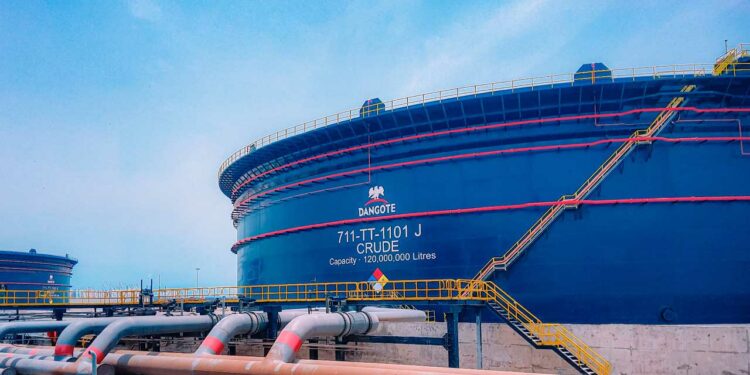
The Dangote Refinery has purchased at least 16 million barrels of Nigerian crude oil for delivery in October, according to industry sources. The volume is equivalent to roughly 520,000 barrels per day, representing a substantial portion of the refinery’s 700,000-barrel-per-day capacity.
The refinery is receiving crude through a combination of supplies from the Nigerian National Petroleum Company (NNPC) and purchases through tenders. NNPC is expected to provide several Nigerian crude cargoes alongside imported crude, while additional volumes have been purchased from other suppliers.
The increased domestic crude purchases are significant for Nigeria because they reduce the quantity of crude available for export at a time when international oil markets are experiencing considerable supply concerns. The refinery has also increased its intake of Nigerian crude compared with previous periods.
The development comes as the refinery prepares for an initial public offering, making reliable crude supplies an important issue for investors assessing the company’s future operations.
Rising global oil prices create opportunities and risks for Nigeria
International crude prices surged sharply today as escalating conflict in the Middle East raised fears of further disruptions to global oil supplies. Brent crude rose above $107 per barrel, while U.S. West Texas Intermediate crude also moved above $100.
For Nigeria, one of Africa’s major oil producers, higher crude prices could potentially increase government oil revenues and strengthen foreign-exchange inflows. However, the benefits depend heavily on Nigeria’s ability to maintain and increase crude production while controlling losses from oil theft, operational disruptions and other challenges affecting the petroleum sector.
The global situation is particularly important because the conflict is affecting shipping routes and energy infrastructure beyond the traditional areas of concern around the Strait of Hormuz. Analysts are watching closely to determine whether the disruption will produce a prolonged period of elevated oil prices.
Nigeria’s economic growth remains a major focus
Nigeria continues to focus on the performance of the economy following the latest GDP figures released by the National Bureau of Statistics. The country’s economy grew by 4.43 percent year-on-year in the second quarter of 2026, compared with 4.23 percent in the corresponding quarter of 2025.
The stronger GDP figure has provided some encouragement for the federal government’s economic reform programme, although Nigerians continue to face significant pressure from the cost of living, food prices and household expenses.
The government has continued to argue that reforms are gradually improving macroeconomic stability, while businesses and households remain focused on whether economic growth will translate into stronger purchasing power, employment opportunities and lower living costs.
Government continues focus on infrastructure and economic reforms
The federal government’s economic programme remains centred on infrastructure investment, energy, security and other areas intended to support long-term growth.
Government expenditure includes significant allocations toward strategic infrastructure development, electricity support and security-related spending. The government says these interventions are intended to support economic activity while addressing some of the structural challenges facing the country.
The effectiveness of the spending, however, remains an important issue for economists and Nigerians as the government attempts to balance investment requirements with pressure on public finances.
Nigeria watches global energy crisis closely
The sharp rise in global oil prices is likely to remain an important issue for Nigeria because petroleum remains central to the country’s foreign-exchange earnings and public finances.
The current international situation is particularly complicated by disruptions affecting oil-producing countries and shipping routes. OPEC has also adjusted its forecast for global oil-demand growth in 2026, while reported output has been affected by disruptions involving major producers.
For Nigeria, the immediate question is whether higher international prices will translate into substantially stronger government revenues. Much will depend on domestic production levels, crude theft, operating costs, export volumes and the amount of crude increasingly being consumed by domestic refineries.
Aviation regulators strengthen cooperation
Nigeria’s aviation sector is also attracting attention today, with the Nigerian Civil Aviation Authority (NCAA) and the National Insurance Commission (NAICOM) signing a memorandum of understanding aimed at strengthening regulation of aviation insurance.
The agreement is part of broader efforts to improve regulatory coordination within Nigeria’s aviation industry. Effective insurance regulation is particularly important because airlines, aircraft operators and other aviation businesses operate in an industry where accidents, equipment failures and other risks can have extremely high financial consequences.
Closer cooperation between the two regulators could therefore help improve oversight and strengthen confidence in Nigeria’s aviation insurance market.
Bank of Agriculture launches N200 billion food-price programme
The Bank of Agriculture has launched a ₦200 billion programme aimed at helping stabilise food prices.
Food inflation and agricultural productivity remain major concerns in Nigeria, making access to affordable agricultural financing an important part of efforts to improve food security.
The programme is expected to support interventions designed to strengthen agricultural production and improve the availability of food. Its success will depend on how effectively funding reaches farmers and agricultural businesses and whether the additional financing translates into increased production and more efficient supply chains.
Nigeria seeks to strengthen energy security
The federal government continues to emphasise cooperation between security agencies and the oil and gas industry as part of efforts to protect energy infrastructure and increase crude-oil production.
The government has previously identified security gaps affecting oil-producing areas as a challenge to the country’s energy ambitions. Greater coordination between security agencies and petroleum-sector operators is intended to reduce threats to infrastructure and help improve production.
The issue has taken on greater importance as international oil prices rise. Nigeria stands to benefit more from the current oil-market environment if it can maintain reliable production and limit losses caused by theft and operational disruptions.
Nigeria’s political atmosphere intensifies ahead of 2027
Political activity continues to build as Nigeria moves closer to the 2027 elections. INEC’s revised timetable is expected to give political parties and aspirants a clearer framework for planning their campaigns and internal processes.
President Bola Tinubu’s administration is simultaneously promoting its economic record, while opposition figures and political groups are preparing their own strategies for the next presidential contest. With the election increasingly dominating the political calendar, debates over economic performance, security, unemployment, living costs and governance are expected to become more prominent.
Nigeria’s major stories today
Today’s major Nigerian stories centre on the 2027 electoral timetable, the growing role of the Dangote Refinery in the domestic petroleum market, rising global oil prices, economic reforms, food security, aviation regulation and preparations for the next general elections.
Leave a Reply