China’s Military Anti-Corruption Campaign Intensifies
One of the biggest stories dominating Chinese and international headlines today is the sentencing of former Chinese defense ministers Wei Fenghe and Li Shangfu. Both men received suspended death sentences over corruption-related charges, marking one of the most dramatic developments in President Xi Jinping’s long-running anti-corruption campaign.
The sentences are highly significant because both officials once occupied some of the most powerful positions within the Chinese military and political establishment. Wei Fenghe previously served as State Councilor and Minister of National Defense, while Li Shangfu was his successor before being removed from office during an earlier wave of investigations.
Chinese state media presented the verdicts as proof that no official is beyond accountability. Analysts, however, see the move as part of a deeper restructuring effort within the People’s Liberation Army. The anti-graft campaign has increasingly targeted senior military leadership, especially within the Rocket Force and strategic weapons divisions.
The unusually severe punishment sent a strong signal across China’s political system. Suspended death sentences in China often translate into life imprisonment without parole if no additional crimes are committed during the reprieve period.
Military observers believe the crackdown reflects growing concern inside Beijing over loyalty, procurement irregularities, and command discipline at a time when China is modernizing its armed forces at an unprecedented pace.
The developments have also renewed international debate about whether repeated purges could weaken operational readiness within the PLA. Some analysts argue that fear and political uncertainty may affect morale among senior officers, while others say the campaign ultimately strengthens party control over the military.
Xi Jinping Expands Diplomatic Engagements
Another major topic in China today is diplomacy. President Xi Jinping continues to increase engagement with foreign leaders as Beijing attempts to position itself as a stabilizing global power.
Chinese state outlets highlighted meetings between Xi and visiting leaders from several countries, including intensified diplomatic exchanges with African and Asian partners. Reports emphasized China’s message of “shared development” and “common prosperity,” language that has become central to Beijing’s foreign policy narrative.
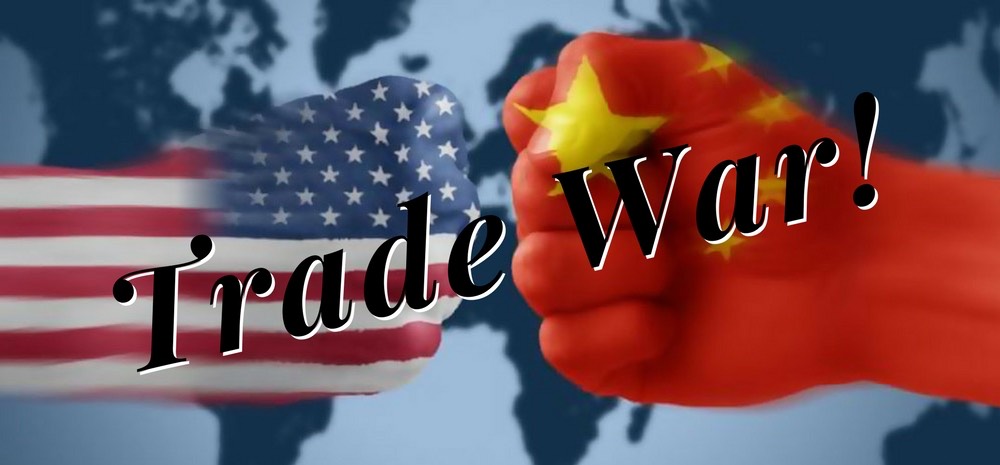
At the same time, attention is growing around a potential state visit by United States President Donald Trump later this month. Chinese media have framed the possible summit as an opportunity to stabilize relations between the world’s two largest economies after years of strategic rivalry.
Although tensions remain over trade, technology restrictions, Taiwan, and military competition in the Indo-Pacific region, Beijing appears eager to maintain communication channels with Washington.
Chinese commentators argue that direct leader-to-leader diplomacy is necessary to avoid misunderstandings during a period of rising geopolitical tensions.
The expected summit comes at a complicated moment globally. The Middle East conflict continues to influence energy markets and global trade routes, while strategic competition between China and the United States remains intense.
Several Chinese analysts believe Beijing wants to present itself as a responsible global actor capable of mediating disputes and promoting economic stability.
China Pushes Forward in Artificial Intelligence
Artificial intelligence remains one of the most important strategic priorities in China today.
Chinese media and technology-focused publications are heavily covering the country’s rapid advances in AI infrastructure, semiconductor development, and scientific computing.
One widely discussed report involves the expansion of a massive AI computing hub in Zhengzhou, described as one of China’s most powerful intelligent computing centers. The project represents Beijing’s determination to reduce dependence on Western semiconductor technology and strengthen domestic innovation.
The AI race has become increasingly important because of ongoing U.S. export controls aimed at restricting China’s access to advanced chips and semiconductor equipment.
Despite these restrictions, Chinese researchers and companies continue to pursue alternative solutions. Reports highlighted breakthroughs involving advanced cooling technologies using diamond-copper materials to improve chip efficiency and reduce overheating.
Chinese technology firms are also facing challenges. Some reports suggest that shortages of advanced AI chips are beginning to affect service capacity among major AI companies.
Even so, Beijing continues to emphasize self-reliance and technological independence.
Government officials have repeatedly described artificial intelligence as essential to economic modernization, industrial upgrading, military development, and global competitiveness.
China’s AI ambitions extend beyond commercial technology. The country is integrating artificial intelligence into manufacturing, logistics, transportation, defense systems, healthcare, and urban planning.
Universities and research institutes are receiving increased support to accelerate innovation in critical technologies.
Chinese state media frequently portray these efforts as part of a broader national rejuvenation strategy designed to reduce vulnerability to foreign pressure.
Economic Stability Remains a Core Priority
Economic stabilization remains another major focus across Chinese news coverage.
Although China’s economy continues to recover in some sectors, policymakers face multiple challenges including sluggish consumer confidence, property sector weakness, demographic pressures, and global trade uncertainty.
Recent reports highlighted efforts by Chinese authorities to stimulate consumption and maintain steady growth.
Automobile sales, camping industries, tourism activity, and lifestyle consumption trends have received positive attention from state media, which are attempting to project optimism about domestic demand.
Officials continue to emphasize “high-quality development,” a term frequently used by Beijing to describe a shift away from debt-driven expansion toward innovation-led growth.
The People’s Bank of China is also reportedly focusing on financial stability and targeted policy support.
Economists inside and outside China are watching closely to see whether Beijing introduces additional stimulus measures later this year.
Youth unemployment remains an area of concern despite government efforts to create more opportunities in technology, manufacturing, and services.
At the same time, Chinese policymakers are trying to reassure foreign investors that the country remains open for business.
Beijing has increased meetings with international business leaders and foreign executives in recent months.
Chinese officials argue that the country’s massive market, manufacturing capabilities, and infrastructure advantages continue to make it attractive for long-term investment.
However, geopolitical tensions and concerns about regulatory unpredictability continue to affect foreign business confidence.
Technology Competition With the United States Deepens
Competition between China and the United States remains one of the defining themes in today’s news coverage.
Chinese outlets continue to criticize American restrictions on technology exports while emphasizing domestic innovation achievements.
Artificial intelligence, semiconductors, quantum computing, and advanced manufacturing are central battlegrounds in this rivalry.
Chinese analysts increasingly describe the global technology race as a contest over future economic and strategic leadership.
At the same time, U.S. lawmakers and officials continue expressing concern about Chinese technological development and alleged intellectual property issues.
Chinese state media reject accusations of technology theft and instead accuse Washington of attempting to contain China’s rise.
Military competition is also intensifying.
Reports discussing China’s new Type 076 amphibious assault ship — sometimes described as a “drone carrier” — have attracted significant attention. The vessel represents another step in China’s expanding naval modernization program.
The South China Sea remains a sensitive area as China, the United States, Japan, and regional partners continue military activities in nearby waters.
Chinese commentators argue that Beijing’s military expansion is defensive and necessary to protect national sovereignty.
Western analysts, meanwhile, view China’s growing naval capabilities as part of a broader effort to reshape regional power dynamics.
Taiwan Remains a Sensitive Issue
Taiwan continues to occupy a central place in Chinese political discourse.
Chinese officials today reiterated opposition to any attempt by Taiwan to participate independently in international organizations such as the World Health Assembly.
Beijing insists that Taiwan is part of China under the “One China” principle and strongly opposes international recognition of Taiwanese sovereignty.
State media accused Taiwan’s Democratic Progressive Party of engaging in political manipulation and undermining cross-strait stability.
The Taiwan issue remains one of the most sensitive flashpoints in U.S.-China relations.
Military exercises, diplomatic disputes, and political rhetoric surrounding the island are closely watched internationally.
Chinese leaders continue emphasizing the goal of “national reunification,” while also warning against foreign interference.
Public opinion surveys discussed in regional media indicate complex attitudes among Taiwanese citizens regarding security and relations with Beijing.
Some observers believe both sides are attempting to avoid direct confrontation while continuing strategic positioning.
China Expands Global Influence in the Global South
China’s growing engagement with developing countries remains another prominent theme.
Chinese media today highlighted stronger cooperation with African, Latin American, and Asian partners.
Beijing continues promoting infrastructure investment, trade partnerships, and development financing through initiatives linked to the Belt and Road framework.
Chinese officials argue that these partnerships are based on mutual respect and non-interference.
Recent diplomatic exchanges emphasized cooperation in agriculture, energy, technology, and transportation.
State media also highlighted China’s decision to expand tariff-free access for imports from several African countries.
These moves are designed to strengthen economic ties while reinforcing China’s image as a partner for development.
Analysts say Beijing sees the Global South as increasingly important in shaping international institutions and global governance.
China’s diplomacy often contrasts its approach with what it describes as Western dominance and conditional aid policies.
At the same time, some countries continue expressing concerns about debt sustainability and strategic dependence related to Chinese investment projects.
Chinese Space and Science Programs Continue Advancing
China’s scientific and space ambitions are also receiving extensive media coverage.
One of the notable developments today involves the successful docking of Tianzhou-10 with China’s space station.
The cargo spacecraft mission is part of China’s long-term effort to build an independent and permanent space presence.
The country’s space program has become a major source of national pride and a symbol of technological progress.
Chinese scientists are also making advances in multiple research fields, including plasma technology, marine science, renewable energy, and robotics.
Reports about humanoid robots, intelligent manufacturing systems, and advanced materials research demonstrate China’s determination to compete at the highest level of global science and technology.
Government support for research and development remains strong despite economic pressures.
China’s leadership views scientific innovation as essential for national security and future prosperity.
Information Control and Political Messaging
Chinese authorities continue placing strong emphasis on ideological discipline and information management.
Political messaging in official media consistently reinforces themes of stability, national unity, economic resilience, and confidence in Communist Party leadership.
Senior officials have repeatedly called for stronger “public opinion guidance” and the promotion of positive narratives about China’s future.
Information control has become increasingly important as social media and digital platforms rapidly shape public discourse.
Chinese regulators continue monitoring online content while promoting state-approved narratives.
At the same time, China’s propaganda system has become more sophisticated internationally.
Chinese media organizations are expanding global outreach through multilingual content, digital broadcasting, and partnerships abroad.
Officials argue that China’s voice is often misrepresented internationally and that stronger communication efforts are necessary.
Critics, however, accuse Beijing of increasing censorship and limiting independent journalism.
Looking Ahead
As of May 12, 2026, China stands at a pivotal moment.
The country is attempting to manage slowing economic growth while simultaneously pursuing technological leadership, military modernization, and expanded global influence.
The anti-corruption campaign within the military demonstrates that political discipline remains a top priority for Xi Jinping’s administration.
At the same time, advances in artificial intelligence, space exploration, and scientific research highlight China’s determination to compete with the world’s leading powers.
Relations with the United States continue to shape many of Beijing’s strategic decisions.
Both governments appear eager to avoid uncontrolled escalation, yet rivalry remains deeply embedded across technology, trade, military affairs, and geopolitics.
China’s domestic challenges are equally significant.
Maintaining economic confidence, supporting employment, stabilizing financial markets, and managing demographic change will require careful policy coordination.
Yet Chinese leaders continue projecting confidence that the country can navigate these pressures successfully.
Today’s headlines reflect a nation that is simultaneously defensive and ambitious — focused on internal control while seeking greater global influence.
Whether through diplomatic outreach, military reform, scientific innovation, or economic restructuring, China is continuing to position itself as a central force in shaping the international order of the coming decades.
For observers around the world, the developments unfolding in China today offer insight into how Beijing intends to confront both domestic pressures and international competition in an increasingly uncertain global environment.
Leave a Reply