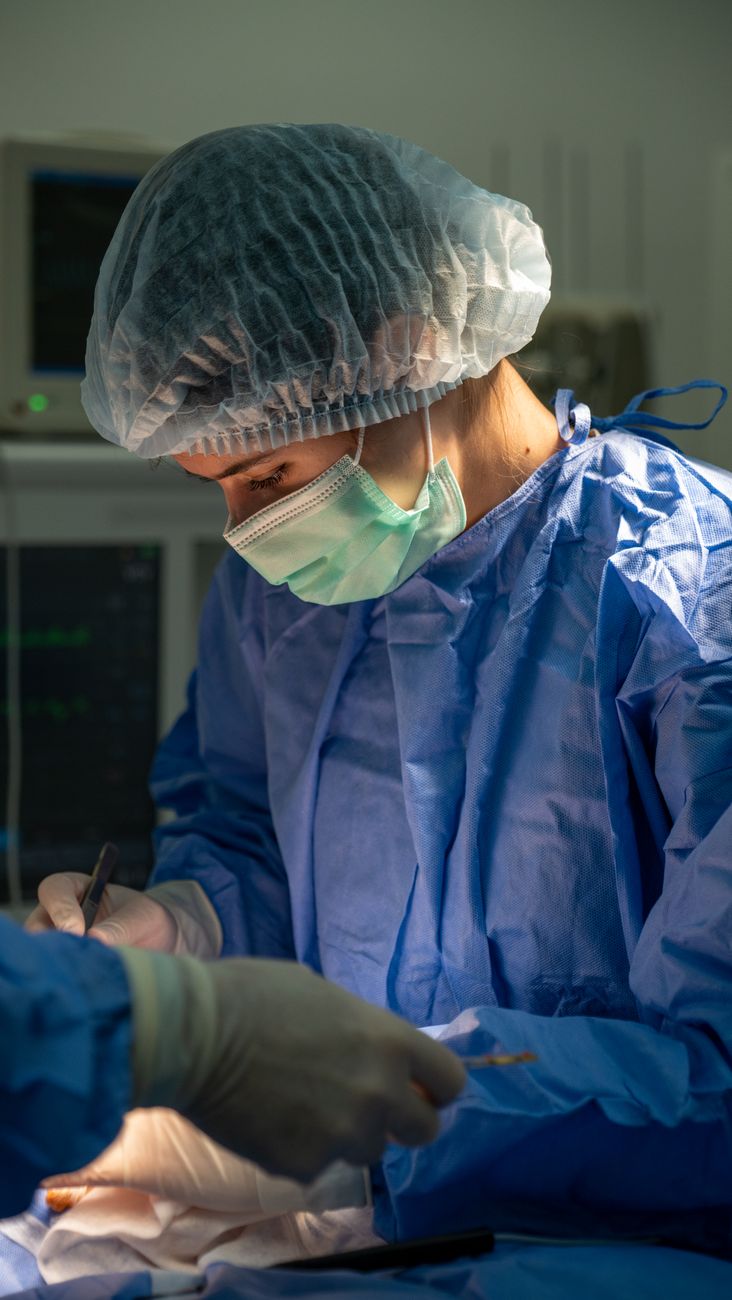
The internet has dubbed it “zombie filler.” And honestly, can you blame them?
We’ve seen some wild beauty trends over the years—snail mucin facials, vampire facials, even placenta-based creams. But this one might just take the (birthday) cake. We’re talking about injecting fat from dead bodies into your face, breasts, or buttocks. It’s real, it’s here, and it’s called AlloClae (pronounced “allo-clay”).
Welcome to the era of corpse cosmetics, where the fountain of youth flows from the morgue.
Wait, What Exactly Is “Zombie Filler”?
Let’s get the morbid specifics out of the way. “Zombie filler” is a cosmetic injectable made from fat harvested from donated human cadavers.
Here’s how it works: when people donate their bodies to science, tissue banks collect their fat alongside organs and other tissues. Companies like Tiger Aesthetics then purchase this fat, screen it for diseases, sterilize it, and process it to remove DNA and cellular debris that could trigger an immune reaction. The result is a sterile, “off-the-shelf” product that looks, according to one description, like “severely curdled cake batter.” This is then sold to plastic surgeons in branded syringes. The final product goes by the name AlloClae.
Why Are People Actually Doing This?
The obvious question is: why? It sounds like the plot of a horror movie. But from a purely medical standpoint, the logic is sound.
1. The Ozempic Effect
We are living in the age of GLP-1 weight-loss drugs. Millions of people have shed significant weight, but they’ve also lost volume in their faces, breasts, and buttocks. One patient described feeling “disfigured” after losing so much weight. Normally, you’d fix this with a fat transfer—sucking fat from one part of your body and injecting it where you want more volume. But if you’re already slim from weight loss, you don’t have any fat to spare.
2. No Surgery, No Downtime
Traditional fat transfers require liposuction (which means surgery, scars, and recovery). “Zombie filler” is a minimally invasive injection done in a doctor’s office under local anesthesia. The procedure has been dubbed a “lunchtime boob job” because you can literally get it done on your break and go back to work. No general anesthesia, no weeks of recovery.
3. Filler Fatigue
After years of overfilled “Instagram faces” from hyaluronic acid fillers, patients are looking for something more “natural.” AlloClae is marketed as a regenerative treatment—it’s real fat, so it feels and looks like real fat, and it actually stimulates your own collagen to grow.
The Costs Are Staggering (But So Is the Demand)
This isn’t cheap. A single 12.5cc syringe can cost up to $2,250, and full treatments range anywhere from $13,000 to $50,000—with some estimates going as high as $100,000 for more extensive work.
Despite the price, demand is through the roof. Since May 2025, more than 2,000 patients have used the product. Clinics in the US have months-long backlogs, and some surgeons report running out of product multiple times.
One New York surgeon noted that less than 5% of board-certified plastic surgeons even have access to it, but those who do are swamped with demand.
The Ethical Nightmare: Profiting from the Dead
This is where things get really uncomfortable.
Arthur Caplan, a professor of bioethics at NYU’s Grossman School of Medicine, put it bluntly: “It really is betraying altruism to make money. I think that’s an ethics problem.”
When people donate their bodies to science, they generally assume they’re helping advance medical research or saving lives through organ donation. They probably don’t imagine their fat ending up in a rich person’s buttocks for a $50,000 cosmetic procedure.
Tiger Aesthetics insists that “all our tissue is consented to for aesthetic use”, meaning donors (or their families) explicitly agreed to this. But the broader ethical question remains: should we be commodifying donated human remains for the luxury beauty market?
Is It Safe? The Risks and Complications
The short answer is: we don’t fully know yet.
The manufacturer claims there are no confirmed cases of graft rejection or infection. The fat is rigorously screened and processed to remove anything that could cause an immune response.
But there have already been complications. One patient who spent $13,000 on the treatment developed fat necrosis—meaning the injected tissue died. She described yellow, oily, chunky fluid seeping from her injection site.
Other concerns include:
- Long-term unknowns: How does cadaver fat behave in the body over 5, 10, or 20 years?
- Technique matters: The manufacturer admits that injection “technique is very important”, meaning a bad doctor could cause serious problems.
- Regulatory battles: New York state has actually blocked distribution of the product, leading Tiger Aesthetics to file a lawsuit against the state’s Department of Health.
The Bigger Picture: A Sign of the Times?
Perhaps the most fascinating aspect of this trend is what it says about us.
We live in an era of “looksmaxxing”—the online movement that promotes “optimizing” physical attractiveness. Men are getting cadaver fat injected into their pecs, biceps, and even calves so they can “say they went to the gym.”
Dr. Douglas Steinbrech, a surgeon at a Manhattan clinic, puts it this way: “It’s a gamechanger. They don’t need surgery. They don’t need general anesthesia. They don’t have recovery.”
We are so desperate for the perfect body that we’re willing to bypass surgery, bypass diet and exercise, and even bypass our own bodies—reaching instead into the grave to borrow someone else’s fat.
The Bottom Line
“Zombie filler” is either a brilliant medical innovation or a sign of our cultural decline—or perhaps both.
On one hand, it offers a genuine solution for people who have lost volume due to weight loss and have no fat of their own to transfer. It’s less invasive, has minimal downtime, and uses real human tissue rather than synthetic fillers.
On the other hand, it raises profound ethical questions about profiting from the dead, and we simply don’t know the long-term safety profile yet.
Dr. Anthony Rossi, a dermatologist in New York, summed it up with dark humor: “‘Zombie’ is apropos, because these people are dead. I mean, it’s kind of dark humor.”
Dark humor indeed. But for thousands of patients lining up at clinics across America, the joke’s on us—because they’re already getting their “zombie BBLs” while the rest of us are still trying to process the fact that this is actually happening.
Leave a Reply