
CHAPTER 1
INTRODUCTION TO THE STUDY
1.0 Introduction
International trade has made significant contributions to the speedy growth of global economies. Trade agreements have also facilitated technological developments and strengthened efforts towards eliminate trade barriers such as quotas and tariffs in cross-border transactions (Popkova, 2022). Both developed and emerging economies are therefore opening their borders to explore and take full advantage of opportunities in global markets to generate economic growth and increase access to human and material resources that facilitate development and improve economic welfare (Ahn, 2020). Governments are also leveraging trade policies as a foreign direct investment (FDI) tool to advance national interests (Agyemang et al, 2020). But trade barriers in industrial countries affect labour-intensive manufactures and agricultural products in which emerging economies have stronger competitive advantage (Al-Roubaie & Matoog,, 2024). Thus, trade liberalization in these areas – in both developing and industrial countries – does not only boost economic growth but also benefits local/foreign investors, corporate organizations, businesses, entrepreneurs, and the global economy (Gna₦on, 2022).
Trade policy is the combination of rules and regulations stipulated by the government to liberalize and/or control international trade (i.e., imports and exports), FDI, and daily business activities within a country. Trade policies and/or agreements often provide preferential treatment to foreign or local businesses in the form of reduced duty or duty-free incentives based on country of origin, product/service type, or industry (Al-Roubaie & Matoog,, 2024). When utilized, preferential treatment from trade policy agreements can lower costs of importing/exporting certain products thereby boosting cross-border trade (Oh & Hansen, 2023).
Economists agree that multilateral trade liberalization benefits countries in different ways (Gna₦on, 2022; Al-Roubaie & Matoog,, 2024). The international marketplace is more competitive in today’s digital world where global actors (e.g., governments, international institutions, multinational corporations, businesses, and individuals) can leverage data-based insights and technology-driven innovations to create positive disruptions in both business and political circles. Trade policies open national economies for local/foreign investors thus making foreign goods/services available to local consumers and at the same time making pricing more competitive (Jiang et al, 2023). Although countries encourage national treatment of foreign brands and/or imported goods to attract more investors and lower cost of products that are more expensive domestically, there are various contentious issues in international trade both between governments and domestically that position smaller, emerging economies at a greater disadvantage to the powerful nations (Saqfalhait et al, 2023). For example, regional conflict in the Middle East can disrupt oil production and trade thereby reducing cost per barrel of crude exported by Nigeria, a situation which further reduces Gross Domestic Product (GDP), weakens vibrancy of the currency/economy, and creates inflation. The General Agreement on Tariffs and Trade (GATT) and World Trade Organization (WTO) created in 1947 in 1995, respectively, have made great efforts to improve ease of doing business in the global marketplace by promoting mutually benefitting reduction of substantial tariffs and other trade barriers, eliminating preferences, protecting intellectual property rights, and settling disputes, among other responsibilities that help members to create more jobs and improve living standards (Gadkari, 2023; Englund, 2022).
Global trade and favourable trade agreements/policies allow powerful multinational corporations (MNCs) such as Nestlé Nigeria Plc, Coca-Cola, Nigerian Breweries, Guinness, Cadbury Nigeria, and United African Company (UAC) to efficiently maximize their strong capital bases, global talent pools, and cutting-edge technologies in different countries where they legally (and sometimes illegally) harness natural resources (land, capital, labour, technology, and other assets) to increase profits as well as create competitive and/or monopolistic advantages. Free trade policy provides consumers with increased access to higher quality and/or less expensive foreign goods (Oh & Hansen, 2023). Manufacturers also leverage reduction or elimination of tariffs to expand their markets, customers, and suppliers thereby helping governments to foster a more transparent, predictive trade and investment atmosphere (Gna₦on, 2022).
However, Nigerian economists have argued that MNCs are exploitative for-profit organizations that leverage political and economic influence as well as their imperialist and neo-colonialist philosophies to establish presence in developing countries where they exploit cheap labour, lax policies, and natural resources meant for host countries like Nigeria to achieve its sustainable development goals (Mambula, 2010; Ahworegba et al, 2022; Oseghale et al, 2023). Shell BP falls among the exploitative MNCs in Nigeria decapitalizing the economy, depleting the resource base, violating human rights, deteriorating the environment, and stifling growth of indigenous companies since pre-independence in 1957 (Nwoke, 2016; Egbon & Mgbame, 2020). On the contrary, Nestlé Nigeria Plc is one of the largest MNCs in Nigeria and Africa delighting millions of consumers with corporate social responsibility (CSR) projects and high quality nutritious powdered and liquid food products (e.g., Nescafé, Golden Morn, and Milo) since 1961 (Munro, 2020; Pillay & Scheepers, 2020). The conglomerate has an ambition to make significant, continuous contributions to building a healthier future. Nestlé is also exploring its Creating Shared Value (CSV) principle, strategies, and value propositions to diversify product lines, expand its unique global footprint, and achieve long-term competitiveness and profitability. This research therefore explores how Nestlé is setting pace as one of Nigeria’s leading food and beverage manufacturing company despite policy challenges, disruptions from strong market forces, and corporate governance issues.
1.1 Background to the Industry and Company
Corporate governance is an issue of global concern because it provides the framework—a system of rules, practices, and processes—which empowers indigenous companies and MNCs to thrive by improving their economic, social, and governance (ESG) impacts (Rao et al, 2023; Kagendo-Kiarie, 2022). A robust corporate governance system allows businesses and organizations to achieve competitive advantage and sustainable profits by addressing issues that concern employees and customers while simultaneously protecting the interests of shareholders and stakeholders. One notable trade policy in Nigeria is the latest Companies and Allied Matters Act (CAMA), 2020. which replaces and repeals the previous Allied Matters Act enacted in 1990 (Jibril et al, 2024).
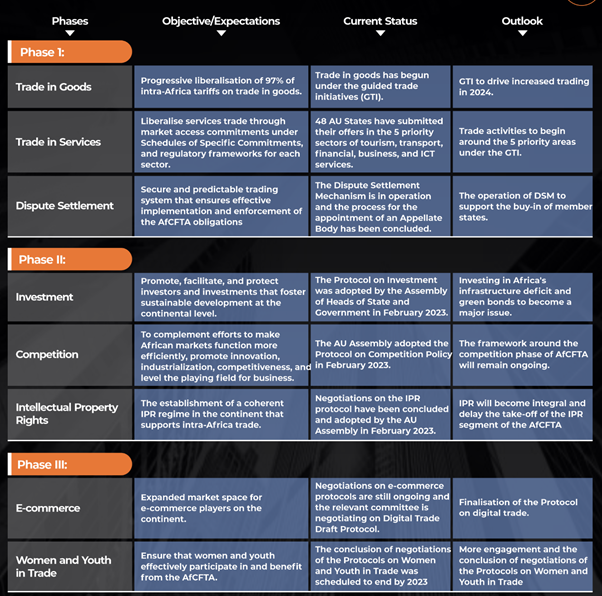
The new CAMA 2020 policy enhances business environment for Micro, Small, and Medium-scale Enterprises (MSMEs) across Nigeria to grow under the African Continental Free Trade Area (AfCFTA) agreement which Nigeria signed in 2019 and ratified in 2020. The trade policy aims to revitalize MSMEs, support MNCs, and launch Nigeria into top twenty countries by ease of doing business (EoDB) globally. Nigeria is a member of the 54-country AfCFTA system, which is one of the world’s largest continental trade areas, so the newly reformed CAMA Act provides a formidable legal foundation and a competitive environment for indigenous and foreign-owned companies to flourish (Adetuyi et al, 2023; Nwoke & Onoh, 2022; Jibril et al, 2024).
Table 2.1: AfCFTA and Trade in Africa
Source: Proshare Research
Prospects from the CAMA Act (2020) and Nigeria’s AfCFTA membership are high. The Nigerian government enacted CAMA (1990) to create the Corporate Affairs Commission (CAC), which saddles the responsibility of incorporating companies and incidental matters, registering business names, and consolidating the Board of Trustees of communities, associations, and other legal entities. The government also reviews trade policies as part of its strategy to align Nigeria’s corporate landscape with regional and global transformations and satisfy demands for business integration (Adetuyi et al, 2023). Previous government administrations in Nigeria have taken measures to revitalize other sectors/industries (e.g., manufacturing, agriculture, mining, commerce, investment, and others) and complement crude oil which provides the sum of incomes from other sectors (Nwoke & Onoh, 2022). Policymakers involved in negotiations of local/international trade agreements, however, have failed to achieve wealth creation goals as GDP declines amid worsening economic recession and fluctuating oil prices in the global market. Economists thus argue that the CAMA Act of 1990 was ineffective and incompatible with modern business practices that promote public-private partnership for sustainable development both domestically and internationally hence the new CAMA 2020 policy (Jibril et al, 2024; Rao et al, 2023).
Stakeholders’ interest is at the core of corporate governance, with emphasis on ethical considerations in business (Munro, 2020). Thus, CAMA 2020 rekindled hope for MNCs and private-sector organizations in Nigeria which had grown used to corrupt practices from managers and directors in public/private sector organizations to suppliers, distributors, and everyone in the value chain. Prospects from the reformed legislation and recent regional trade integration (i.e., AfCFTA) may therefore remain a mirage without effective implementation and monitoring mechanism. The policy failure will not only weaken growth of Indigenous MSMEs but also create large loopholes for MNCs like Neste Nigeria Plc and others to exploit (Madawaki et al, 2022). For example, Nestlé in 2022 implemented a 6.5% hike in product prices, citing the increasing food insecurity in Nigeria—a policy which Nigerians considered inhumane, exploitative, and unnecessary at a time when consumers are facing economic challenges. The company has been accused of tax evasion, political involvement, animal testing, animal rights abuse, anti-social finance, and a poor approach to climate change. Its latest crisis ‘the ‘Baby Formula Scandal’ is about Nestlé adding one and a half cube of sugar per serving of one portion of cereal manufactured for six-months-old toddlers (Ndubuisi & Nygaard; 2018; Clinton & Chatrath, 2022; Kapoor et al, 2022).
Nestlé had maintained a categorically false claim that its outrageously expensive baby formula is better than breast milk which contains free antibodies (Kagendo-Kiarie, 2022). New investigation found that babies grew up lacking essential nutrients which adversely affected their health and lifespan, especially in developing countries (Clinton & Chatrath, 2022). Although this remains the worst scandal an MNC has ever faced, Nestlé is also accused of using unsafe water to dilute its formula and paying doctors/nurses/health organizations to promote its bogus claims that baby formula is better than breast milk thereby exploiting parents and deceiving millions of people across the world. As of 2023, the global market for Nestlé infant formula market and other products was estimated at $115 billion – and still growing bigger (Vollero, 2022).
On this premise, CAMA 2020 Act was enacted to regulate business activities in Nigeria’s corporate climate, it ensures ethical practices, quality control, and process efficiency among MNCs and MSMEs operating in the country (Ozili, 2022). However, high-impact aftershocks from the COVID-19 pandemic and recent global business disruptions from widespread sustainability campaigns, human rights activism, regional conflicts, trade wars, and cybersecurity threats show that thousands of businesses in different countries, including Nigeria, will shut down unless the governments – through liberal trade policies – provide an enabling environment to improve recovery from unexpected economic and environmental events (Garibaldi & Deane, 2023).. But as countries establish robust trade policies and control mechanisms to adjust with the fast-paced global marketplace, trade policies in Nigeria’s capitalist economy tends to favour powerful MNCs against SMEs. Notwithstanding, research shows that Nestlé Nigeria operations reflect dynamism and resilience due to its innovative leadership and strategic management (Clinton & Chatrath, 2022). This study thus examines Nestlé’s business strategy to ascertain how the MNC successfully navigates Nigeria’s corporate climate to sustain competitiveness and profitability.
1.2 Background to the Literature
Nestlé Nigeria Plc is a food and beverage manufacturer established in 1961 as Nestlé Products Nigeria Limited. Headquartered in Lagos, Nigeria, Nestlé’s main factory is situated in Agbara Industrial Estate, Ogun State, from where it manufactures, markets, and distributes bottled water, breakfast cereals, coffee, dairy products, baby food, and confectionery. Nestlé Nigeria is one of African food and beverage brands dominating the food processing sector with eight branch offices and three manufacturing sites. Nestlé relies on its highly engaged workforce comprising more than 2,300 direct staff to manufacture and export food products to millions of customers within and outside Africa. Top executives of Nestlé Nigeria Plc are as follows:
- Wassim Elhusseini (Lebanese) – CEO, Managing Director, Executive Officer
- Gbenga A. Oyebode (Non-Executive Independent Chair of the Board)
- Ibukun-Olu Ipinmoye (Executive Director)
- Namit Mishra (Indian) – Finance & Control Director
- Bode B. Ayeku (Company Secretary, Legal Advisor)
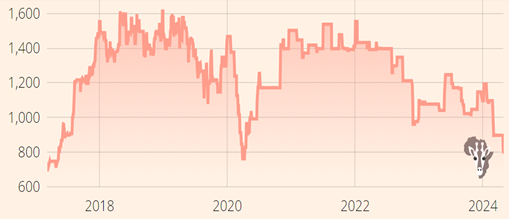
Year-on-year financials (See Fig. 1) indicate Nestlé Nigeria Plc made a profit of ₦48.97 billion in 2022 but lost ₦79.47 billion in 2023 despite a 22.45% leap in revenues from ₦446.82 billion to ₦547.12 billion in 2022 and 2023, respectively—its first after-tax loss in the last twelve years. Shareholder funds also fell, slipping to a negative of ₦78 billion (in 2023) compared to a positive of ₦30.2 billion in fiscal year 2022 (FY2022). The slide in naira value caused a revaluation of Nestlé’s foreign currency obligations which negatively affected cost of financing business operations and consequently the profit tax. Other multinational manufacturers with huge presence in Nigeria (e.g., PZ Cussons, Cadbury Nigeria, Nigeria Breweries, and Guinness Nigeria) also reported losses in 2023.
Figure 1.1: Annual Report of Nestlé Nigeria Plc (as of 30 December 2023).
Source: Africa Financial (2024)
Further, the Central Bank of Nigeria (CBN) in June 2023 merged all segments of the foreign exchange (FX) market into the Investors and Exporters window to enforce a new ‘willing buyer, willing seller model’ of transactions. CBN interventions in the FX market includes implementation of monetary policy to maintain exchange rate stability and liquidity. The apex bank through CBN Circular 2024 announced an upward review of minimum capital requirements for non-interest, merchant, and commercial banks in Nigeria as well as scrapped use of foreign currency as collateral for naira loans, a policy that aims to strengthen naira value and banking sector against looming financial crisis (Ejemeyovwi et al, 2022). Yet the unstable currency has depreciated and appreciated against the dollar and other major foreign currencies since then. Nestlé’s net finance cost therefore increased to ₦227.8 billion in 2023 from a paltry ₦16.3 billion in 2022. Regardless of the adverse policy impact on business outlook, Nestlé invested ₦815 million in 2024 to acquire a new, cost-efficient liquefied natural gas (LNG) that powers its industrial plant in Ogun State thus enhancing energy efficiency, reducing production costs, and sustaining long-term productivity and operational excellence.
Nestlé Nigeria Plc has won awards and recognitions for contributions to corporate social responsibility, and an impressive ESG performance, particularly in environmental sustainability, employee training, community engagement, and consistent delivery of affordable, nutritious food products that endears Nestlé brand to customers in local and international markets. The company also implements innovative business strategies to improve competitive advantage. Yet a sharp decline in revenue accruing partly from the devaluation of naira in 2023 underscores need to strengthen organizational resilience. Gbenga A. Oyebode (Non-Executive Independent Chair of the Board) holds positions as Chair of CFAO Nigeria which is one of the major company suppliers of automobiles. He is also a director in Standard Chartered Bank (a partner of Nestlé Nigeria). In accordance with Section 303 of the 2020 CAMA Act, these joint top executive positions are on records to ensure transparency and accountability of corporate governance.
Nestlé Nigeria Plc is a subsidiary of Nestlé SA (also known as Nestlé Group). Henri Nestlé founded the company in 1866 as Anglo-Swiss Condensed Milk Company. In January 2017, Ulf Mark Schneider became CEO of the multinational headquartered in Vevey, Switzerland with operations in 188 countries.
1.3 Research Aim
To investigate the impact of trade policies and business strategy on Nestlé Nigeria Plc.
1.4 Research Objectives
- To critically review the literature on trade policy and business strategy.
- To critically evaluate trade policies and strategy in the case of Nestle Nigeria by applying the survey method on a sample size of 302 participants.
- To recommend strategies to Nestle on how to improve organizational resilience.
1.5 Research Questions
- How does trade policy affect Nestlé Nigeria?
- Does strategy guarantee actualization of business objectives?
- If no, what strategies can businesses implement to reduce the negative impact of microeconomic and macroeconomic policies?
Leave a Reply