
Tesla Inc. operates with a culture that enables creation of competent and productive human capital required to constantly deliver innovative products to customers around the world (Prassad., 2012). In the global automotive business, every company—at least, in theory—functions with a corporate or organizational culture that outlines what behaviours are acceptable and how decisions are to be taken (Koren et al., 2016). At Tesla Inc, employees are empowered to make meaningful inputs that differentiate products and services in all sectors (Templeton., 2019). The company maximizes workers’ creativity to create sustainable profits—as part of its corporate culture—and in this way, Tesla’s cultural traits serves as a factor for competitive advantage against industry giants like BMW, Honda, GMC, Nissan, Volkswagen etc (Alvesson & Sveningsson., 2015).
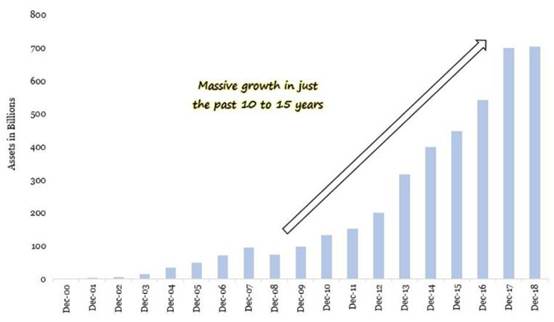
Figure 6: Tesla’s Assets in U.S. Factor-based Investments
Source: Morning Star (2018)
4.1 Tesla’s Cultural Traits and Features
Tesla’s organizational culture is based on “innovative and problem-solving” capabilities. The company’s corporate culture empowers workers to think creatively and solve current or emerging problems in all market segments (Atif et al., 2011). For example, the automaker’s excellence in building electric cars was a product of employees who painstakingly brainstormed to develop vehicles that support global environmental sustainability goals—against cars with internal combustion engines (Shelby., 2018). On this backdrop, the main features of Tesla’s organizational culture are:
- Moving faster: One of Tesla’s major competitive advantage is speed, which is considered a characteristic of the company’s organizational culture—and a factor for sustainability in the global automobile market. For instance, the firm’s HR team motivates its workforce to innovate avantgarde products with inimitable features. By manufacturing products that match or exceed competitors’ in quality, Tesla’s corporate culture thus reflects business pliability. Nonetheless, the company’s prompt response to current trends and issues in the automotive industry makes it a pacesetter (Kats et al., 2010).
- Doing the impossible: To build extraordinary products, Tesla’s engineers need to think outside the box, and the success of this radical corporate culture highlights the importance of using unconventional ideas in business. Tesla recognizes the importance of creativity in car designs—a reason it has satisfied consumer needs over time and continues to improve business performance (Nancy & Brons., 2010).
- Constantly innovating products: Creativity is a core aspect of Tesla’s organizational structure. For example, the automaker has continuously improved the design and performance of its energy-storage products. To maintain competitiveness in electric car (and related products) business, Tesla offers its managers and employees huge rewards for constant innovation in business processes and performance (Tung., 2016).
- Always reasoning from “First Principles”: According to Tesla CEO, Elon Musk, reasoning from “first principles” imply understand the root of problems in other to proffer effective solutions. For example, the company’s energy-storage products were manufactured to solve the growing need for renewable energy as well as the health hazards and climate change-implications from gas emissions (Sutter., 2019). Tesla’s HR team regularly hold training programs to sensitize employees on this feature of its organizational culture (Koren et al., 2016).
4.2 Advantages and Disadvantages of Tesla’s Corporate Culture
Innovation is the bedrock of Tesla’s organizational culture and one of the advantages is that it enables development of premium-quality technology products. For example, performance of the company’s electric cars and brand image are responsible for its increasing market share (Jiang et al., 2017; Molnar., 2019). The corporate culture is also beneficial because rapid response to issues and challenges in the automotive market, including the engineers’ problem-solving capability, keep the company a step ahead of competitors—making Tesla a consumer’s first choice (Guiso et al., 2015).
However, a shortcoming of Tesla’s corporate culture is the stress on employees to always innovate (Harpaz, & Meshoulam., 2009)—a circumstance which benefits the company but negatively affects workers (Chew & Chang., 2008). Nonetheless, Tesla can create sustainable profits and attain competitiveness, in favour of both company and employees, if the implementation strategy is properly scrutinized (Holland et al., 2007; Huhtala et al., 2015).
5. CONCLUSION
Although Tesla has achieved progress through its corporate culture, findings from this study show poor performance in managers’ welfarist responsibility and there’s an urgent need for a change in this key lever (Wong., 2017). Bolden-Barrett (2017) wrote about Tesla being a target of controversies after employees reported cases of workplace harassment and unsafe working conditions at Tesla plants, among others, especially workplace injuries which were highest in 2014 and 2016 (Palo Alto., 2017). Although Elon Musk denied the allegations of abuse, it is clear that no HR team achieves long-term objectives without a worker and consumer-oriented culture. For this reason, the company sacked its HR Director (O’ Donovan & Anand., 2017).
I therefore agree that there’s a strong link between HRM practices and organisational performance. Becoming a flexible organization is not enough for Tesla. The company needs to improve relationships with stakeholders (particularly employees) in order to encourage commitment to performance-related goals.
Leave a Reply