After his first big role in The Dirty Dozen in 1967, Sutherland’s career as a leading man peaked in the 1970s.
He starred in films by the era’s top directors – even if they didn’t always do their best work with him:
- Alan Pakula, director of Klute, 1971
- Federico Fellini, Fellini’s Casanova, 1976
- Bernardo Bertolucci, 1900, 1976
- Claude Chabrol, Blood Relatives, 1978
- John Schlesinger, The Day of the Locust, 1975
Come the next decade, Robert Redford, to the surprise of some, cast Sutherland as the father in his directorial debut, Ordinary People.
The drama about a handsome suburban family destroyed by tragedy won four Oscars, including best picture.
Ordinary People also set the stage for a shift in Sutherland’s career towards more mature and sometimes less offbeat characters.

There was a down period in the 80s after the failure of the 1981 satire Gas and the 1984 comedy Crackers.
Sutherland had a brief but memorable role in Oliver Stone’s JFK (1991), and played another patriarch for Mr Redford in his 1993 film Six Degrees of Separation.
He also played track coach Bill Bowerman in 1998’s Without Limits.
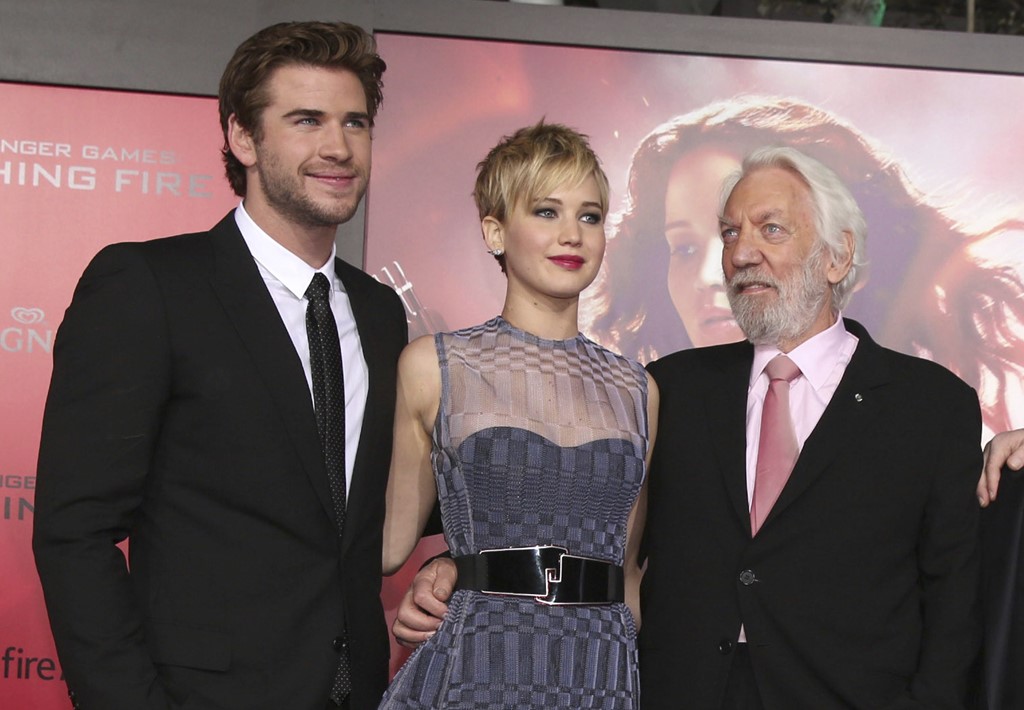
In the last decade, Sutherland increasingly worked in television, most memorably in HBO’s Path to War, in which he played President Lyndon Johnson’s secretary of defence Clark Clifford, while making a powerful appearance in the blockbuster Hunger Games: Catching Fire.
Sutherland was overlooked by the academy throughout most of his career. He was never nominated but was presented with
an honorary Oscar in 2017.
He did, though, win an Emmy in 1995 for the TV film Citizen and was nominated for seven Golden Globes, winning two – again for Citizen X and for the 2003 TV film Path to War.
Leave a Reply