
CHAPTER TWO: LITERATURE REVIEW
2.1 Introduction to the Chapter
This chapter reviews and evaluates existing literature on social media engagement and youth mental health. It examines dominant global research, emerging African and Nigerian studies, key theoretical frameworks, and important mediating factors shaping digital experiences. The aim is to identify a clear research gap (described as a knowledge fault line) that this study addresses.
Rather than summarising previous work, the chapter critically examines conceptual assumptions, geographical bias, and methodological limits in the literature. It progresses from global scholarship to African and Nigerian studies, and from broad theories to specific social, economic, and technological mechanisms. This structure situates the Nigerian context as both under-researched and theoretically important.
2.2 Western-Centred Dominance in Global Social Media Research
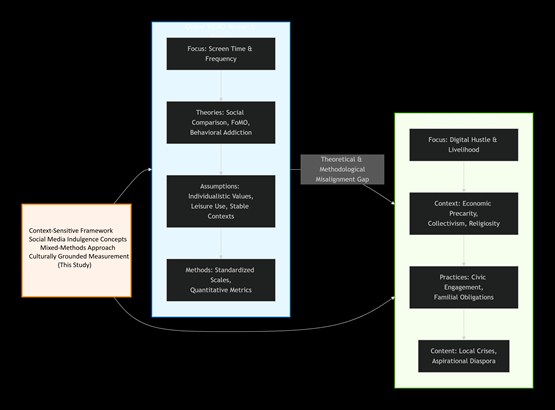
Figure 2.1: The Disconnect Between Global Models and Nigerian Realities
Source: The Author (2026)
Global research on social media and youth mental health is dominated by studies from Western, Educated, Industrialised, Rich, and Democratic (WEIRD) societies. Henrich, Heine, and Norenzayan show that although WEIRD populations represent a small share of the global population, they dominate behavioural research and theory development (63). As a result, findings from narrow socio-cultural contexts are often treated as universal.
As shown in Figure 2.1, dominant global models rely on assumptions that do not align with digital realities of Nigerian youths. These models often misinterpret behaviour shaped by economic pressure, collective responsibility, and political instability.
Many Western studies prioritise individualistic values such as autonomy, self-esteem, and personal success. However, Rad, Martingano, and Ginges argue that such constructs fail to capture relational and communal understandings of wellbeing common in non-Western societies (189). When applied without adaptation, culturally normal behaviour may be wrongly framed as maladaptive.
Further, Western studies rely heavily on self-report tools developed in high-income settings. These assume stable internet access, private devices, and leisure-oriented use. In Nigeria, however, digital engagement is often shaped by survival strategies, informal labour, and family obligations. As a result, high engagement may be misclassified as harmful rather than functional.
Platform focus also differs. Western studies often prioritise Instagram or TikTok, while Nigerian youths rely heavily on WhatsApp, Facebook, and X for news, politics, business, and community. George, Jensen, and Russell note that ignoring these differences obscures how local insecurity and economic precarity shape emotional responses to online content (134).
Western-derived wellbeing interventions also tend to emphasise individual self-regulation, such as reducing screen time. In Nigeria, where online presence is closely linked to income, education, and social support, such strategies may be impractical or harmful.
Figure 2.2 illustrates how WEIRD models, which focus on screen time, addiction, and individual comparison, fail to capture collective identity pressures, economic necessity, and political content central to Nigerian digital life. This limitation supports the need for alternative concepts such as social media indulgence.
Figure 2.2: Limitations of Dominant WEIRD Models in Explaining Nigerian Youth Experience

Source: The Author (2026)
In particular, the figure highlights that Nigerian youths’ online behaviour is often strategically oriented (that is, shaped by income-generating activities, peer networks, and civic engagement) rather than merely excessive or compulsive. Recognizing these contextual factors underscores why a framework like social media indulgence, which accounts for emotional, social, and structural influences, offers a more accurate lens for analysis.
Limits of Dominant Correlational Studies
Large-scale correlational studies form the backbone of global research. Many report links between higher social media engagement and anxiety, depressive symptoms, or emotional distress. For example, Twenge associates increased digital media use with rising psychological distress (112), while Valkenburg, Meier, and Beyens identify mechanisms such as social comparison and harassment (4).
These studies have raised awareness and informed policy debates (Odgers and Jensen 178). However, they have key limitations when applied to Nigeria.
First, engagement is often measured narrowly as screen time, treating all activities as equivalent. Meier and Reinecke argue this ignores differences between active, passive, and instrumental use (15).
Second, reliance on self-report data introduces recall errors and bias (Parry et al. 9).
Third, correlational designs cannot establish causality. Orben notes uncertainty over whether social media causes distress or distressed individuals use social media more (3). In Nigeria, unmeasured factors such as unemployment and insecurity may strongly shape both.
Finally, many studies assume a one-directional effect, thus, ignoring reciprocal relationships (Kross et al. 1021).
Overall, correlational research shows association but offers limited explanation in contexts shaped by structural pressure.
Cultural Limits of Dominant Theories
- Social Comparison Theory
Social Comparison Theory explains distress through comparison with idealised others (Festinger 119). While supported in Western settings, it overlooks collectivist dynamics. In Nigeria, comparison often involves families or communities, not individuals. Chang notes that comparison is relational and shared in collectivist cultures (64), thereby limiting the theory’s explanatory power.
- Fear of Missing Out (FoMO)
FoMO is typically defined as anxiety about missing social experiences (Przybylski et al. 1842). In Nigeria, however, constant checking may reflect fear of missing economic, political, or safety-related information. Alt argues such behaviour may be rational rather than anxiety-driven (91).
- Behavioural Addiction Model
Addiction models identify extreme dysfunction using clinical criteria (Andreassen et al. 253). While useful in severe cases, they risk labelling adaptive behaviour as disordered. Schmuck (118) and Buchi (1120) warn that this framing ignores economic necessity and agency, particularly in informal economies.
Together, these theories explain some patterns but overlook collective, economic, and structural influences central to Nigerian digital life.
Gaps in Literature
Gap 1 (Limits of Applying Western Theories): Many psychological frameworks used to explain the mental health effects of social media, including Social Comparison Theory and Fear of Missing Out (FoMO), were developed within Western, Educated, Industrialised, Rich, and Democratic (WEIRD) contexts (Festinger 122). These frameworks are grounded in individualistic value systems and assume leisure-based patterns of social media use. Such assumptions do not fully correspond with Nigeria’s collectivist social norms and high-context patterns of social interaction. In Nigeria, social comparison is often relational rather than purely individual. It is tied to family reputation, religious identity, or communal standing rather than personal popularity alone (Oyedemi 102). Similarly, FoMO frequently reflects pragmatic concerns (i.e., missing income opportunities, safety updates, or migration information) rather than fear of social exclusion from leisure activities (Adegbesan 57). Therefore, the application of WEIRD-derived constructs without contextual adaptation can lead to misinterpreting both motivations for indulgence and its psychological consequences (Festinger 118).
Gap 2 (Beyond Simple Use to Deep Engagement): A second gap concerns the failure to differentiate distinct forms of engagement. For example, viewing social media use as a single activity obscures the varied motivations and mental health implications of Nigerian youths’ digital practices (Onyekwere et al. 47). Four dominant engagement patterns are particularly striking:
- Aspirational engagement, which exposes users to idealised lifestyles and diaspora success, often intensifying anxiety and relative deprivation.
- Civic engagement, which promotes awareness and collective agency but also emotional fatigue and outrage burnout.
- Escapist engagement, which provides short-term relief but may disrupt sleep and coping capacity.
- Entrepreneurial engagement, where visibility, branding, and networking are tied directly to income, producing both resilience and chronic stress (Onyekwere et al. 50).
Existing research rarely differentiates these forms of indulgence, making it difficult to identify which modes of engagement are associated with specific psychological outcomes. Equally neglected are content specificity and contextual indicators. Nigerian youths encounter aspirational diaspora narratives, traumatic news, hate speech, humour, and religious content, each of these offering distinct emotional consequences (Ajayi and Oloruntola 3; Buchi 1119). Source credibility, framing, and paratextual cues such as comments and shares further shape emotional impact (Festinger 136). Algorithmic curation amplifies emotionally charged content, thereby reinforcing anxiety, outrage, or inadequacy through feedback loops designed to maximise engagement (Onyekwere et al. 47).
Gap 3 (Agency, Constraint, and Socio-Cultural Mediation): A third gap concerns the tension between user agency and algorithmic influence. Many Western models tend to interpret intensive social media engagement as inherently excessive or unhealthy. In the Nigerian context, however, young people often engage with social media in deliberate and strategic ways. They use digital platforms as forms of labour for income generation, professional networking, and social mobility (Buchi 1119). When research fails to distinguish between adaptive, goal-oriented engagement and compulsive patterns of use, it risks misclassifying necessity-driven digital practices while overlooking forms of engagement that may produce genuine psychological strain (Adegbesan 57). In addition, socio-cultural mediators (such as religiosity, political instability, communal identity, cyberbullying, and family obligation) shape how social media engagement affects mental health. While religious contents may provide emotional reassurance or intensify anxiety, political doomscrolling can raise awareness and generate distress. Cyberbullying, on the other hand, often intersects with ethnic and religious identity thereby increasing its emotional impact whereas family-based digital expectations can heighten feelings of guilt and pressure (Ajayi and Oloruntola 7; Buchi 124).
The problem addressed by this study is not a lack of research on social media and youth mental health, but the absence of integrated, context-sensitive analysis. Existing Nigerian studies remain fragmented because they often focus on isolated outcomes or rely on unvalidated Western scales (Asare 88). Consequently, the mechanisms linking specific forms of engagement to mental health remain poorly understood.
This study responds by adopting a multi-layered analytical approach that examines how social media indulgence is experienced, why it takes specific forms, and under what socio-cultural conditions it affects mental health. By shifting attention from whether social media is harmful to how and when it becomes psychologically consequential, the study aims to generate contextually grounded knowledge capable of informing policy, mental health practice, and youth-focused interventions.
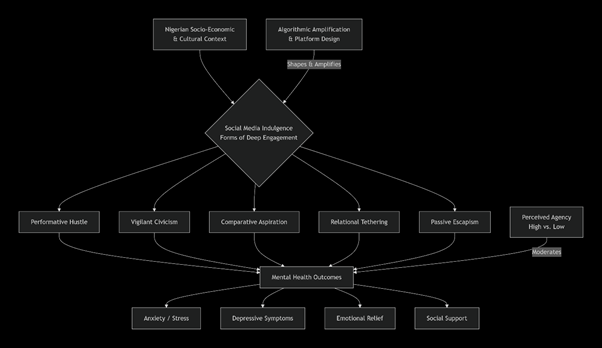
Figure 2.3: Conceptual Framework of Social Media Indulgence in Nigeria
Source: The Author (2026)
Figure 1.2 conceptualises social media indulgence as a spectrum of practices shaped by Nigeria’s economic uncertainty, political instability, and dense social ties. Forms such as performative hustle and relational tethering are shown to carry distinct mental health implications, reinforcing the need for engagement-sensitive and context-aware analysis.
Moving Beyond One-Size-Fits-All Narratives
Recent studies reject the idea that social media is uniformly harmful. Outcomes depend on how, why, and by whom platforms are used. Research shows that social media can provide support for marginalised groups, including reduced isolation and identity validation (Escobar-Viera et al. 412; Hanley 67). However, Nigerian studies rarely examine these protective effects.
Distinctions between active and passive use of social media further refine understanding. Passive use is linked to distress while active engagement can support connection (Verduyn et al. 118). Yet in Nigeria, active use often serves economic rather than social purposes, thus, requiring further differentiation.
Furthermore, platform-specific research shows different effects across Instagram, X, and YouTube (Meier and Schäwel 54; Smith et al. 203). Nigerian research rarely makes such distinctions and this oversight limits explanatory depth.
Persistent Gaps in the Nigerian Context
Despite global progress, existing models remain Western-centred. They overlook Nigerian realities such as economic precarity, religious influence, family obligation, migration aspirations, and exposure to violent content. Without contextual adaptation, global theories risk misinterpretation. This leads to a dual gap: limited context-sensitive data on Nigerian youths, and weak application of advanced frameworks to local realities.
2.3 African and Nigerian Research: Growing but Weakly Connected
African research on youth social media use is expanding but remains uneven and underdeveloped (Asare 78). Common findings include:
- Mobile-first engagement shaped by data cost (Bosch 214)
- Economic use of platforms in informal labour (Mutsvairo and Borges-Rey 583)
- Political mobilisation with limited attention to emotional impact (Mare 41)
Mental health outcomes remain underexplored.
Nigerian research, however, clusters around three areas:
- Academic performance, framing social media as distraction (Onyekwere et al. 47)
- Political activism, with little attention to emotional cost (Ajayi and Oloruntola 6)
- Addiction prevalence, using imported tools with limited context (Nwachukwu et al. 537)
These studies offer fragmented insights without a unifying framework.
African research on youth social media use has grown steadily over the past decade, reflecting the rapid expansion of mobile connectivity and platform adoption across the continent. However, despite this growth, the body of scholarship remains uneven, fragmented, and conceptually underdeveloped (Asare 78). Much of the existing literature prioritises access, usage patterns, and instrumental outcomes, while the psychological and emotional consequences of sustained engagement—particularly mental health outcomes—remain insufficiently examined. This imbalance has resulted in a limited understanding of how African youths experience social media not merely as a communication tool, but as a pervasive socio-emotional environment.
One dominant finding in African social media research is the mobile-first nature of youth engagement, largely shaped by data affordability, network infrastructure, and economic constraints. Bosch (214) highlights that African youths primarily access social media through smartphones, often relying on prepaid data bundles and platform-specific data subsidies. This mobile-first engagement encourages short, frequent, and repetitive usage patterns rather than prolonged desktop-based interaction. While such studies effectively explain how African youths access social media, they rarely interrogate how this usage patterns affect mental and emotional wellbeing. The cognitive implications of constant micro-engagement, notification-driven behaviour, and fragmented attention remain underexplored within this strand of research.
A second prominent theme in African scholarship focuses on the economic utilisation of social media platforms, particularly within informal labour markets. Mutsvairo and Borges-Rey (583) document how youths use platforms such as Facebook, WhatsApp, Instagram, and TikTok for entrepreneurial activities, self-branding, content monetisation, and gig-based labour. In contexts of high unemployment and economic precarity, social media is framed as an opportunity structure (an avenue for income generation and social mobility). While this perspective usefully challenges deficit-based narratives of African youth digital engagement, it often neglects the psychological pressures associated with performative labour, algorithmic visibility, and economic comparison. The emotional strain of maintaining an online persona, competing for attention, and equating digital engagement with economic survival is rarely addressed. This creates a significant gap in understanding the mental health costs of platform-based economic participation.
Third, African research has extensively examined social media as a tool for political mobilisation and civic engagement, particularly among youths. Studies such as Mare (41) highlight how platforms facilitate protest coordination, political awareness, and resistance movements. This literature often emphasises empowerment, voice, and participation, positioning social media as a democratising force in restrictive political environments. However, similar to Nigerian political communication studies, this strand of research gives limited attention to the emotional and psychological consequences of sustained political engagement online. Exposure to polarised discourse, online harassment, misinformation, and emotionally charged content can contribute to stress, anxiety, and emotional fatigue. Yet these outcomes are rarely foregrounded. The result is an incomplete assessment of the costs and benefits of digital political participation.
Across these African studies, mental health outcomes remain notably underexplored. Emotional distress, anxiety, sleep disruption, and psychological overload are either mentioned in passing or excluded entirely. The lack of theoretically grounded mental health analysis reflects a broader tendency to prioritise structural and instrumental dimensions of social media use over subjective experience. Consequently, African youths are often portrayed as users, consumers, activists, or entrepreneurs, rather than as emotionally embedded individuals navigating complex psychosocial pressures.
Within this broader African context, Nigerian research mirrors many of these limitations while also exhibiting distinct thematic clustering. Nigerian scholarship on youth social media use has largely concentrated on three main areas, each offering partial insights but lacking integrative frameworks.
The first major cluster centres on academic performance, where social media is predominantly framed as a distraction. Studies such as Onyekwere et al. (47) examine correlations between social media use and declining academic focus, time mismanagement, and reduced academic achievement. While this literature raises important concerns about attention economy dynamics and educational outcomes, it often adopts a narrowly instrumental view of social media. Emotional experiences (such as stress arising from academic comparison, anxiety linked to performance display, or emotional exhaustion from constant connectivity) are seldom explored. As a result, social media is positioned as an external interference rather than a psychologically immersive environment that shapes students’ mental states and self-perceptions.
The second cluster focuses on political activism and civic participation, with studies like Ajayi and Oloruntola (6) highlighting the role of social media in youth mobilisation, protest movements, and political discourse. These studies are particularly prominent in the Nigerian context, given the country’s dynamic political landscape and youthful population. However, similar to broader African political communication research, Nigerian studies tend to prioritise participation outcomes over emotional consequences. The psychological toll of exposure to political conflict, online aggression, misinformation, and collective anxiety is rarely examined. This creates a gap between understanding political engagement as a behavioural outcome and recognising its emotional cost to young users.
The third cluster addresses social media addiction and problematic use, often through prevalence studies that apply diagnostic scales developed in Western contexts. Research such as Nwachukwu et al. (537) quantifies levels of compulsive use, dependency, and withdrawal-like symptoms among Nigerian youths. While these studies provide useful baseline data, their reliance on imported measurement tools raises concerns about cultural relevance and contextual sensitivity. Such tools may inadequately capture the socio-economic pressures, communal expectations, religious influences, and structural constraints that shape Nigerian youths’ digital experiences. Moreover, prevalence-focused approaches often prioritise classification over understanding, offering limited insight into how youths emotionally experience and interpret their social media use.
Taken together, these Nigerian studies offer fragmented insights without a unifying theoretical or analytical framework. Academic performance studies overlook emotional wellbeing, political communication studies underplay psychological cost, and addiction-focused research often abstracts behaviour from lived experience. Few studies integrate social comparison processes, algorithmic influence, emotional regulation, and perceived control into a single analytical lens. As a result, the complex interplay between social media indulgence and mental health remains insufficiently theorised within Nigerian scholarship.
This study addresses these limitations by situating Nigerian youth social media use within established psychosocial theories while grounding analysis in local socio-cultural realities. By integrating Social Comparison Theory, Uses and Gratifications Theory, and Self-Determination Theory, the research moves beyond fragmented perspectives to offer a holistic understanding of how emotional distress, coping strategies, and perceived control emerge from everyday digital engagement. In doing so, it contributes not only to Nigerian literature but also to broader African scholarship, demonstrating the need for mental health–centred, theoretically integrated, and context-sensitive approaches to studying youth social media use.
Ultimately, the uneven development of African and Nigerian research underscores the urgency of reframing social media scholarship to prioritise emotional wellbeing alongside access, participation, and productivity. This study responds to that need by foregrounding mental health outcomes and offering an empirically grounded, theoretically coherent contribution to the field.
Leave a Reply