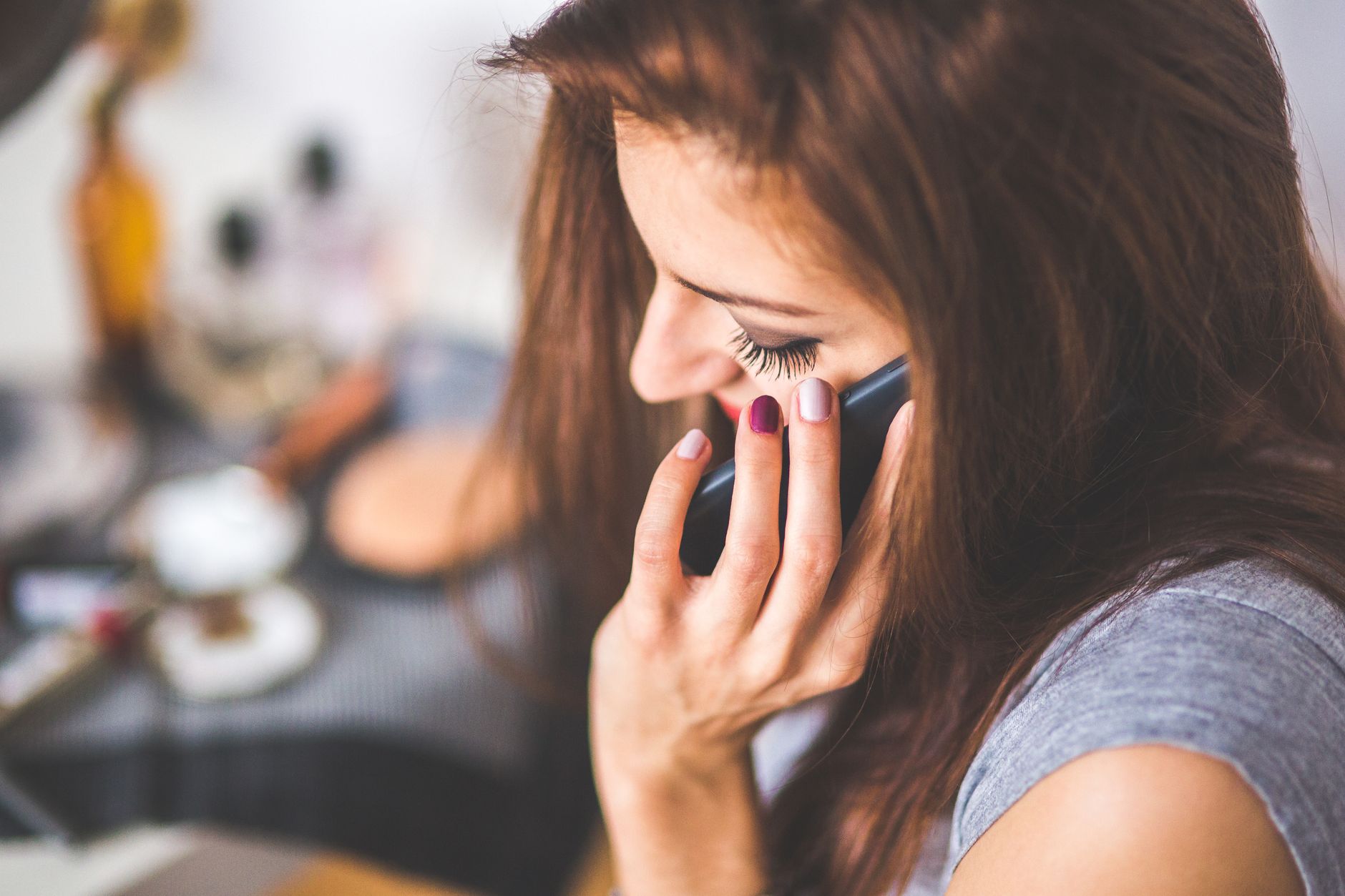
Talking on the phone and smoking cigarettes could soon share something in common: being legally banned on airplanes.
A bill introduced by lawmakers in the House of Representatives last month would make taking phone or video calls from the air illegal, an issue that’s becoming increasingly relevant as WiFi access in the skies expands. Congress voted in 2018 to require the Federal Aviation Administration to ban phone calls on flights, but did not set a deadline, and a ban has never been implemented. The Quiet Skies Act, introduced by Democratic Reps. Greg Stanton and Hillary Scholten, and Republican Reps. Rick Crawford and Rob Bresnahan, would force the FAA to finalize the ban within 180 days.
Former flight attendants say talking on the phone inside a plane is already against the policies of some airlines, but making it the law would protect passengers as well as the flight crew.
“We’re shoved into a tin can, and we’re hurdling through the sky at 38,000 feet. It’s not a normal situation to be in,” Ally Murphy, a former flight attendant and cabin service supervisor at Virgin Atlantic, told Business Insider. “If you’re shoulder-to-shoulder with somebody and having to speak loudly, you’re really disrupting the other passengers around you.”
While Congress rarely legislates airplane etiquette — airlines are generally able to set their own policies — the government has stepped in on matters related to health and safety, or security concerns, such as banning smoking and vaping or requiring masks during the pandemic.
“Everything that happens in the aviation industry, the underlying first thought will always be about how does this affect the safety of the aircraft and the passengers who are on board it,” Murphy said. Passengers talking loudly on the phone or FaceTiming a friend could be a distraction, especially if other passengers lodge complaints with the crew, and could make it more difficult for passengers to hear crew announcements.
A universal ban could help flight attendants avoid conflict
While major American airlines, including United, American, and Southwest, prohibit in-flight phone calls, British Airways earlier this year said it would allow phone and video calls on aircraft with Starlink WiFi. Virgin Atlantic also allows phone calls on its Starlink-equipped flights, though it asks that they be kept short, and it does not allow video calls.
Bobby Laurie, a former flight attendant and travel industry expert, said inconsistent or ambiguous rules can be confusing for passengers and difficult for flight attendants to enforce. It can put crew in a tricky position, asking them to make subjective calls about what constitutes disruptive behavior, in turn increasing the potential for conflict between flight attendants and passengers.
“When you ask people to be considerate, consideration means something different for everybody,” Laurie said, adding that a blanket ban could help flight attendants avoid the kinds of passenger confrontations that became more common during the pandemic.
Paul Hudson, the president of FlyerRights, a nonprofit that advocates for airline passengers, said he supports a ban on phone calls but that there could be some accommodations, such as a phone booth or a designated section where calls are allowed. Airlines, which have increasingly embraced a pay-for-every-amenity model, could charge for it.
“It would satisfy the need for people who want to do business or have family issues, especially on long flights, and also protect the passengers,” he said, noting Amtrak trains have designated “quiet” cars as well as cars where calls are allowed.
Leave a Reply