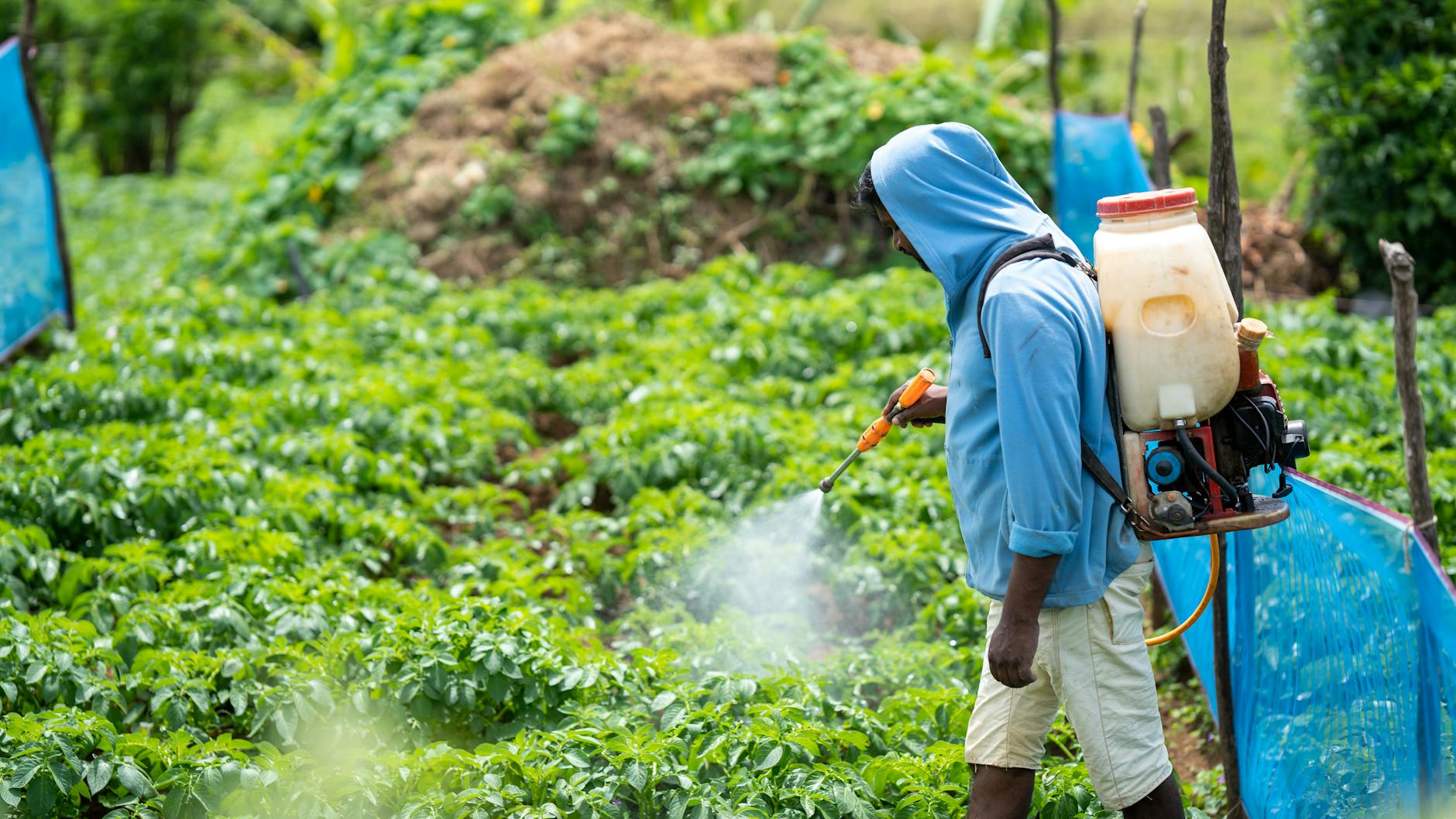
The use of pesticides in Nigerian agriculture has increased markedly over the past several decades, reflecting broader global trends in intensification of food production. This growth has been driven by multiple, interrelated factors, including (a) rapid population expansion (b) accelerating urbanisation (c) climate variability (d) declining soil fertility, and (e) rising pressure on farmers to improve crop yields and reduce post-harvest losses. With Nigeria’s population projected to exceed 230 million by the end of 2025 (NBS, 2023), the demand for affordable and readily available food has intensified, thus, placing significant strain on traditional farming systems (FAO, 2023).
Pesticides play a central role in Nigeria’s crop production systems, particularly in the cultivation of staple foods such as maize, rice, cassava, yam, cowpea, vegetables, and fruits. Farmers rely on pesticides to control insects, weeds, fungi, nematodes, and rodents that can cause severe yield reductions if left unmanaged. Empirical evidence, however, suggests that pest-related losses in sub-Saharan Africa can account for between 30% and 40% of potential crop yields, making chemical pest control an attractive and often necessary option for farmers operating under resource-constrained conditions (Abate et al, 2021).
Commonly used pesticides in Nigeria include insecticides such as organophosphates (e.g. chlorpyrifos and dichlorvos), carbamates (e.g. carbaryl), and synthetic pyrethroids (e.g. cypermethrin and deltamethrin). Herbicides, particularly glyphosate and atrazine, are extensively applied for weed control, specifically in cereal and tuber production systems. Fungicides are also used in horticultural crops to manage fungal diseases that thrive under Nigeria’s humid tropical conditions (Sosan et al, 2023). While many of these chemicals are approved for agricultural use under regulated conditions, their widespread and often uncontrolled application raises serious food safety and environmental concerns.
A defining feature of pesticide use in Nigeria is the predominance of smallholder farmers who account for over 80% of agricultural producers. These farmers typically operate on less than two hectares of land and have limited access to agricultural extension services, formal education, and reliable information on safe pesticide use (FMARD, 2022). Consequently, pesticide application is frequently characterised by poor adherence to recommended guidelines, including dosage instructions, application timing, and safety precautions. Studies have documented practices such as overdosing, repeated application beyond recommended frequency, inappropriate mixing of multiple pesticides, and the use of pesticides for purposes other than those specified on product labels (Adeyeye et al, 2021; Olatunji et al, 2021).
One particularly problematic practice is the failure to observe pre-harvest intervals (PHIs). PHIs refer to the minimum period that must elapse between the last pesticide application and harvest to allow residues to degrade to safe levels. Non-compliance with PHIs significantly increases the likelihood that pesticide residues will remain on food products at the point of sale and consumption. Research conducted on vegetables and grains sold in Nigerian markets has revealed residue levels that exceed internationally accepted Maximum Residue Limits (MRLs), suggesting widespread PHI violations (Akinneye et al, 2021; Sosan et al, 2023).
Further, the misuse of pesticides in Nigeria is exacerbated by the widespread availability of banned, unregistered, and counterfeit products. Despite Nigeria’s participation in international chemical conventions such as the Rotterdam and Stockholm Conventions, banned or highly hazardous pesticides continue to circulate within informal supply chains. These products are often sold in open markets and agrochemical shops without proper labelling, safety instructions, or regulatory oversight. In some cases, pesticides are repackaged into unlabelled containers, increasing the risk of accidental poisoning and misuse by farmers and household consumers (PAN Nigeria, 2022).
From a regulatory perspective, pesticide control in Nigeria involves multiple government agencies, including the National Agency for Food and Drug Administration and Control (NAFDAC), the Standards Organisation of Nigeria (SON), and the Federal Ministry of Agriculture and Food Security (formerly the Federal Ministry of Agriculture and Rural Development). NAFDAC is responsible for the registration, regulation, and monitoring of pesticides, while SON sets quality standards and FMARD oversees agricultural policy and extension services. However, the effectiveness of this regulatory framework is undermined by fragmented institutional responsibilities, limited inter-agency coordination, inadequate funding, and weak enforcement capacity (NAFDAC, 2023).
Laboratory infrastructure for pesticide residue testing remains insufficient, particularly at state and local government levels. This factor limits routine monitoring of food products and reduces the likelihood that violations will be detected and sanctioned. As a result, compliance with pesticide regulations is often low. Deterrence mechanisms are also weak. Scholars have argued that regulatory gaps create an enabling environment for unsafe pesticide practices and have direct implications for food safety and consumer health (Bello et al, 2024b).
Beyond regulatory weaknesses, socio-economic factors also shape pesticide use patterns in Nigerian agriculture. Many farmers perceive pesticides as a quick and effective solution to pest problems, especially in the absence of alternative pest management strategies. Integrated Pest Management (IPM) approaches (which combine biological control, cultural practices, and limited chemical use) remain underutilised due to limited awareness, training, and institutional support (FAO, 2022b). Additionally, aggressive marketing by agrochemical companies and informal vendors often promotes pesticide use without adequate emphasis on safety or environmental consequences.
Climate change has further intensified pesticide dependence in Nigeria. Rising temperatures, changing rainfall patterns, and increased pest pressure have altered pest dynamics, leading to the emergence of new pests and extended breeding cycles for existing ones. Farmers faced with unpredictable losses often respond by increasing pesticide application as a coping strategy, sometimes without adequate technical guidance (UNEP, 2022). This climate–pesticide nexus presents new challenges for sustainable agriculture and food safety in Nigeria.
The implications of unsafe pesticide use extend beyond the farm level to the entire food value chain. Pesticide residues can persist during transportation, storage, and processing, eventually reaching consumers through raw or minimally processed foods. In Nigeria, where food processing is often informal and limited washing or peeling practices may be applied, the risk of dietary exposure to pesticide residues is heightened (Okoye et al, 2022). Vulnerable populations, including children, pregnant women, and the elderly are particularly at risk of adverse health effects from chronic low-level exposure.
From an agricultural policy perspective, balancing the productivity benefits of pesticide use with the need to protect human health and the environment remains a major challenge. While pesticides contribute to food availability and farmer livelihoods, their unregulated use undermines food safety, erodes consumer confidence, and threatens long-term agricultural sustainability. Therefore, sustainable intensification of Nigerian agriculture does not require only improved access to safer pest control technologies but also stronger regulatory enforcement, farmer education, and public awareness.
In summary, pesticide use in Nigerian agriculture is shaped by a complex interaction of demographic pressures, economic incentives, institutional weaknesses, and environmental change. Although pesticides are indispensable tools for modern crop production, their widespread misuse poses significant risks to food safety and public health. Understanding these dynamics is essential for contextualising public perceptions of food safety and for designing country-specific interventions that promote safer, more sustainable agricultural practices. This study builds on this context by examining how pesticide use influences consumer perceptions of food safety in Nigeria and what this means for policy, regulation, and agricultural development.
Leave a Reply