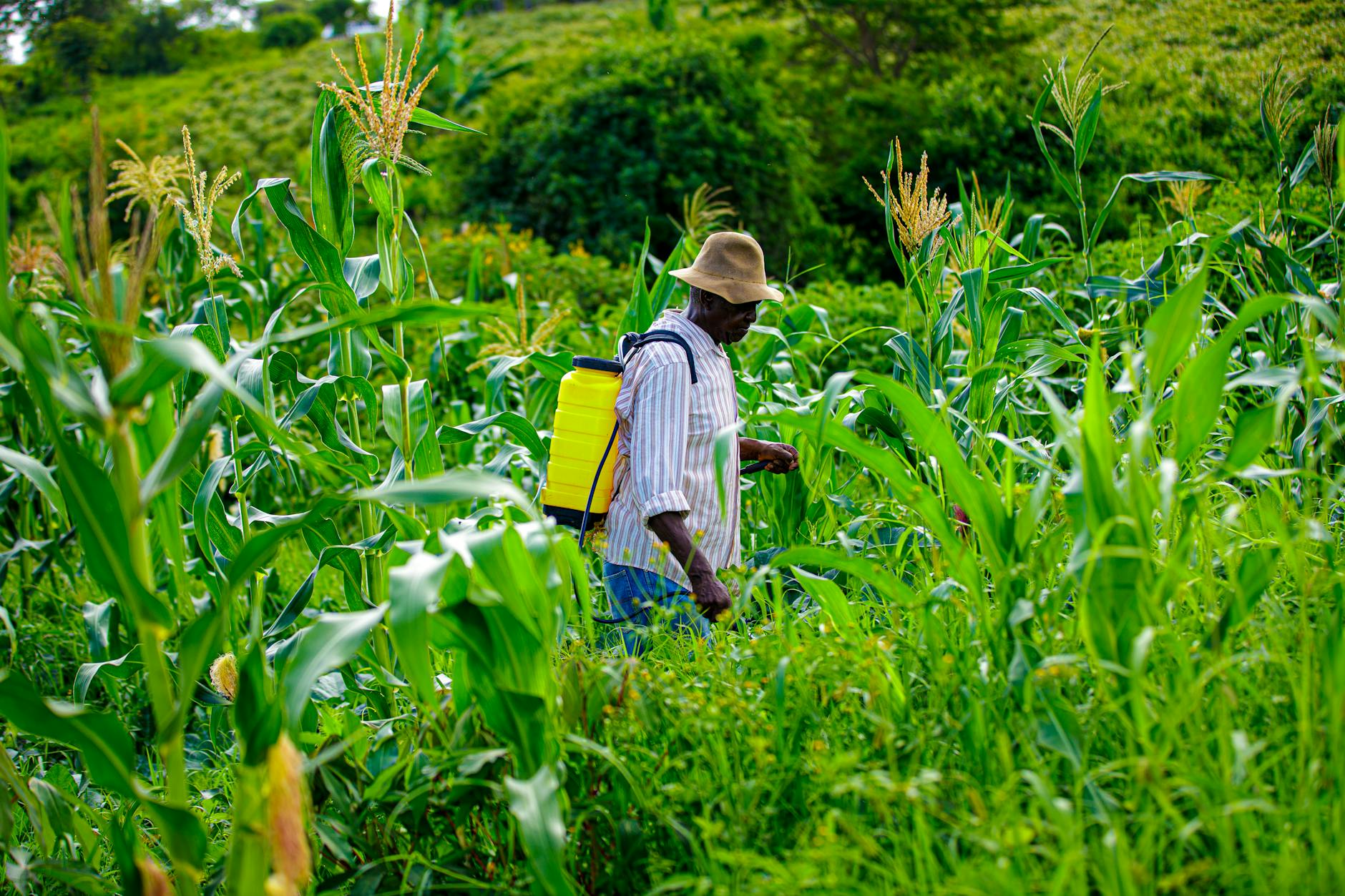
Pesticides are widely used to control pests, weeds, and diseases and to improve agricultural productivity. In many developing countries, including Nigeria, pesticide use has increased significantly in response to population growth and food security pressures. According to Frontiers (2025), Nigeria has grown into one of the largest importers and users of pesticides in Africa, with insecticides, herbicides, and fungicides dominating agricultural chemical portfolios.
2.3.2 Practices and Compliance Challenges
Empirical evidence consistently demonstrates substantial non-compliance with recommended pesticide use practices among Nigerian farmers and other actors within the food supply chain (Sulaiman & Abubakar, 2025). Although pesticides are regulated through national guidelines that specify approved chemicals, application rates, safety precautions, and pre-harvest intervals (PHIs), adherence to these standards remains low in practice. A recent mixed-methods study by Frontiers (2025) conducted in north-western Nigeria revealed widespread violations of PHIs, improper storage of agrochemicals, and unsafe disposal of pesticide containers, underscoring a significant gap between regulatory expectations and on-farm realities. Notably, the study found that even farmers who possessed basic awareness of pesticide risks often failed to translate this knowledge into safe practices.
One major compliance challenge is the limited access to formal training and agricultural extension services. Many smallholder farmers rely on informal knowledge networks, including advice from agrochemical retailers or fellow farmers, rather than scientifically grounded guidance. This reliance increases the likelihood of incorrect dosage, inappropriate mixing of chemicals, and repeated application beyond recommended thresholds. In some cases, pesticides intended for specific crops or pests are indiscriminately applied across multiple crops, raising the risk of excessive residues in food products (Sulaiman & Abubakar, 2025).
Beyond primary production, compliance challenges extend to post-harvest handling and storage practices, particularly among commodities merchants and traders. Studies conducted in Oyo and Kwara States indicate that pesticides are frequently misused for grain and produce preservation during storage, often as a substitute for proper storage infrastructure or pest management systems (Olatilewa et al, 2024; Afolayan & Bankole, 2023). These practices are commonly undertaken without formal training or awareness of food safety implications, contributing to elevated pesticide residue levels in food commodities entering local markets (Oshatunberu et al, 2023).
Another critical issue is the availability of unregistered, banned, or counterfeit pesticides in informal markets. Weak regulatory enforcement allows such products to circulate widely, often sold without adequate labelling, usage instructions, or safety warnings (Gbadegesin et al, 2025). Farmers and traders may unknowingly use highly toxic substances or inappropriate formulations, exacerbating food safety risks. This regulatory gap undermines national pesticide governance frameworks and weakens incentives for compliance (Oshatunberu et al, 2023).
Socio-economic pressures further compound non-compliance. Farmers operating under tight financial constraints may prioritise yield maximisation and crop appearance over safety considerations, especially in competitive markets where visually appealing produce attracts higher prices (Sulaiman & Abubakar, 2025). Similarly, traders may apply pesticides during storage to prevent losses, perceiving such practices as economically necessary despite potential health consequences (Onwudiegwu et al, 2025). These dynamics highlight that non-compliance is not solely a knowledge deficit but is also shaped by structural, economic, and institutional factors.
Collectively, these compliance challenges increase the likelihood that pesticide residues will persist in food products consumed by the public. From an agricultural and food systems perspective, the findings suggest that improving food safety in Nigeria requires not only stricter regulation but also (a) enhanced farmer education (b) improved extension services (c) better market incentives for safe practices, and (d) effective monitoring of pesticide distribution and use. These challenges provide important context for understanding public concern about food safety and reinforce the need to examine how pesticide practices influence consumer perceptions and trust in the food system.
Leave a Reply