Here are the main stories shaping Nigeria’s news agenda today.
Osun election reshapes the political conversation
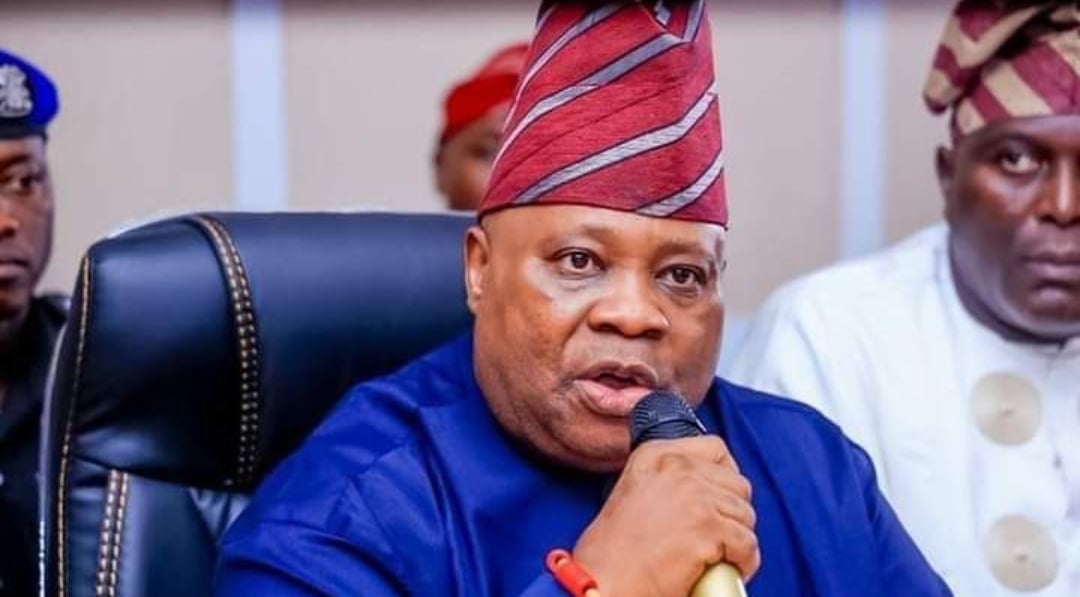
The fallout from Saturday’s Osun State governorship election is dominating political coverage. Governor Ademola Adeleke won re-election, and the result is already being viewed through the lens of the 2027 presidential race. President Bola Tinubu congratulated Adeleke and said the election reinforced Nigeria’s democratic process.
Adeleke’s reported support for Tinubu’s 2027 re-election bid has also generated criticism from opposition figures, adding another layer to the political debate.
Inflation falls to 15.43%
Nigeria’s headline inflation rate fell to 15.43% in July, down 0.48 percentage points from June, according to figures reported today from the National Bureau of Statistics. The decline is welcome news for policymakers, although prices and household purchasing power remain major concerns for Nigerians.
The naira also opened the week relatively stronger, trading around ₦1,357.61 to the US dollar in the reported market rate.
Government launches five-year organised-crime strategy
The federal government has unveiled a five-year National Strategy for Combating Organised Crime, designed to dismantle criminal networks, disrupt illicit financial flows and improve cooperation among security and law-enforcement agencies.
The strategy treats crimes such as kidnapping, trafficking, cybercrime and other organised criminal activity as interconnected threats requiring greater intelligence sharing and coordination.
Oil sector pushes for renewed investment
Nigeria is continuing its drive to attract investment into deep-water oil and gas. The government has introduced a new fiscal framework that can give contractors a 70:30 profit-oil split for qualifying new deep-offshore developments, even in areas where existing production has moved to a higher government share.
The broader offshore framework, approved last week, is intended to unlock as much as $50 billion in investment and revive projects that have been delayed by regulatory and fiscal uncertainty.
Meanwhile, Nigeria’s oil-rig count rose by 20% during the first seven months of 2026, a sign of increased upstream activity.
Refinery revival faces a crude-supply test
Plans to restart the Port Harcourt and Warri refineries are facing renewed scrutiny from fuel retailers. PETROAN is calling for guarantees that sufficient crude will be supplied to the refineries before their revival, highlighting the difference between completing refinery rehabilitation and ensuring that the plants can operate reliably.
Cocoa farmers face new European rules
Nigeria’s cocoa industry is confronting the European Union’s anti-deforestation requirements, which are raising concerns about whether small-scale farmers and exporters can meet new traceability and compliance standards.
The issue matters well beyond environmental regulation: Europe is an important market for West African cocoa, and compliance costs could affect farmers’ access to international buyers.
83 Nigerians return from South Africa
The federal government says another 83 Nigerians have returned from South Africa amid concerns over anti-foreigner sentiment there. The arrivals form part of Nigeria’s response to reported incidents affecting Nigerians and other African migrants.
NDLEA destroys illicit drugs worth ₦301 billion
Nigeria’s National Drug Law Enforcement Agency says it has destroyed more than 329,000 kilograms of assorted illicit drugs seized in Lagos, with an estimated street value of about ₦301 billion.
The operation included drugs seized through major maritime and airport commands and underscores the scale of Nigeria’s ongoing battle against drug trafficking and abuse.
Babangida turns 85
Former military president Ibrahim Badamasi Babangida turned 85 today, prompting tributes from across Nigeria’s political establishment. Tinubu described Babangida as a consequential Nigerian leader whose influence left an enduring mark on the country.
The bigger picture
Nigeria’s news agenda today is being pulled in several directions: the Osun result is accelerating political manoeuvring ahead of 2027, while falling inflation offers some relief on the economic front. At the same time, Abuja is betting heavily on oil investment and refinery revival, even as security agencies pursue a more coordinated response to organised crime. Internationally, cocoa exporters and Nigerians living abroad are dealing with pressures in major overseas markets and communities.
Leave a Reply