Syria’s caretaker prime minister has vowed to guarantee the rights of all communities in Syria.
In an interview with Italian news outlet Corriere Della Sera, Mohamed al Bashir distanced the rebels from links with Al Qaeda, saying they “distorted the true meaning of Islam” and the West should not “associate Muslims with terrorism”.
“Precisely because we are Islamic, we will guarantee the rights of all people and all communities in Syria.”
Asked if he wanted peace with Israel while remaining hostile with Iran, Hezbollah and Russia, he thanked the interviewer and left the room.
Iran and Russia propped up ousted Syrian leader Bashar al Assad. Israel has attacked airbases in Syria since his regime fell.
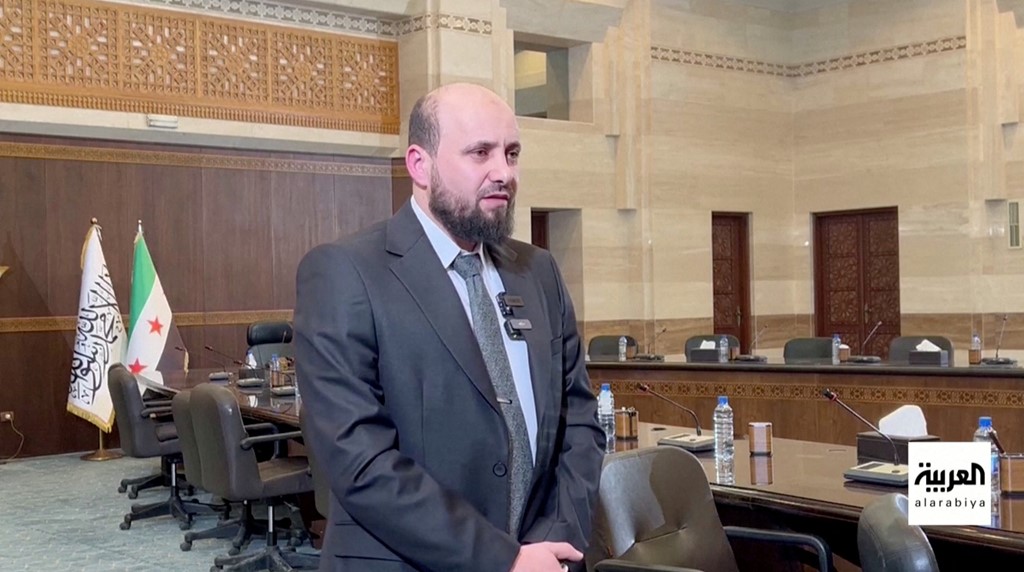
Bashir expanded on the bounties placed on war criminals by the rebel leader Abu Mohammed al Jolani.
They were people who committed crimes before and during the Syrian revolution, including torture, killings and making “thousands of citizens disappear into prisons”, he said, adding they would be judged by Syrian law.
State of Syrian government
Bashir said he was aware the new leadership was “inheriting a bloated administration plagued by corruption” when he met with former government ministers yesterday.
Financially, the country is in “a very bad state”, holding no foreign currency reserves and with 35,000 Syrian pounds worth one US dollar, he said. The debt is “enormous”.
The PM, who said he would remain in office until March 2025, laid out his top three priorities.
He wanted to re-establish the authority of the state, bring back millions of Syrian refugees and provide essential services like electricity, food and water.
“My appeal goes out to all Syrians abroad: Syria is now a free country that has regained its pride and dignity. Come back. We need to rebuild.”
Millions of Syrians have fled their home and sought asylum abroad since the outbreak of the civil war in 2011. Since Assad’s downfall, the UK and multiple other European countries have frozen asylum claims from Syrians.
Syrians who made lives in Berlin fear being forced home
In southern Berlin, Syrians have made a home from home.
Streets are lined with shops named after Syrian cities; reminders of the lives many fled due to war. Germany’s taken in the most Syrian refugees in the European Union.
Yamn Moahen, manager of the Aldimashqi Restaurant, is one of just under a million Syrian nationals living in the country.
He’s not ready to go home yet: “It’s not safe. There is no security right now, so it would be a bad idea to send people back so early,” he says.
Yamn joined huge crowds filling the neighbourhood as they celebrated the fall of Assad.
But then Germany announced it was temporarily freezing asylum applications for Syrians and for some the excitement quickly turned to fear of being forced home too soon.
“I pay taxes and do nothing illegal, am I just supposed to close everything and go home?” Yamn says.
“They can’t just tell us to go back; there are so many here who have already opened businesses and have been successful – so many doctors, engineers, or students who are still studying; children who are born here and can speak German.”
Leave a Reply