Across the vast tapestry of history, certain dates emerge as quiet reservoirs of remarkable human experience. May 28 is one such day—a day when the world witnessed groundbreaking achievements, devastating tragedies, and transformative shifts across industries from aviation and healthcare to music and technology. This is not a date defined by a single headline but by a symphony of events that, taken together, paint a vivid portrait of our collective past.
✈️ Taking to the Skies: Triumphs and Tragedies in Aviation
The annals of May 28 in aviation reveal a day of immense progress shadowed by profound loss. On a tragic note, May 28, 1968, saw the crash of Garuda Indonesian Airways Flight 892. The Convair 990A jet, operating the Bombay to Karachi segment, crashed shortly after takeoff from Santacruz Airport (now Chhatrapati Shivaji Maharaj International Airport in Mumbai), claiming all 29 occupants on board and tragically, one person on the ground. This disaster, occurring in the dead of night at 2:44 AM, remains a stark reminder of aviation’s inherent risks during the jet age.
Earlier that decade, on May 28, 1940, a Hawker Hurricane Mk.I from the 213 Squadron of the RAF was lost during a combat patrol over the Calais-Dunkirk sector during a critical phase of World War II, failing to return and marking a sacrifice in the Battle of France. In a different wartime context, May 28, 1971, brought the loss of a true American hero. Movie star and World War II legend Audie Murphy, the most decorated American soldier of the war, was among six people killed when a private plane crashed near Catawba. The nation mourned the loss of a figure whose bravery on the battlefield was as legendary as his roles on the silver screen.
Not every aviation event on this date was a tragedy. On May 28, 1935, the first indoor swimming pool in England was opened in London, with an entrance fee of one guinea, a far cry from the high-stakes world of flight. And in a lighthearted celebration of motor-powered travel, the first Isle of Man motorcycle TT race was held on this day in 1907, laying the foundation for one of the world’s most dangerous and prestigious motorsport events.
🏭 The Engines of Industry: Manufacturing, Motoring, and Innovation
May 28 has been a pivotal date for the global automotive and manufacturing industries, marked by major corporate maneuvers and industrial strategies. In a move that sent shockwaves through the industry, Fiat Chrysler proposed a merger with French automaker Renault on May 28, 2019, aiming to create the world’s third-biggest automaker, a $40 billion giant poised to compete in the race for electric and autonomous vehicles. The proposal, however, would ultimately collapse, illustrating the immense challenges of cross-border industrial consolidation.
On the same day in 2019, Ford Motor Company was charting its own financial course by issuing $750 million in corporate notes due in 2059, a strategic move to secure long-term funding. Earlier, in 2017, the world’s most valuable automaker by market cap for much of its history, Toyota, saw its Camry model listed at a salvage auction on May 28, a mundane but illustrative end to the life cycle of millions of vehicles.
At the cutting edge of green technology, May 28, 2011, saw the European debut of the Fisker Karma. The world’s first true electric vehicle with an extended range, the Fisker Karma took to the legendary streets of Monaco before the Grand Prix qualifying rounds, offering a glimpse of a sustainable automotive future. Back in 1937, the foundations of a different kind of automotive giant were laid when the German company Volkswagen was founded on May 28, an event inextricably linked with the Nazi state’s ambition to produce an affordable “people’s car”. The post-war evolution of Volkswagen into a global powerhouse would become one of the most remarkable industrial redemption stories of the 20th century.
The manufacturing sector also saw pivotal shifts. On May 28, 2018, General Motors extended a single-shift operation at its historic plant in Oshawa, Ontario, until this date, a direct response to sharp declines in North American car sales. This was a harbinger of more profound restructuring to come, as the industry pivoted away from traditional sedans.
🎵 The Rhythm of the Times: Music, Pop Culture, and Entertainment
The world of music and pop culture has also left an indelible mark on May 28. In a moment of pure cultural convergence, May 28, 1983, found the sprawling US Festival ’83 in full swing in California. An eclectic and massive lineup—including Van Halen, U2, David Bowie, The Clash, Stevie Nicks, Willie Nelson, Ozzy Osbourne, and Judas Priest—graced the stage, epitomizing the excess and diversity of early 80s rock culture. The festival represented a new model for large-scale music events, blending genres and attracting massive crowds.
In the world of hip-hop, May 28, 1991, marked the release of N.W.A’s second and final studio album, Niggaz4Life. The album debuted at number one on the Billboard 200, a historic achievement that cemented the group’s legacy as one of the most influential and controversial acts in music history. On the same day, the album True Confessions by T.C. Ellis was released, featuring compositions by the legendary artist Prince, showcasing the breadth of his influence. More recently, May 28, 2021, saw the release of the posthumous DMX album and the anticipated sophomore album from the experimental rock band black midi, demonstrating the continued vitality of music discovery and release.
📈 Tech Titans and the Digital Frontier
May 28 has become a key date for corporate maneuvering in the technology and e-commerce sectors. In 2014, Apple made a seismic announcement on this day, revealing its intention to acquire Beats Electronics and Beats Music for a staggering $3 billion. The deal, spearheaded by Dr. Dre and Jimmy Iovine, was Apple’s largest acquisition at the time and signaled a major push into streaming music and premium audio accessories, reshaping the company’s product ecosystem.
Years earlier, on May 28, 2009, the tech world was abuzz with anticipation for what was supposed to be a new era of web search. Microsoft’s Bing Day arrived, as CEO Steve Ballmer prepared to unveil the company’s new search engine, a direct challenger to Google. While Bing would capture only a fraction of the search market, its launch was a testament to Microsoft’s enduring ambition to compete in the digital core.
On a more ominous note, May 28, 2022, as the world was exiting the acute phase of the COVID-19 pandemic, health experts warned of a potential surge in cases following Memorial Day weekend gatherings, highlighting the persistent vigilance required in public health management. The contrasting data from that day in 2021, when COVID cases were a fraction of the previous year, underscored the pandemic’s wavering trajectory and the challenge of achieving a stable endemic state.
🩺 Health, Humanity, and Global Crises
The health-related events of May 28 underscore the persistent struggle against disease and the fragile nature of public health systems. On May 28, 2023, the United States and Mexican authorities jointly urged the World Health Organization to declare a public health emergency due to a deadly fungal meningitis outbreak. The outbreak, which had a high mortality rate, exposed the vulnerability of medical systems to rare but highly lethal pathogens. Concurrently, the death toll from a cholera outbreak in Hammanskraal, South Africa, rose to 23, with over 200 people hospitalized, illustrating the ongoing threat of waterborne diseases in areas with inadequate sanitation infrastructure.
Earlier, on May 28, 2024, the World Health Organization and UNICEF warned that measles cases across Europe were surging for a second consecutive year, soon to exceed the total number reported in all of 2023. The resurgence was linked to a decline in routine childhood vaccinations, a preventable backslide that threatened millions of children. In a related but more hopeful vein, an observational study highlighted on May 28, 2024, revealed that most pregnancy-related deaths occur in the year after a baby is born, a finding that is beginning to change how doctors provide postpartum care, potentially saving countless lives.
⚖️ Law, Society, and Unrest
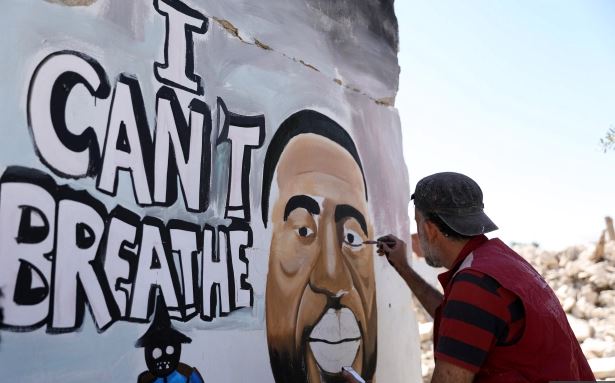
The legal and social landscape on May 28 has been marked by significant turmoil and restructuring. In 2020, the murder of George Floyd in Minneapolis ignited a nationwide reckoning on race and policing. By May 28, 2020, the protests had spread to New York City, where hundreds of demonstrators gathered, setting the stage for weeks of civil unrest that would reshape national conversations about justice and law enforcement. The unrest had already turned violent in Minneapolis, where a police precinct was set ablaze as anger over the death boiled over. Meanwhile, in Russia, on May 28, 2026, a criminal case was opened against journalist Arkady Babchenko for evading the duties of a “foreign agent,” representing the escalating crackdown on independent media and dissent in the country.
🏟️ Sports, Glory, and Competition
The world of sports has provided its share of May 28 drama. In one of the most iconic events in American motorsports, Takuma Sato won the 101st running of the Indianapolis 500 on May 28, 2017, delivering a historic victory for Honda and becoming the first Japanese driver to win the race. Sato’s daring pass on the final lap remains one of the most thrilling moments in recent Indy 500 history.
On the football pitch, Major League Soccer games have been played on May 28 across various years, with matches drawing passionate crowds. In 2025, Inter Miami CF faced off against CF Montréal on this date, with Lionel Messi’s presence bringing unprecedented global attention to the league. That same day, the Seattle Sounders hosted San Diego FC, showcasing the league’s growing geographic footprint.
🏛️ Architecture and the Built Environment
May 28 has also witnessed the opening of architectural marvels. On May 28, 1930, the iconic Chrysler Building officially opened its doors in New York City. For a brief period, it was the tallest building in the world, and its Art Deco spire and eagle gargoyles have made it a beloved symbol of the city’s architectural ambition. This day also saw the opening of the Golden Gate Bridge on May 28, 1937—a 4,200-foot suspension bridge that became an instant engineering wonder.
More recently, on May 28, 2026, construction workers in Italy made an unexpected discovery while clearing old bombs: an ancient sanctuary was unearthed, sparking a significant archaeological investigation. The find served as a powerful reminder that history is not just buried in archives but often lies just beneath the surface of our everyday lives.
Leave a Reply